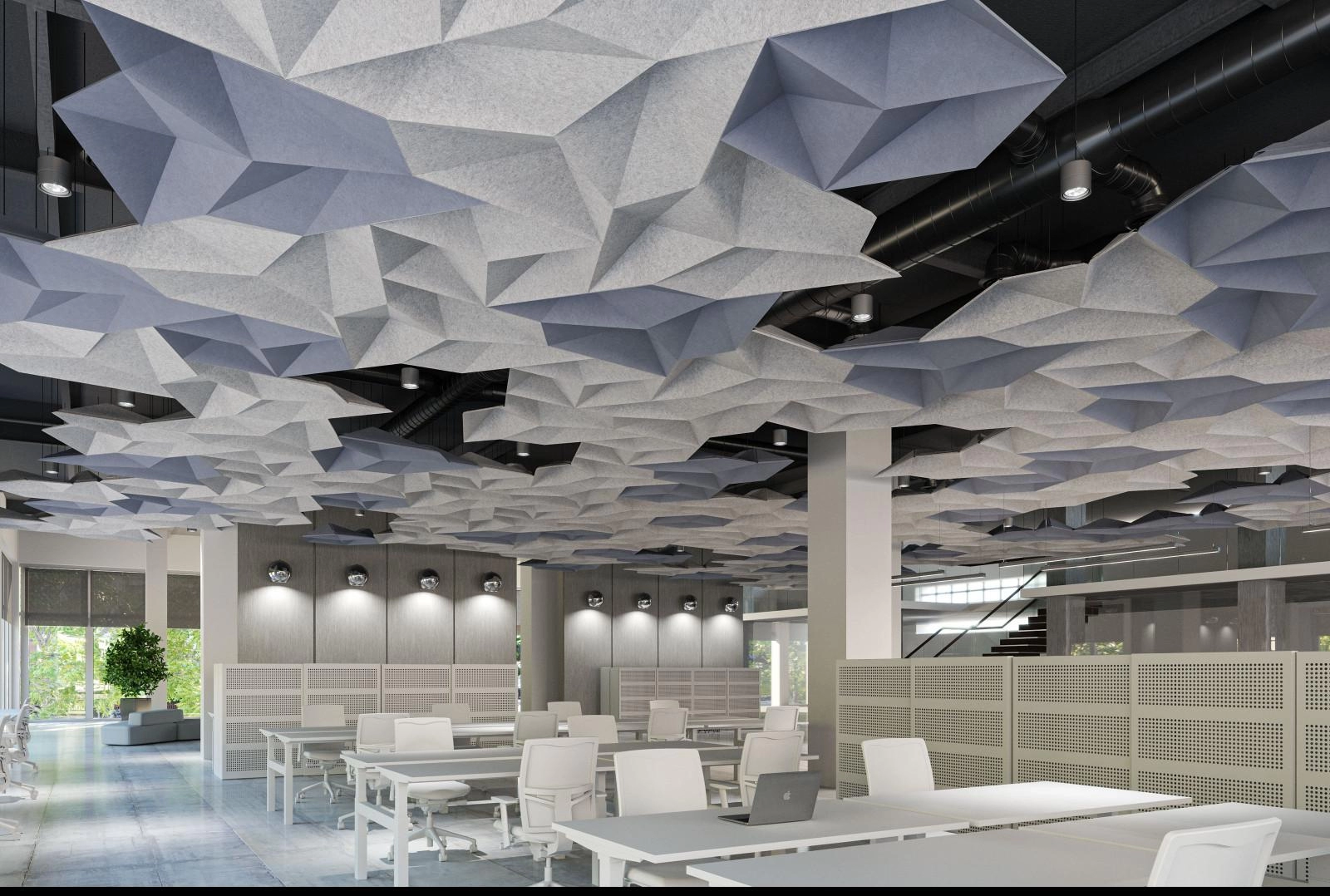
Choosing the right acoustic treatment is an important part of creating a comfortable and functional indoor environment. Whether you are designing an office, hotel, school, conference room, or residential space, the materials used on your walls can influence sound quality, interior appearance, maintenance requirements, and long-term performance. Among the available solutions, polyester acoustic panels and fabric-wrapped acoustic panels are two popular options for managing indoor noise and reducing sound reflections.
Although both types of acoustic panels are designed to absorb sound, they differ in their construction, material composition, appearance, and practical applications. Polyester acoustic panels are typically manufactured from polyester fibers, while fabric-wrapped acoustic panels generally consist of an acoustic core covered with decorative fabric. However, polyester fiber can also be used as the core material in fabric-wrapped products, so these categories are not always mutually exclusive.
Understanding these differences helps architects, interior designers, contractors, and buyers choose the right solution for their projects. This guide compares polyester acoustic panels and fabric acoustic wall panels across material structure, sound absorption, design flexibility, durability, installation, maintenance, and cost considerations.

What Are Polyester Acoustic Panels?
Polyester acoustic panels are sound-absorbing products made primarily from polyester fibers. Many products are manufactured using polyethylene terephthalate (PET) fibers, which may come from virgin polyester, recycled plastic bottles, or a combination of different fiber sources.
During manufacturing, polyester fibers are processed into a porous, fibrous structure. The small spaces between the fibers allow sound waves to enter the panel, where part of the sound energy is converted into heat through friction and other internal losses. This process helps reduce sound reflections and reverberation within a room.
Unlike acoustic products that require a separate decorative covering, many polyester acoustic panels have a finished surface directly formed from the fiber material. They may feature solid colors, textured surfaces, geometric shapes, or decorative cut patterns.
Key Characteristics of Polyester Acoustic Panels
Several characteristics make polyester acoustic panels suitable for a wide range of interior projects.
Lightweight construction: Polyester fiber panels are generally lightweight, making them easier to handle, transport, cut, and install than many heavier wall treatment materials.
Integrated surface finish: Many polyester acoustic panels do not require an additional fabric covering. Their color and surface texture are incorporated into the panel itself.
Flexible design options: Manufacturers can produce panels in different thicknesses, dimensions, colors, and shapes. Some products can also be cut into custom patterns for decorative wall installations.
Potential recycled content: Certain PET acoustic panels incorporate recycled polyester fibers. Buyers should confirm the recycled content and supporting documentation of individual products rather than assuming all polyester panels are recycled.
Versatile applications: Polyester acoustic panels are used in offices, classrooms, home studios, commercial interiors, meeting rooms, and other spaces where reducing echo is important.
The actual acoustic performance of a polyester panel depends on its thickness, density, fiber structure, mounting method, and the frequency of the sound being absorbed. The material name alone does not guarantee a particular sound absorption rating.
What Are Fabric-Wrapped Acoustic Panels?
Fabric-wrapped acoustic panels are constructed from an acoustic core covered with a layer of decorative fabric. The core may consist of fiberglass, mineral fiber, polyester fiber, or another sound-absorbing material, depending on the manufacturer's product design.
The fabric serves as the visible exterior finish, while the internal core provides much of the sound absorption. For effective performance, the covering fabric generally needs to allow sound waves to pass through rather than reflect most of the sound at the surface.
Fabric-wrapped acoustic panels are widely used in commercial interiors because they combine sound absorption with a broad range of colors, textures, and decorative finishes.
Key Characteristics of Fabric-Wrapped Acoustic Panels
Wide fabric selection: Buyers can choose from different fabric colors, textures, and visual styles to complement furniture, wall finishes, flooring, and other interior elements.
Different acoustic core options: Depending on the product, the core can be selected according to acoustic requirements, panel thickness, weight, and project specifications.
Professional appearance: Fabric-wrapped acoustic wall panels can create a clean, upholstered finish that suits offices, conference rooms, hotels, and other design-focused environments.
Custom dimensions: Panels can often be manufactured in different sizes and shapes to accommodate wall layouts, architectural details, and project-specific requirements.
Replaceable or repairable finishes in some systems: Certain panel designs allow the fabric to be replaced or repaired without replacing the entire acoustic core. This depends on the construction and should be confirmed with the manufacturer.
Fabric-wrapped acoustic panels are not a single standardized product. Their performance, durability, and maintenance requirements vary according to the core material, fabric type, edge construction, and installation method.
Polyester Acoustic Panels vs. Fabric-Wrapped Acoustic Panels: Key Differences
The most important distinction is the construction method. Polyester acoustic panels are generally identified by their fiber-based material, while fabric-wrapped acoustic panels are identified by their covered construction. A fabric-wrapped panel may itself contain a polyester acoustic core.
The following comparison provides a practical starting point for evaluating both options.
Comparison factor | Polyester acoustic panels | Fabric-wrapped acoustic panels |
|---|
Basic construction | Primarily polyester fiber | Acoustic core covered with fabric |
Visible surface | Usually the polyester panel itself | Decorative fabric covering |
Design flexibility | Colors, shapes, textures, and cut patterns | Wide choice of fabric colors and textures |
Acoustic performance | Depends on thickness, fiber structure, and mounting | Depends on core, fabric permeability, and mounting |
Weight | Often lightweight | Varies with core and frame construction |
Surface maintenance | Depends on fiber finish and manufacturer guidance | Depends on fabric type and cleaning instructions |
Customization | Panel dimensions, colors, shapes, and patterns | Panel dimensions, fabric selection, edges, and shapes |
Typical applications | Offices, schools, studios, commercial interiors | Conference rooms, hotels, offices, and design-led spaces |
Neither option is automatically superior in every situation. The right choice depends on the project's acoustic objectives, visual requirements, maintenance expectations, and budget.
1. Sound Absorption Performance
Sound absorption is often the first consideration when selecting acoustic wall treatments. Both polyester acoustic panels and fabric-wrapped acoustic panels can help control reverberation, but their effectiveness depends on the complete product design rather than the surface material alone.
How Polyester Acoustic Panels Absorb Sound
The porous structure of polyester fiber allows sound waves to penetrate the material. As sound moves through the fiber network, energy is dissipated through friction and related processes.
Thicker polyester acoustic panels generally provide greater opportunities for sound interaction within the material, particularly at lower frequencies, although the actual results depend on the panel's structure and installation. Air gaps behind wall-mounted panels can also influence absorption performance.
For example, a classroom with hard floors, large windows, and painted walls may experience excessive speech reflections. Installing appropriately specified polyester acoustic wall panels can help reduce reverberation and make spoken communication easier to follow.
However, polyester panels should not be treated as complete soundproofing solutions. They primarily absorb sound within a room; they do not necessarily prevent sound from passing through walls or between separate spaces.
How Fabric-Wrapped Acoustic Panels Absorb Sound
Fabric-wrapped acoustic panels use an internal core to absorb sound. The covering fabric is generally selected to permit sound transmission into that core.
Different core materials offer different performance characteristics. A fiberglass-core panel, for example, may perform differently from a polyester-core panel of the same external dimensions. Fabric permeability, core thickness, mounting depth, and panel coverage also affect the final result.
When comparing products, buyers should request test reports or reliable acoustic performance data, such as the Noise Reduction Coefficient (NRC), where applicable.
NRC provides a useful summary of sound absorption across a defined range of frequencies, but it does not describe performance at every frequency or predict the precise acoustic outcome of every room.
Which performs better?
Neither category is universally better. Compare tested acoustic performance for the specific products under consideration, paying attention to thickness, mounting conditions, and the frequencies that matter most to the project.
2. Appearance and Interior Design
Acoustic panels often occupy a significant portion of a wall, so their visual impact should be considered alongside their acoustic function.
Design Advantages of Polyester Acoustic Panels
Polyester acoustic panels are available in a variety of colors, thicknesses, and shapes. Some can be cut into geometric designs, slatted patterns, decorative tiles, or custom silhouettes.
Because many polyester panels have an integrated finish, they can create a consistent visual appearance without a separate fabric layer. This can be particularly useful for contemporary offices, educational facilities, creative studios, and public spaces.
Designers may combine several colors or panel shapes to create visual zones, highlight particular walls, or coordinate acoustic treatment with a company's interior identity.
Polyester acoustic wall panels can also be selected for projects where a lightweight, clean-lined surface is preferred over a traditional upholstered appearance.
Design Advantages of Fabric Acoustic Wall Panels
Fabric acoustic wall panels offer a different type of design flexibility. The visible fabric layer can introduce subtle textures, woven patterns, and a more upholstered appearance.
This makes fabric-wrapped acoustic panels suitable for boardrooms, executive offices, hotel interiors, reception areas, and other spaces where acoustic treatment needs to complement a carefully coordinated design scheme.
Fabric selection can help designers match existing upholstery, furniture finishes, or decorative elements. Depending on the supplier, custom fabric options and edge treatments may also be available.
However, not every decorative fabric is suitable for acoustic use. Very dense or impermeable coverings may interfere with sound absorption, so buyers should confirm that the proposed fabric is compatible with the panel's acoustic design.
Which looks better?
Polyester acoustic panels are worth considering for modern, colorful, or pattern-driven installations. Fabric-wrapped panels may be preferable when the project requires a particular textile finish or a more upholstered appearance.
The best choice depends on the desired visual effect and the available product specifications.
3. Durability and Long-Term Performance
Durability is particularly important in commercial spaces where acoustic panels may remain installed for many years.
Durability of Polyester Acoustic Panels
Polyester acoustic panels generally have a relatively simple construction because many products do not use a separate decorative covering. This can reduce the number of material layers that need to be maintained.
Nevertheless, their durability varies by product. Exposed edges may be vulnerable to damage, and some fiber surfaces can collect dust or become marked through frequent contact. The resistance of a panel to impact, abrasion, moisture, and deformation should be verified through product specifications.
For schools, corridors, shared offices, and other high-traffic areas, buyers should consider whether the selected panel can withstand the expected level of use.
Durability of Fabric-Wrapped Acoustic Panels
Fabric-wrapped acoustic panels depend on both the core and the exterior covering for long-term performance.
The core may retain its acoustic function while the fabric becomes stained, worn, faded, or damaged. Fabric quality, edge finishing, attachment methods, and exposure to sunlight or frequent handling can all affect the product's service life.
In some systems, damaged fabric can be replaced. In others, the covering is permanently attached, making repair more difficult.
For commercial installations, it is useful to ask the supplier about abrasion resistance, colorfastness, repair options, and the availability of replacement materials.
Which lasts longer?
There is no universal answer. A well-made polyester panel may perform reliably for years, while a high-quality fabric-wrapped panel may offer equally long service under suitable conditions. Product construction, environmental conditions, installation quality, and maintenance practices matter more than the category name alone.
4. Cleaning and Maintenance Requirements
Maintenance can influence the long-term cost and suitability of an acoustic panel, especially in hospitality, education, and shared commercial environments.
Maintaining Polyester Acoustic Panels
The maintenance requirements of polyester acoustic panels depend on the fiber finish and the manufacturer's instructions. Some products can be cleaned using a vacuum with a suitable attachment or a soft brush to remove loose dust.
For localized marks, the manufacturer may recommend a specific cleaning method. Aggressive scrubbing, excessive moisture, or unapproved chemicals can damage the surface or change its appearance.
Before selecting a polyester panel for a high-use environment, check whether routine cleaning is sufficient or whether more specialized care is required.
Maintaining Fabric-Wrapped Acoustic Panels
Fabric-wrapped acoustic wall panels may collect dust and surface marks on their textile coverings. Routine vacuuming can help remove loose particles, but stain removal depends on the fabric composition and treatment.
Some fabrics are more resistant to stains than others. Certain coverings may support spot cleaning, while others require professional cleaning or have restrictions on moisture and cleaning agents.
For restaurants, hotel corridors, meeting facilities, and busy offices, a cleanable, durable fabric can be an important selection criterion.
Which is easier to maintain?
Polyester acoustic panels may be simpler to care for when their exposed surfaces are easy to clean and do not require special treatment. Fabric-wrapped panels can also be practical when a durable, cleanable textile is specified. Buyers should compare the maintenance instructions for the exact products rather than assuming that one category always requires less care.
5. Installation and Customization
Installation requirements affect labor, project scheduling, and the final appearance of the acoustic treatment.
Installing Polyester Acoustic Panels
Polyester acoustic panels are often lightweight and can be installed using suitable adhesives, mechanical fasteners, clips, or other manufacturer-approved systems. Some products can be cut to fit around architectural features, but the permitted cutting methods depend on panel construction.
Before installation, contractors should confirm the substrate condition, panel dimensions, required clearances, and mounting method. Wall surfaces should be prepared according to the installation instructions to ensure a secure and consistent result.
For larger projects, it is also important to plan the panel layout carefully. Incorrect spacing or inconsistent alignment can affect the visual finish and reduce the intended acoustic coverage.
Installing Fabric-Wrapped Acoustic Panels
Fabric-wrapped acoustic panels may use adhesive mounting, concealed clips, mechanical fasteners, or proprietary hanging systems. Panels with frames or heavier cores may have different support requirements from lightweight, frameless products.
Because fabric is the visible finish, installers need to handle panels carefully to avoid stains, tears, or damage to corners and edges.
Custom fabrication can help accommodate wall dimensions, electrical outlets, doors, and other architectural details. However, special sizes and shapes should be confirmed before production to avoid installation delays.
Which is easier to install?
Lightweight polyester panels may be easier to handle in some installations. Fabric-wrapped panels can also be straightforward to install when supplied with a suitable mounting system. The most practical option depends on panel weight, wall conditions, project size, and the installation method.
6. Environmental Considerations and Material Safety
Environmental claims and material safety deserve careful attention, especially for schools, healthcare-related environments, offices, and projects pursuing green building goals.
Polyester Acoustic Panels and Recycled Materials
Some polyester acoustic panels are manufactured using recycled PET fibers, including fibers derived from post-consumer plastic bottles. Using recycled content may help reduce reliance on virgin raw materials, but the environmental benefit depends on the product's composition, manufacturing process, transport, service life, and end-of-life options.
Buyers should request documentation showing the recycled content if it is an important project requirement. They should also confirm whether the finished panel can be recycled through an available local program, as the presence of polyester does not automatically mean that a product is widely recyclable.
Fabric-Wrapped Acoustic Panels and Material Selection
The environmental profile of a fabric-wrapped acoustic panel depends on both its core and its covering. A panel with a recycled polyester core may still use a different type of fabric, backing, adhesive, or frame.
For a meaningful comparison, assess the complete product rather than focusing on one component. Relevant information may include recycled content, emissions testing, product declarations, durability, and disposal guidance.
Fire Safety and Indoor Air Quality
Both polyester acoustic panels and fabric-wrapped acoustic panels must be selected according to the applicable building codes and project requirements.
Fire performance can vary significantly by material composition, panel construction, fabric treatment, and installation method. Do not assume that a polyester product is fire-resistant simply because it is fiber-based, or that a fabric-wrapped panel meets fire requirements because it is intended for commercial use.
Where necessary, request relevant fire-test documentation for the complete panel assembly. Indoor air quality requirements may also call for emissions testing or other product certifications.
For schools, hotels, offices, and public buildings, confirming these requirements before purchase can help prevent costly specification changes later.
7. Cost Considerations: Which Offers Better Value?
The total cost of an acoustic panel project includes more than the purchase price of the panels. Material selection, custom dimensions, mounting systems, installation labor, cleaning requirements, and future repairs can all influence long-term value.
Factors Affecting Polyester Acoustic Panel Costs
The cost of polyester acoustic panels can vary according to thickness, dimensions, density, color, recycled content, surface treatment, and manufacturing complexity.
Standard panels may be suitable for projects with straightforward layouts. Custom shapes, special colors, and detailed cutting patterns can increase production requirements.
Installation costs also depend on the selected mounting system and the condition of the existing walls.
Factors Affecting Fabric-Wrapped Acoustic Panel Costs
Fabric-wrapped acoustic panels may involve costs associated with the acoustic core, covering fabric, frame, edge construction, and assembly process.
Premium textiles, specialized finishes, custom shapes, and complex mounting systems may increase the total cost. On the other hand, standard fabric selections and established panel designs may help keep specifications straightforward.
If the fabric can be replaced independently of the core, this may provide a maintenance advantage in certain projects, although replacement costs and labor should be considered.
How to Compare Total Project Value
When comparing quotations, check whether the proposed products have equivalent acoustic performance, thickness, dimensions, fire documentation, and installation requirements.
A lower initial purchase cost does not necessarily mean lower long-term expenditure. A panel that meets the project's acoustic needs, withstands regular use, and is easy to maintain may provide better overall value.
For large commercial projects, request complete specifications and compare the cost of the installed system rather than evaluating panels by unit price alone.
8. Which Acoustic Panel Is Best for Different Applications?
The intended use of a room can help narrow the choice between polyester acoustic panels and fabric-wrapped acoustic panels.
Offices and Open-Plan Workspaces
Open-plan offices often contain hard surfaces, glass partitions, and multiple sources of conversation. Polyester acoustic panels can be useful for reducing reflections while adding color or geometric design elements.
Fabric-wrapped acoustic wall panels are also suitable, especially in meeting rooms, private offices, and spaces where the finish needs to coordinate with upholstered furniture.
The final choice should consider the room's reverberation, privacy requirements, and overall interior design. Neither wall panel type should be expected to provide sound isolation between adjacent rooms unless the wider building construction is designed for that purpose.
Schools and Educational Facilities
Classrooms benefit from acoustic conditions that support clear speech and reduce distracting reverberation. Polyester acoustic panels may suit schools seeking lightweight, colorful wall treatments.
Fabric-wrapped acoustic panels may also be appropriate when the selected covering and core meet the project's durability, cleaning, and fire-safety requirements.
In either case, panels should be installed where they can effectively contribute to the room's acoustic treatment without creating unnecessary maintenance problems.
Hotels and Hospitality Spaces
Hotel lobbies, conference rooms, restaurants, and guest areas often need a balance between acoustic comfort and interior appearance.
Fabric-wrapped acoustic panels can complement refined interiors through coordinated textile finishes. Polyester acoustic panels can provide a more contemporary look, particularly when custom colors or decorative shapes are part of the design.
For busy public spaces, evaluate cleanability, abrasion resistance, fire requirements, and the accessibility of panels for future maintenance.
Home Studios and Media Rooms
Home studios and media rooms may require targeted control of reflections and reverberation. Both polyester acoustic panels and fabric-wrapped acoustic panels can contribute to room treatment when appropriately specified.
Panel thickness, placement, coverage, and frequency-dependent performance are especially important. Buyers should identify whether the main goal is improving speech clarity, controlling music reflections, or managing a combination of sound sources.
For recording rooms, acoustic panels should be selected as part of a broader treatment plan rather than used as a substitute for sound isolation.
9. Questions to Ask Before Choosing an Acoustic Panel Supplier
Whether you choose polyester acoustic panels or fabric-wrapped acoustic panels, selecting a capable supplier is an important part of project planning.
Before placing an order, consider asking the following questions:
What acoustic performance data is available? Request relevant test reports and confirm the testing conditions.
What materials are used? Check the panel core, surface finish, fabric composition, and any adhesives or frames.
Can the product be customized? Confirm available dimensions, thicknesses, colors, shapes, and surface treatments.
Does the panel meet project safety requirements? Request the necessary fire-performance and emissions documentation.
What installation methods are supported? Ensure the proposed mounting system is suitable for the wall or ceiling substrate.
How should the product be maintained? Obtain cleaning instructions and information about repairs or replacement parts.
Can samples be provided? Reviewing samples can help assess color, texture, thickness, and finish before approving a larger order.
For projects involving multiple rooms or large quantities, it is also useful to confirm production lead times, quality-control procedures, packaging, and consistency between batches.
Conclusion
Ultimately, the choice between polyester acoustic panels and fabric-wrapped acoustic panels comes down to how well each option meets your project's acoustic, design, and practical requirements. Comparing material properties, sound absorption performance, surface finishes, and long-term maintenance will help you make a more informed decision. With a clear understanding of these factors, you can explore the acoustic panel solutions offered by ROYDAA and identify options that align with the needs of your space.




 +86 18963687089


 en
 it
 es
 hu
 ja
 sv
 pt
 ms
 ko
 ru
 fr
 de
 ar