As the audio industry evolves, modern studios are not only prioritizing sound quality but also sustainability. Traditional acoustic panels often rely on synthetic materials that may be harmful to the environment and difficult to recycle. Today, many studios are turning to eco-friendly studio acoustic panels—a choice that combines professional audio performance with environmental responsibility.
Eco-friendly acoustic panels are designed to absorb sound effectively while using sustainable, non-toxic, and recyclable materials. They address the growing demand for studios that are both acoustically optimized and environmentally conscious. This article explores the sustainable options available, their benefits, and practical guidance for integrating them into modern recording spaces.
1. Understanding the Importance of Eco-Friendly Acoustic Panels
Sound quality and environmental impact are equally critical in contemporary studio design. Traditional acoustic panels, often made of polyurethane foam or synthetic fiberglass, can have several drawbacks:
Eco-friendly acoustic panels solve these problems by using natural, recyclable, or low-impact materials that reduce the studio’s ecological footprint. Beyond environmental responsibility, these panels often enhance indoor air quality, making the studio a healthier space for artists and engineers.
2. Sustainable Materials Used in Eco-Friendly Acoustic Panels
Several sustainable materials are now widely used in acoustic panels, each offering unique acoustic and environmental benefits.
2.1 Recycled PET Felt Panels
Material source: Recycled plastic bottles
Acoustic performance: Excellent mid- and high-frequency absorption
Advantages: Durable, lightweight, aesthetically versatile, 100% recyclable
Application: Wall or ceiling treatments in home studios, professional studios, or office spaces
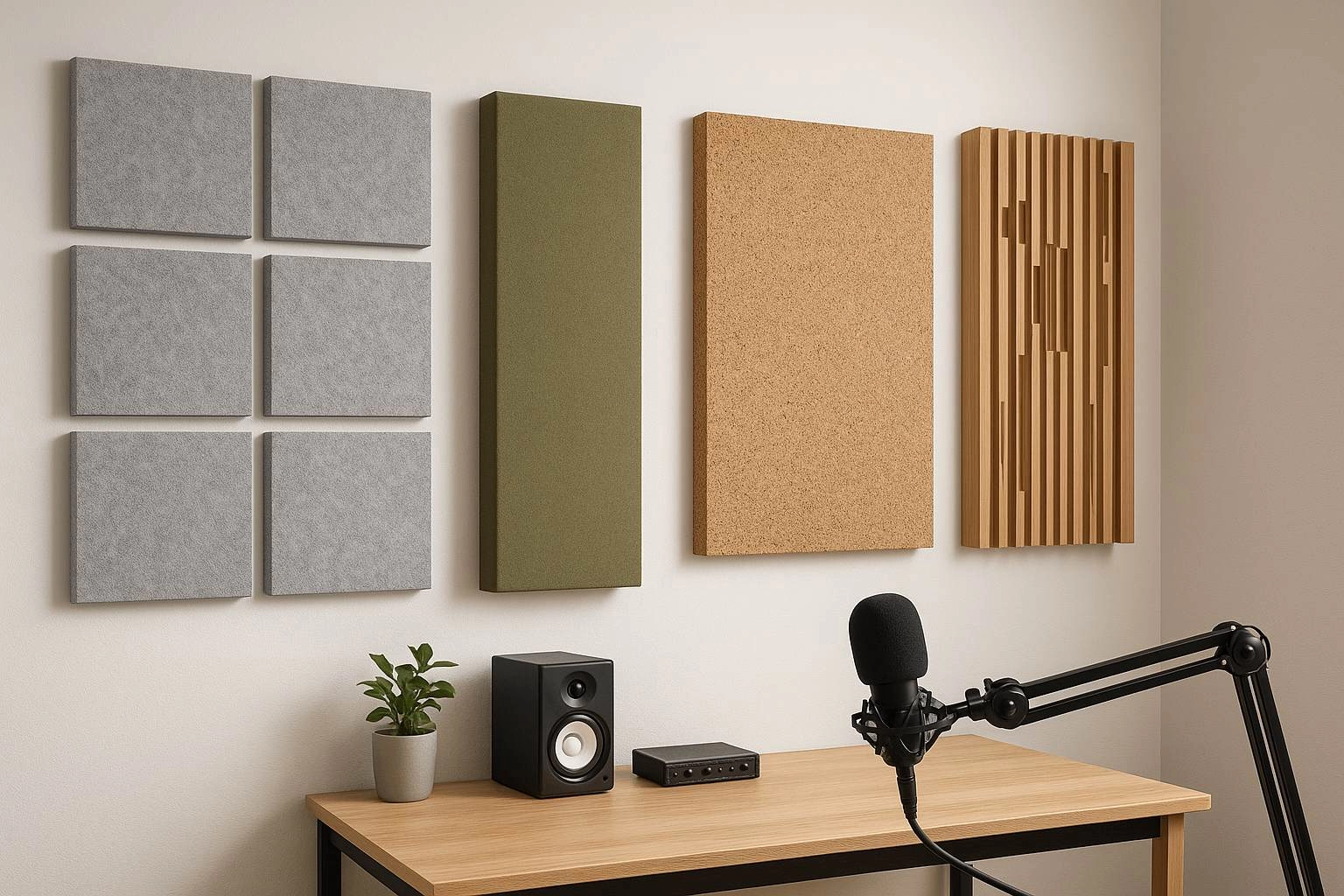
PET felt panels are among the most popular eco-friendly options, combining sustainability with modern design flexibility.
2.2 Natural Fibers (Cotton, Hemp, Wool)
Material source: Post-industrial or post-consumer fibers
Acoustic performance: Good absorption across mid-to-high frequencies
Advantages: Biodegradable, VOC-free, renewable
Application: Recording studios, podcast rooms, classrooms, and offices
Panels made from natural fibers provide a warm, organic look while maintaining professional acoustic standards.
2.3 Bamboo and Wood Panels
Material source: Fast-growing bamboo or sustainably harvested wood
Acoustic performance: Effective when combined with internal absorptive materials or diffusion designs
Advantages: Renewable, visually appealing, strong and durable
Application: Acoustic diffusion panels, decorative wall panels, ceiling treatments
Bamboo panels, in particular, are highly sustainable due to bamboo’s rapid growth cycle and minimal environmental impact.
2.4 Cork Panels
Material source: Cork bark, harvested without killing trees
Acoustic performance: Absorbs mid-to-high frequencies and provides natural diffusion
Advantages: Renewable, biodegradable, fire-resistant, non-toxic
Application: Studio walls, ceilings, and creative design installations
Cork panels offer an excellent combination of sustainability, acoustic performance, and natural aesthetics.
3. Benefits of Using Eco-Friendly Acoustic Panels
3.1 Environmental Responsibility
Choosing sustainable materials reduces waste, conserves natural resources, and lowers carbon emissions associated with production. Studios can align with global sustainability goals while maintaining professional audio standards.
3.2 Healthier Studio Environment
Eco-friendly panels are often VOC-free and non-toxic, reducing harmful emissions in enclosed studio spaces. This creates a safer environment for prolonged recording and mixing sessions.
3.3 High-Quality Acoustic Performance
Sustainable materials can deliver absorption and diffusion performance comparable to or even exceeding traditional materials. Modern design innovations have optimized natural and recycled materials for professional-grade sound control.
3.4 Versatility and Aesthetic Appeal
Eco-friendly panels are available in a variety of colors, shapes, and textures. They can be integrated seamlessly into a studio’s design, offering both functionality and visual appeal.
3.5 Long-Term Durability
Panels made from recycled PET, bamboo, and natural fibers are often highly durable, ensuring long-lasting acoustic performance and minimal replacement frequency.
4. Key Considerations When Selecting Eco-Friendly Panels
Choosing the right eco-friendly acoustic panels involves more than material selection. Here are essential factors to consider:
4.1 Acoustic Goals
Identify your studio’s acoustic needs:
Reduce echo and reverb for vocal recording
Control bass frequencies for accurate mixing
Improve speech intelligibility for podcasting
4.2 NRC Rating and Panel Thickness
NRC (Noise Reduction Coefficient): Higher values indicate better sound absorption
Panel thickness: Thicker panels improve low-frequency absorption, while thinner panels handle mid-to-high frequencies effectively
4.3 Room Size and Shape
Smaller rooms may require strategically placed panels at reflection points, while larger studios can benefit from more extensive coverage and combinations of absorption and diffusion panels.
4.4 Design and Aesthetic Integration
Eco-friendly panels can double as design elements. Consider colors, patterns, and shapes that complement the studio’s interior while optimizing sound.
4.5 Installation Method
Panels should be easy to mount without compromising sustainability. Options include adhesive, hanging systems, or modular designs for flexible positioning.
5. Popular Eco-Friendly Panel Solutions for Modern Studios
5.1 Modular PET Felt Panels
Lightweight, recyclable, and easy to install
Ideal for wall, ceiling, or partition applications
Offers customizable color and shape options
5.2 Hemp Fiber Absorption Panels
Biodegradable and renewable
Excellent mid-to-high frequency absorption
Works well in both home and commercial studios
5.3 Cork Diffusers
Natural diffusion for reflective surfaces
Adds aesthetic warmth and texture
Fire-resistant and durable
5.4 Bamboo and Wood Acoustic Panels
Provides natural diffusion and partial absorption
Strong, renewable, and visually appealing
Can be combined with internal absorptive layers for full-range performance
6. Installation Tips for Eco-Friendly Panels
6.1 Identify Reflection Points
Use the “mirror trick” to find first reflection points on walls and ceilings. Place absorption panels at these points for maximum effect.
6.2 Treat Corners with Bass Traps
Low-frequency energy accumulates in corners. Eco-friendly bass traps made from recycled or natural materials help balance bass response.
6.3 Combine Absorption and Diffusion
Mix absorption panels and diffusers to avoid overly “dead” sounding rooms while maintaining clarity.
6.4 Maintain Balanced Coverage
Target critical areas rather than covering every surface. A strategic approach ensures optimal sound control without excessive material use.
6.5 Consider Modular Solutions
Modular eco-friendly panels allow you to adjust placement as your studio evolves, maximizing both acoustic efficiency and sustainability.
7. The Future of Sustainable Acoustic Solutions
As environmental awareness grows, eco-friendly acoustic panels are becoming standard in modern studios. Advances in material science and acoustic engineering now allow:
High-performance recycled PET panels
Biodegradable fiber panels with excellent acoustic properties
Stylish, sustainable solutions suitable for professional recording and commercial spaces
Investing in eco-friendly panels positions studios as forward-thinking, socially responsible, and capable of delivering professional-grade sound without compromising the planet.
Conclusion
Eco-friendly studio acoustic panels provide a sustainable way to achieve high-quality sound in modern recording spaces. From recycled PET felt to bamboo, cork, and natural fibers, these materials offer professional-level acoustic performance while minimizing environmental impact.
By selecting the right materials, thickness, NRC rating, and placement, studios can create balanced, clear, and consistent audio environments. Beyond their acoustic benefits, eco-friendly panels also enhance aesthetics, improve indoor air quality, and demonstrate a commitment to sustainability.
For modern studios, eco-friendly acoustic treatment is not just a choice—it is a standard for professional, responsible, and high-performing audio production.




 +86 18963687089

 en
en it
it es
es hu
hu ja
ja sv
sv pt
pt ms
ms ko
ko ru
ru fr
fr de
de ar
ar