Choosing the right acoustic wall treatment is an important decision for offices, hotels, conference rooms, restaurants, and other commercial interiors. Poor acoustics can make conversations difficult to follow, increase the perception of background noise, and reduce comfort in spaces where people work, meet, or relax. At the same time, acoustic materials need to complement the interior design rather than make a room look purely functional.
Two popular options are slatted acoustic wall panels and fabric acoustic panels. Both can help control sound reflections when they are designed with suitable sound-absorbing materials, but they differ in construction, appearance, maintenance requirements, and design flexibility.
Slatted acoustic panels typically feature decorative wood or wood-look slats combined with an acoustic backing, while fabric acoustic panels generally use a fabric-covered absorptive core. These differences influence where each product works best and what buyers should consider before placing an order.
So, which is better: slatted acoustic wall panels or fabric acoustic panels? The answer depends on the room's acoustic requirements, visual style, budget, installation conditions, and long-term maintenance needs. Understanding these factors makes it easier to choose a solution that balances sound absorption with practical interior design.

What Are Slatted Acoustic Wall Panels?
Slatted acoustic wall panels are decorative wall systems designed to combine a linear architectural appearance with sound-absorbing performance. They commonly consist of narrow slats mounted over an acoustic felt backing or another absorptive layer. Some systems also incorporate a cavity behind the panels, depending on the installation method.
The visible slats may feature natural wood veneer, engineered wood, MDF with a decorative finish, or other materials designed to create a wood-like appearance. Panel designs vary in slat width, spacing, color, thickness, and backing construction.
How Do Slatted Acoustic Panels Work?
Sound waves reach the panel surface and pass through the gaps between the slats. Some of this sound energy enters the acoustic backing, where porous materials help convert sound energy into a small amount of heat through friction. This reduces the amount of sound reflected back into the room.
The effectiveness of slatted acoustic wall panels depends on several factors, including:
The type and density of the acoustic backing.
The width and spacing of the slats.
The thickness of the panel assembly.
The presence and depth of an air cavity behind the panel.
The frequency of the sound being absorbed.
The total surface area covered by the panels.
Not every decorative slat wall provides meaningful sound absorption. Buyers should check acoustic test data for the complete panel system instead of assuming that the wood slats alone deliver acoustic benefits.
Where Are Slatted Acoustic Wall Panels Commonly Used?
Wood slat acoustic panels are particularly suitable for interiors where appearance is as important as acoustic comfort. Common applications include open-plan offices, meeting rooms, hotel lobbies, reception areas, restaurants, residential living rooms, and commercial corridors.
Their linear pattern adds visual depth and can make large wall surfaces more interesting. For projects that require both decorative finishes and acoustic treatment, slatted acoustic wall panels offer a way to integrate these functions into one design element.
What Are Fabric Acoustic Panels?
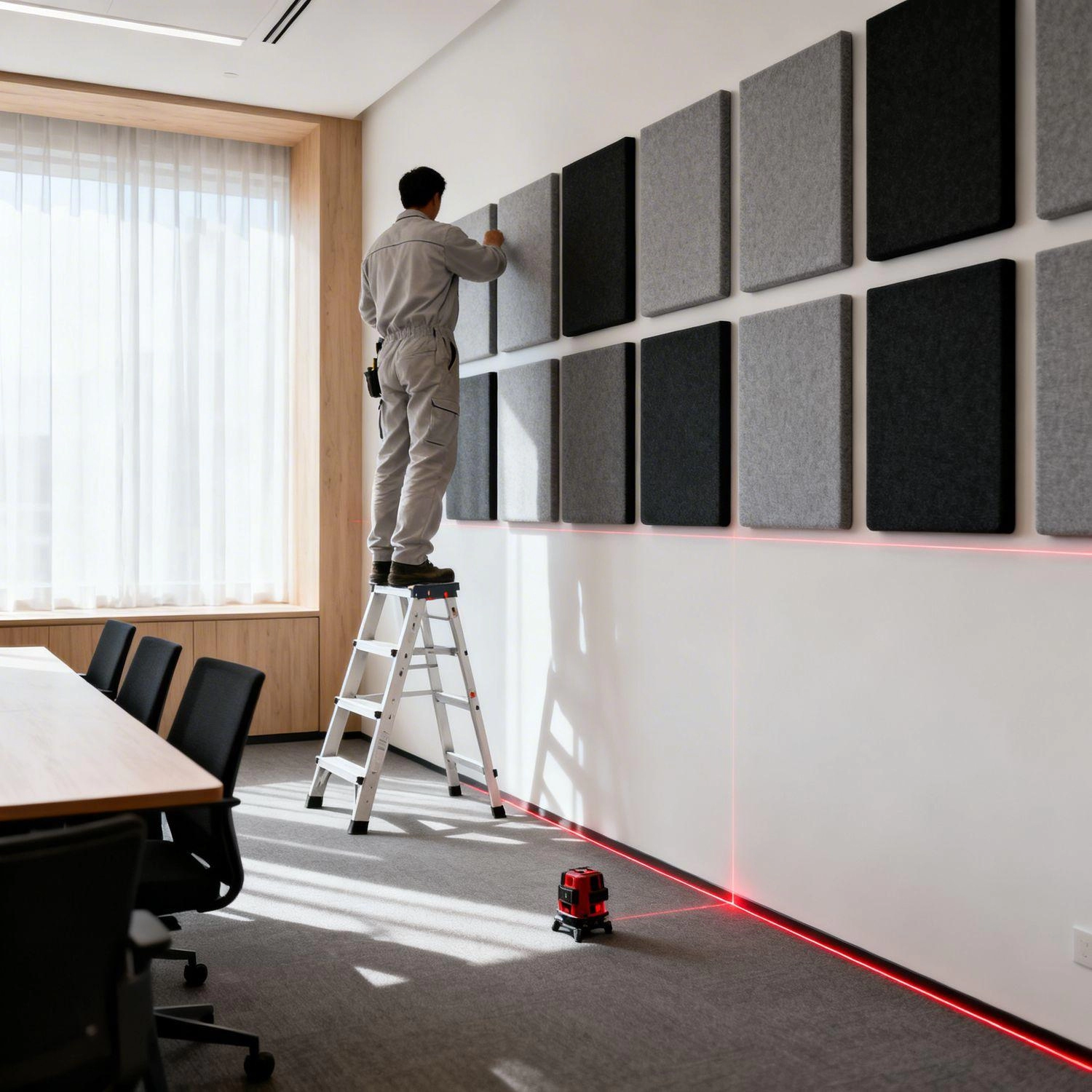
Fabric acoustic panels are sound-absorbing products that typically consist of an internal core covered with acoustically transparent fabric. The core may use fiberglass, mineral wool, polyester fiber, or other materials selected for their absorption characteristics.
The fabric provides the finished appearance, while the underlying material performs most of the sound absorption. Because the surface is generally porous, sound can pass through the fabric and enter the absorptive core.
How Do Fabric Acoustic Panels Reduce Sound Reflections?
When sound reaches a fabric acoustic panel, it passes through the outer fabric and interacts with the internal core. The porous structure creates resistance as air moves through the material, converting part of the sound energy into heat.
This process helps reduce reflected sound and can improve speech intelligibility in rooms with excessive reverberation.
The performance of fabric acoustic panels depends on the core material, panel thickness, mounting method, air gap, and frequency of the incoming sound. Fabric selection also matters because a tightly woven or acoustically unsuitable covering may restrict sound from reaching the core.
For commercial projects, buyers should review the tested acoustic performance of the complete panel rather than evaluating the fabric or core material separately.
Where Are Fabric Acoustic Panels Commonly Used?
Fabric acoustic wall panels are widely used in offices, conference rooms, classrooms, auditoriums, training rooms, call centers, and other environments where speech clarity is important.
They are available in various shapes, sizes, colors, and thicknesses. Some products can be installed as individual wall panels, while others form larger coordinated acoustic systems.
Because fabric acoustic panels can provide substantial sound absorption without introducing a prominent wood-grain pattern, they are often selected for projects where acoustic performance is the primary concern.
Slatted Acoustic Panels vs. Fabric Acoustic Panels: Key Differences
Although both product types can improve room acoustics, they are not interchangeable in every situation. The following comparison highlights the main considerations for buyers.
Comparison factor | Slatted acoustic wall panels | Fabric acoustic panels |
|---|
Appearance | Architectural slat pattern with a wood or wood-look finish | Soft, fabric-covered surface in a range of colors |
Construction | Slats combined with acoustic backing | Fabric covering over an absorptive core |
Acoustic performance | Depends on slat spacing, backing, panel assembly, and mounting | Depends on core material, thickness, fabric, and mounting |
Design role | Combines decorative wall treatment with acoustic absorption | Provides a more direct, understated acoustic treatment |
Customization | Slat dimensions, finishes, spacing, and panel layouts may be customizable | Fabric colors, panel sizes, shapes, and thicknesses may be customizable |
Maintenance | Surface dusting and finish-specific cleaning | Dust removal and fabric-appropriate cleaning |
Installation | May require alignment, cutting, and a suitable mounting system | Often installed as individual panels or modular systems |
Typical applications | Offices, hotels, reception areas, restaurants, and feature walls | Offices, meeting rooms, classrooms, studios, and presentation spaces |
The most important point is that neither product type is automatically superior in sound absorption. A well-designed fabric panel may outperform a particular slatted panel, while a properly engineered slatted acoustic system may provide the performance required for another application. The complete product specification and installation conditions determine the actual result.
1. Acoustic Performance: Which Panel Absorbs More Sound?
For buyers whose main priority is acoustic improvement, sound absorption should be one of the first factors to compare.
Fabric acoustic panels often provide a relatively straightforward approach to absorption because their porous covering allows sound to reach the absorptive core. Depending on the thickness and construction, they can be effective at reducing reverberation and improving speech clarity.
Slatted acoustic wall panels also absorb sound when designed with appropriate backing materials and panel construction. However, their performance can vary considerably because the visible slats, gaps, backing, and mounting arrangement work together as a complete system.
Understand NRC and Frequency-Specific Performance
The Noise Reduction Coefficient (NRC) is a commonly used rating that summarizes sound absorption across selected frequencies. It can help buyers compare products, but it should not be treated as a complete description of acoustic performance.
Sound absorption varies by frequency. A panel may perform differently at low, middle, and high frequencies, which is important when addressing speech, equipment noise, or other sound sources.
When comparing slatted acoustic panels with fabric acoustic panels, review the following information:
The reported NRC or equivalent absorption data.
Frequency-specific sound absorption results, when available.
The tested panel thickness and backing construction.
Whether an air cavity was used during testing.
The mounting method and amount of exposed surface area.
These details help prevent misleading comparisons between products tested under different conditions.
Which Is Better for Reducing Office Echo?
Both panel types can help reduce office echo. Fabric acoustic panels may be a practical choice when the primary goal is to add absorptive surface area with a relatively simple appearance.
Slatted acoustic wall panels may be more attractive when the project also requires a decorative feature wall. In either case, the quantity and distribution of acoustic treatment are important. Installing a few panels in an otherwise highly reflective room may not provide enough absorption to create a noticeable improvement.
For larger offices, a combination of wall panels, ceiling absorbers, carpeting, and upholstered furniture may be more effective than relying on a single product.
2. Appearance and Interior Design
Acoustic treatment is often a visible part of commercial interior design. The right choice should support the intended atmosphere while meeting practical performance requirements.
The Design Advantages of Slatted Acoustic Wall Panels
Slatted acoustic wall panels create a distinctive linear pattern that adds texture and depth to interior walls. Wood finishes can make offices and commercial spaces feel warmer, while darker finishes may complement contemporary, industrial, or minimalist interiors.
These panels can be used as full-height wall features, reception backdrops, meeting room accents, or decorative sections within larger open spaces.
For hotels, restaurants, and corporate offices, the ability to integrate acoustic treatment into a prominent design feature can be a significant advantage. Instead of treating acoustic panels as separate technical additions, designers can incorporate them into the overall material palette.
The Design Advantages of Fabric Acoustic Panels
Fabric acoustic panels provide a different aesthetic. Their smooth, soft surfaces can create a clean appearance that fits easily into professional interiors.
A wide range of fabric colors allows designers to coordinate panels with company branding, furniture, wall finishes, or existing interior themes. Some systems also support geometric layouts, custom shapes, or printed coverings, depending on the manufacturer.
Fabric panels can be particularly useful in meeting rooms and offices where a consistent, understated finish is preferred.
Which Option Is More Flexible for Interior Design?
The answer depends on the desired result. Slatted acoustic panels are a strong choice for projects that emphasize wood textures, architectural details, and feature walls. Fabric acoustic panels may offer greater flexibility when color coordination, soft surfaces, or geometric arrangements are the main priorities.
For some commercial interiors, combining both materials can create a balanced result. Slatted panels can provide visual interest on selected walls, while fabric acoustic panels can deliver additional absorption in areas where performance is the primary concern.
3. Cost Considerations: Which Is More Budget-Friendly?
The cost of slatted acoustic wall panels and fabric acoustic panels varies by product specification, order quantity, customization requirements, and installation complexity. It is therefore difficult to declare one option universally cheaper.
Factors Affecting the Cost of Slatted Acoustic Panels
The price of slatted acoustic panels may be influenced by the type of slat material, surface finish, backing construction, panel dimensions, and mounting system.
Natural wood veneer and specialized finishes may have different costs from standard engineered finishes. Custom slat spacing, non-standard colors, special dimensions, and project-specific manufacturing can also affect the final quotation.
Installation should be considered as part of the total project budget. Detailed alignment, wall preparation, cutting, and finishing around corners or outlets may require additional labor.
Factors Affecting the Cost of Fabric Acoustic Panels
Fabric acoustic panels vary in price according to the core material, panel thickness, frame construction, fabric quality, dimensions, and mounting method.
Standard modular panels may be straightforward to specify, while custom shapes, premium fabrics, unusual sizes, or specialized performance requirements may increase the overall cost.
Large projects may also benefit from purchasing efficiencies, depending on the supplier's production capabilities and order requirements.
Compare Total Project Cost, Not Just Panel Price
When comparing acoustic wall panel prices, buyers should consider more than the initial product quotation. A useful comparison includes:
Panel price and required quantity.
Installation labor and mounting accessories.
Wall preparation and finishing.
Customization and sample costs, where applicable.
Cleaning and maintenance requirements.
Replacement needs over the expected service life.
The most economical solution is the one that meets the project's acoustic and design requirements without introducing unnecessary installation or maintenance costs.
4. Durability and Maintenance
Commercial acoustic panels need to remain presentable under regular use. Their long-term condition depends on material quality, location, cleaning methods, and exposure to physical contact.
Maintaining Slatted Acoustic Wall Panels
Wood slat acoustic panels generally require routine dust removal and cleaning appropriate to their surface finish. Their grooves and gaps may collect dust, so the panel design and accessibility should be considered during product selection.
Natural wood veneer and other finishes may have specific cleaning restrictions. Excessive moisture or unsuitable cleaning agents can damage some surfaces, so the manufacturer's maintenance instructions should be followed.
In high-traffic areas, buyers should also consider the resistance of the slats and edges to scratches, impacts, and everyday wear.
Maintaining Fabric Acoustic Panels
Fabric acoustic panels may require vacuuming, spot cleaning, or other care depending on the fabric type and internal construction. Stains can be more noticeable on light-colored surfaces, while frequent physical contact may lead to visible wear.
For reception areas, classrooms, and shared offices, buyers should ask whether the fabric is suitable for the expected cleaning frequency and whether replacement coverings or individual panels are available.
Some fabric acoustic products offer removable or replaceable covers, but this feature should be confirmed for the specific product.
Which Is Easier to Maintain?
Neither option is always easier to maintain. Slatted panels may be more convenient where wipe-clean surfaces are desirable, provided the selected finish supports that cleaning method. Fabric panels may be suitable for spaces with limited physical contact and a well-established cleaning routine.
The best choice depends on the environment, surface finish, cleaning procedures, and expected level of wear.
5. Installation Requirements
Installation affects both the finished appearance and acoustic performance of a wall panel system. Buyers should confirm the installation method before finalizing product dimensions or project schedules.
Installing Slatted Acoustic Wall Panels
Slatted acoustic panels often require careful measurement and alignment to maintain consistent spacing and a continuous visual pattern. The installation process may involve wall preparation, mounting battens or framing, fixing panels, cutting around obstacles, and finishing exposed edges.
The weight and dimensions of the panels, wall substrate, and fixing method should all be considered. Electrical outlets, switches, doors, and corners may require additional planning to avoid uneven cuts or visible gaps.
Some slatted panel systems can be installed by experienced contractors, while more complex layouts may benefit from professional installation.
Installing Fabric Acoustic Panels
Fabric acoustic panels are often supplied as individual units or modular systems. Depending on the design, they may be mounted using clips, mechanical fixings, adhesives, or dedicated hanging systems.
Modular products can simplify layout changes and replacement, although installation requirements vary between manufacturers.
The wall surface must still be suitable for the selected fixing method, and panel placement should be planned to provide adequate acoustic coverage.
Does Installation Affect Sound Absorption?
Yes. The performance of an acoustic panel can change according to how it is mounted. Backing layers, air gaps, fixing systems, and the amount of exposed absorptive surface may all influence the result.
Buyers should follow the installation configuration associated with the product's acoustic test data whenever possible. Changing the backing, mounting depth, or assembly may produce different results from those reported in the original test.
6. Which Panels Are Better for Different Commercial Applications?
The most suitable acoustic wall panel depends on how a space is used and which problems the project needs to solve.
Open-Plan Offices
Open-plan offices often require a combination of sound absorption and visual organization. Slatted acoustic wall panels can provide a decorative treatment along large walls, while fabric panels can add absorption to selected work or collaboration zones.
Because noise can travel across open spaces, wall panels may need to be combined with ceiling absorbers, desk screens, or other treatments.
Meeting and Conference Rooms
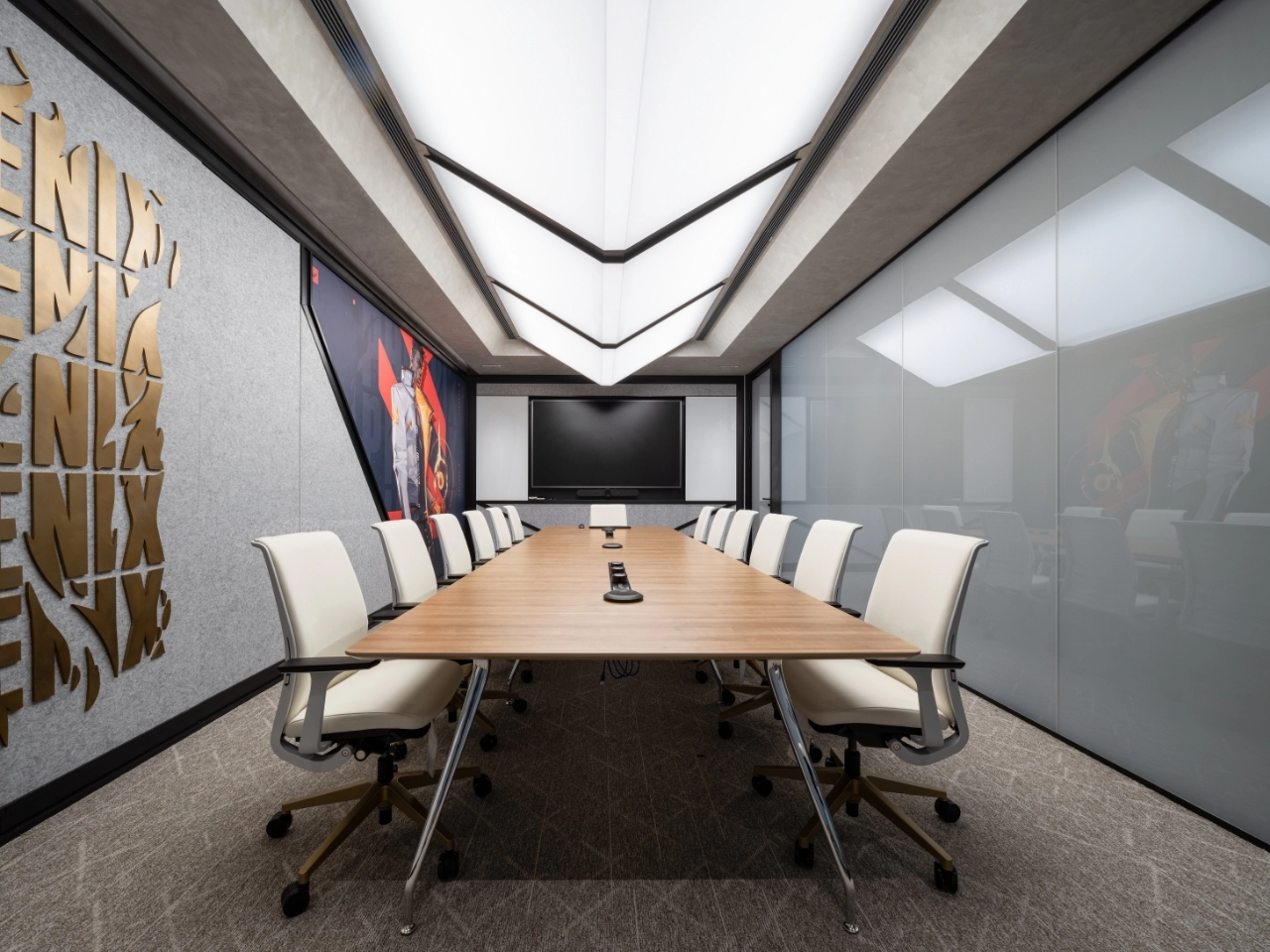
Meeting rooms benefit from acoustic treatment that supports clear speech. Fabric acoustic panels can be useful where speech absorption and controlled reverberation are priorities.
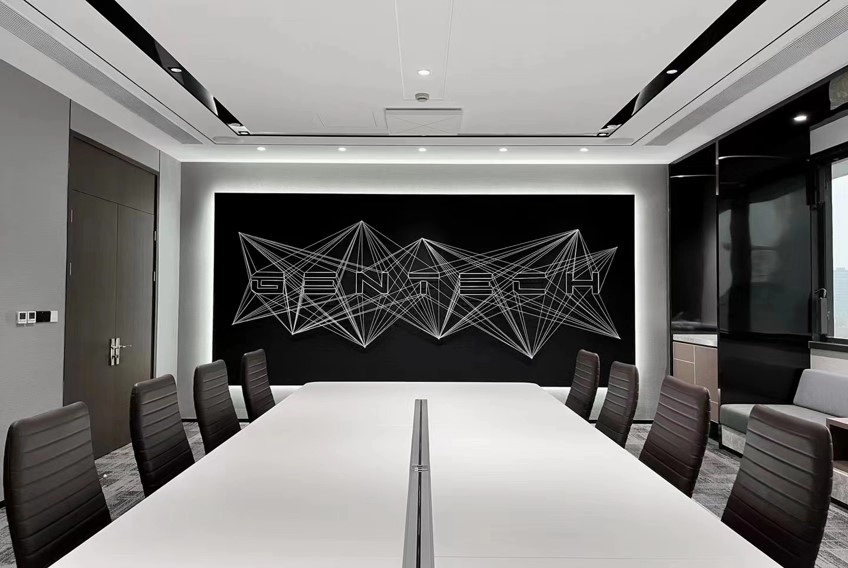
Slatted acoustic wall panels may be preferable when the meeting room also serves as a client-facing space that requires a distinctive interior finish. The final decision should be based on measured or documented acoustic performance rather than appearance alone.
Hotels and Reception Areas
Hotels and reception areas often need to balance appearance, durability, and comfort. Slatted acoustic wall panels can complement wood furniture, decorative lighting, and architectural features while helping manage sound reflections when appropriately designed.
Fabric panels can provide additional absorption in locations where a softer appearance or specific color scheme is preferred.
Restaurants and Hospitality Spaces
Restaurants can be acoustically challenging because conversations, tableware, equipment, and customer movement create overlapping sound sources. Excessive reverberation may make conversations difficult even when the overall sound level is not unusually high.
Both slatted acoustic panels and fabric acoustic panels can contribute to sound absorption. However, food service environments also require attention to cleaning, moisture exposure, and relevant fire-safety requirements.
The selected products should be appropriate for the intended location and maintenance conditions.
Residential Interiors
In residential spaces, slatted acoustic panels are often selected for living rooms, media rooms, and feature walls where decorative wood textures are desired. Fabric acoustic panels may suit home offices, music rooms, or other spaces where a softer appearance is preferred.
For home theaters or music rooms, buyers should assess the full acoustic design rather than assume that wall panels alone will provide sound isolation or complete room treatment.
7. Questions to Ask Before Buying Acoustic Wall Panels
Before purchasing slatted acoustic wall panels or fabric acoustic panels, buyers should establish the project's requirements and verify that the proposed products can meet them.
What Acoustic Performance Is Required?
Determine whether the main goal is to reduce reverberation, improve speech intelligibility, or address another acoustic issue. If sound transmission between rooms is the primary concern, additional sound insulation measures may be necessary.
Are Test Reports Available?
Ask for relevant acoustic test reports and confirm the exact panel construction, backing, mounting method, and thickness used in the test. This makes it easier to compare products fairly.
Can the Panels Be Customized?
For commercial projects, customization may involve dimensions, finishes, colors, slat spacing, panel layouts, or fabric selection. Confirm the available options, minimum order quantities, lead times, and any associated costs before committing to a specification.
Do the Panels Meet Project Requirements?
Check applicable fire-performance requirements, installation instructions, material documentation, and maintenance recommendations. These factors can be especially important for offices, hotels, educational facilities, and other commercial buildings.
Are Samples Available?
Samples can help buyers evaluate surface texture, color, finish quality, and how the product coordinates with other materials. However, a small sample cannot demonstrate the acoustic performance of a complete installation. Technical documentation should be reviewed separately.
How to Make the Final Decision
Choosing between slatted acoustic wall panels and fabric acoustic panels is not simply a matter of selecting the product with the most attractive appearance or the lowest initial price. Both can help improve acoustic comfort, but their suitability depends on the room, the panel construction, the required performance, and the project budget.
Slatted acoustic panels are worth considering when a project requires a decorative wood-style finish alongside sound absorption. They work particularly well as feature walls in offices, hotels, reception areas, and other commercial interiors where architectural appearance is important.
Fabric acoustic panels are often a practical option when the priority is adding absorptive surface area with flexible color choices and a relatively understated appearance. They can be especially useful in meeting rooms, classrooms, offices, and presentation spaces where speech clarity matters.
For projects with multiple acoustic challenges, a combination of slatted and fabric acoustic panels may offer a more balanced solution. Buyers should compare documented acoustic performance, material specifications, installation requirements, maintenance needs, and total project cost before making a final selection.
When evaluating options for commercial interiors, ROYDAA can be considered as part of the process of exploring wood slat wall panel solutions that align with the project's design direction and practical requirements. By assessing the intended application and acoustic objectives first, buyers can make a more informed decision and select wall treatments that support both the appearance and everyday use of the finished space.




 +86 18963687089


 en
 it
 es
 hu
 ja
 sv
 pt
 ms
 ko
 ru
 fr
 de
 ar