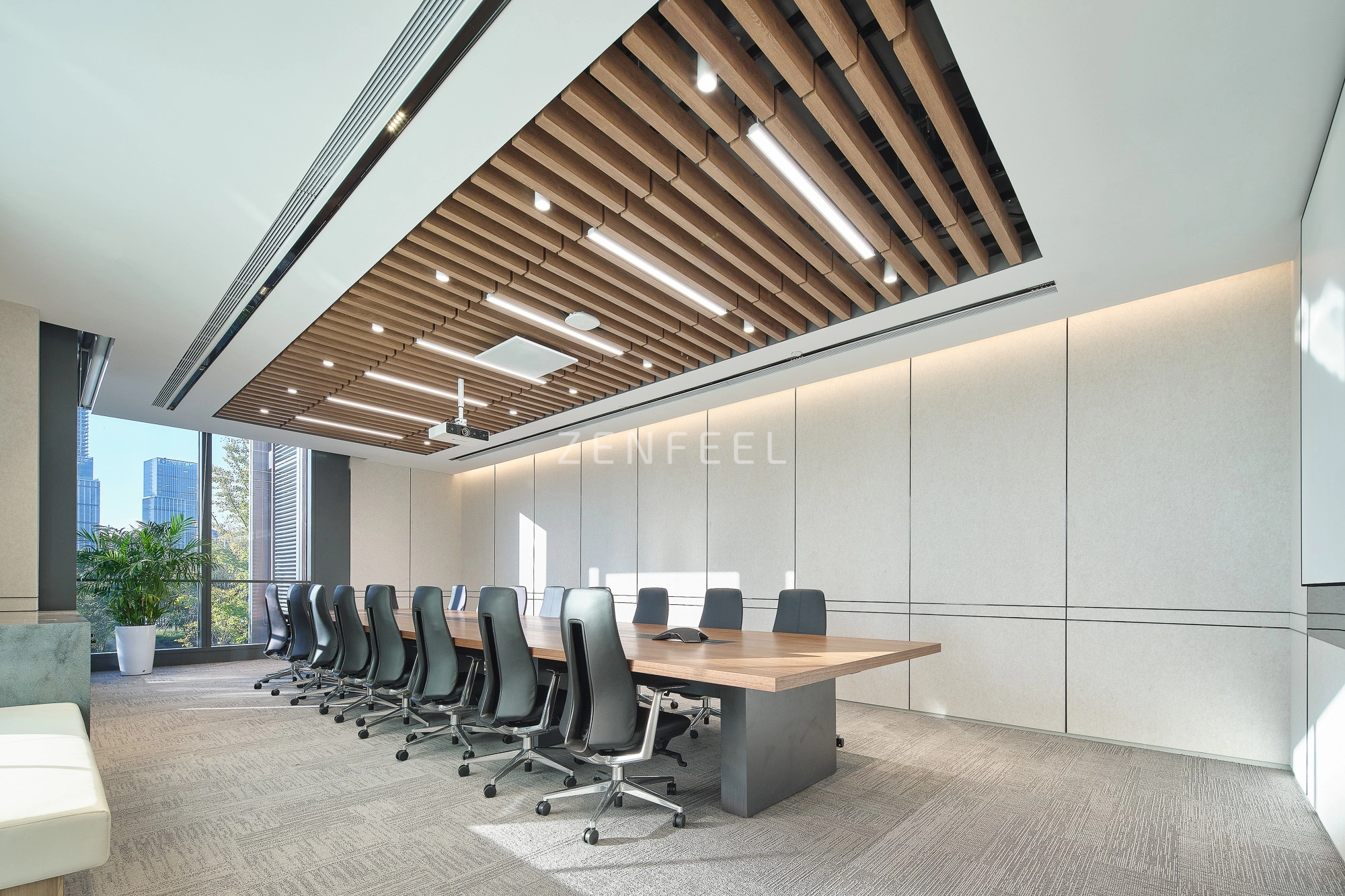
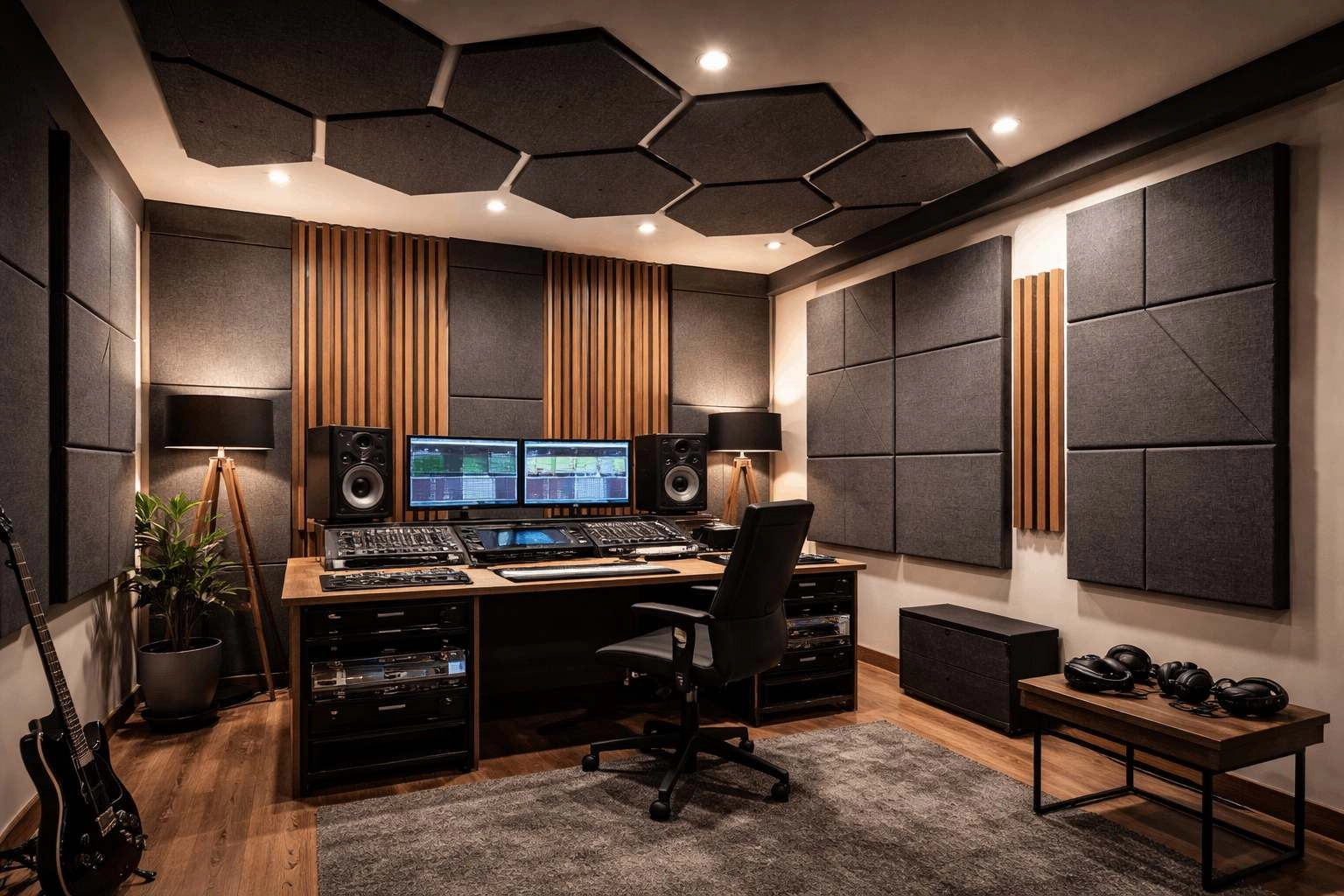
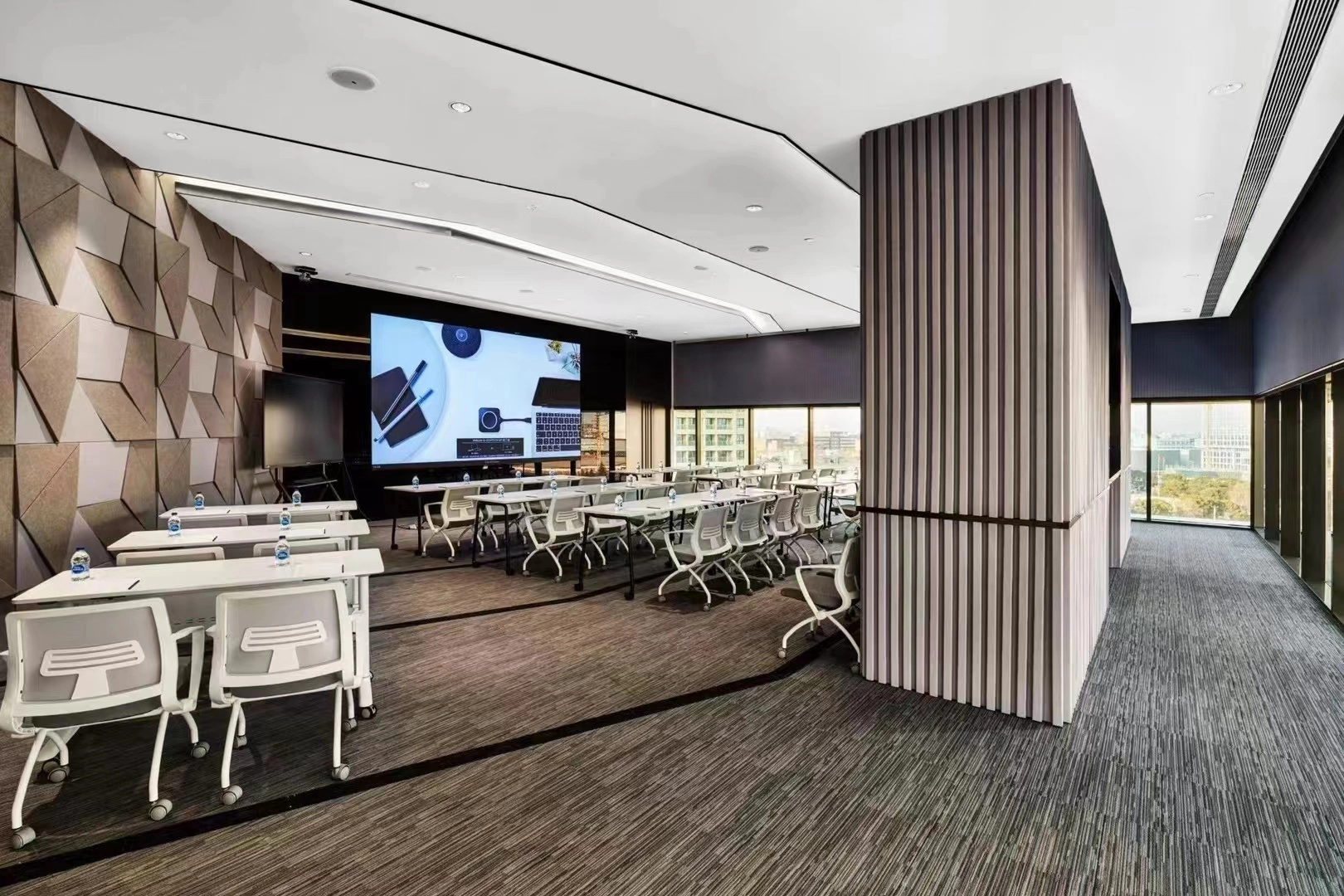
Large commercial workspaces are designed to support communication, collaboration, and efficient use of space. However, the same open layouts that make modern offices flexible can also create significant acoustic challenges. Conversations travel across large areas, phone calls overlap, equipment generates constant background noise, and hard surfaces reflect sound throughout the room. Without an effective acoustic strategy, even a well-designed office can become distracting and uncomfortable.
This is where office acoustic panels can make a meaningful difference. Rather than simply trying to make a workplace quieter, a well-planned acoustic treatment helps control reverberation, improve speech clarity, reduce unwanted sound reflections, and create a more comfortable environment for employees and visitors.
For large commercial projects, however, selecting acoustic panels is not as simple as choosing an attractive product from a catalog. The size and layout of the workspace, acoustic requirements, installation method, material performance, fire safety, design objectives, and project budget all need to be considered together.
This guide explains the key factors commercial buyers, architects, interior designers, contractors, and facility managers should evaluate when selecting office acoustic panels for large workspaces.
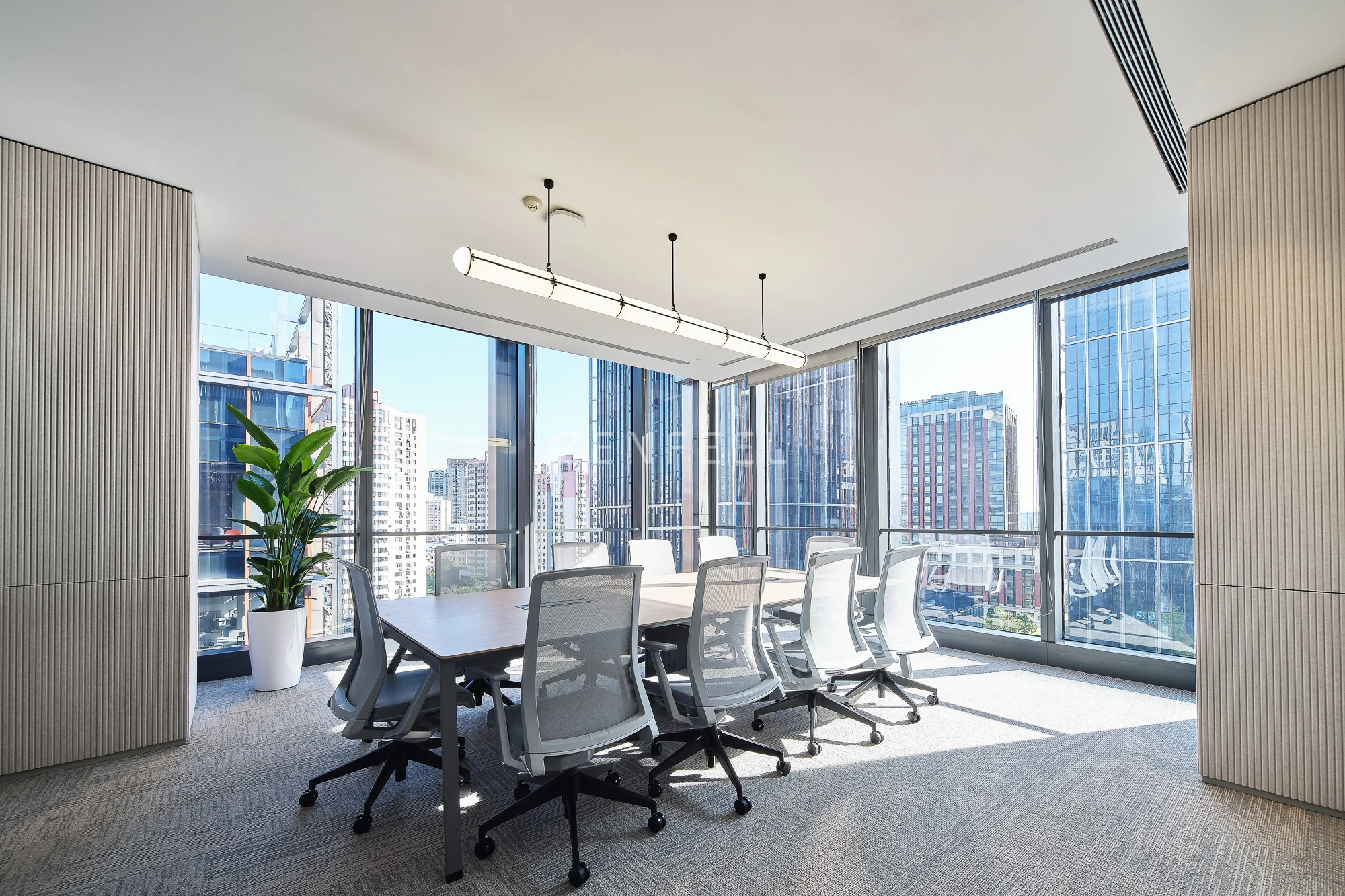
Why Large Commercial Workspaces Need Better Acoustic Control
Acoustic problems become more noticeable as office spaces become larger and more open.
A small private office may have relatively limited sound reflection. In contrast, a large open-plan workspace can contain hundreds or thousands of square meters of floor area, high ceilings, glass partitions, concrete surfaces, exposed structures, and other hard materials.
These surfaces reflect sound rather than absorbing it. As a result, speech and background noise can continue traveling through the space.
Common problems include:
Excessive reverberation
Poor speech intelligibility
Distracting conversations
Increased background noise
Difficulty concentrating
Reduced meeting quality
Lack of acoustic privacy
Uncomfortable noise levels
The purpose of acoustic treatment is therefore not to eliminate every sound. Offices need a certain level of interaction and communication. The objective is to create an acoustic environment where necessary communication is clear while unnecessary noise is controlled.
This distinction is important when selecting office acoustic panels for a commercial project.
1. Start With the Workspace Layout
Before comparing acoustic panel products, examine the actual layout of the office.
A large commercial workspace may contain several different functional areas, such as:
Open workstations
Private offices
Meeting rooms
Conference rooms
Collaboration areas
Reception areas
Breakout spaces
Corridors
Phone booths
Training rooms
Each area has different acoustic requirements.
For example, an open workstation area may need broad sound absorption to reduce general background noise. A conference room may require more targeted acoustic treatment to improve speech clarity. A reception area may prioritize both acoustic comfort and visual appearance.
This means that one type of acoustic panel does not necessarily need to be used throughout the entire building.
A better approach is to divide the project into acoustic zones and determine the requirements of each area before selecting products.
2. Understand Sound Absorption Performance
One of the most important considerations when choosing office acoustic panels is their sound absorption performance.
Acoustic panels absorb sound energy instead of allowing it to reflect repeatedly around a room. Their effectiveness depends on factors such as material composition, thickness, density, surface structure, and installation method.
Buyers should look beyond marketing terms such as "high performance" and review actual acoustic test data where available.
The Noise Reduction Coefficient, commonly known as NRC, is one measurement that can help buyers compare the sound absorption performance of acoustic materials.
However, NRC should not be considered the only factor.
Different spaces may have different frequency requirements. Speech-related noise and lower-frequency mechanical noise, for example, may require different acoustic strategies.
For large commercial workspaces, it is better to evaluate acoustic performance based on the specific characteristics of the room rather than selecting panels solely because they have a particular rating.
3. Consider Panel Placement, Not Just Panel Quality
Even high-quality acoustic panels may provide limited results if they are installed in the wrong locations.
In large offices, sound can travel across open spaces and reflect from walls, ceilings, floors, glass, and other surfaces. Strategic placement is therefore essential.
Common installation locations include:
Walls
Wall-mounted acoustic panels are useful for controlling sound reflections from large vertical surfaces. They can also become part of the interior design.
Ceilings
Ceiling-mounted or suspended acoustic panels can be highly effective in large open offices, especially when ceilings are high or the workspace has a large unobstructed floor area.
Partitions
Acoustic panels can be integrated into workstation dividers or office partitions, helping separate working zones while providing sound absorption.
Suspended Baffles
Acoustic baffles are particularly useful in spaces with exposed ceilings. Their vertical or suspended configuration increases the amount of acoustic treatment without requiring the entire ceiling to be covered.
For large projects, combining several installation methods can often provide better results than relying exclusively on wall panels.
4. Choose the Right Acoustic Panel Material
Material selection is another important part of the purchasing process.
Different acoustic materials offer different combinations of sound absorption, durability, appearance, environmental performance, and installation flexibility.
Common materials include:
For modern commercial interiors, PET acoustic panels have become increasingly popular because they combine sound absorption with lightweight construction and design flexibility.
Many PET panels are manufactured using recycled polyester fibers, making them attractive for projects that prioritize sustainability.
They can also be cut into different shapes, produced in various colors, and used for wall, ceiling, partition, and decorative applications.
For businesses working toward sustainable building goals, PET office acoustic panels can therefore offer a practical combination of acoustic performance and environmental considerations.
5. Think About the Size of the Space
The larger the workspace, the more important the overall acoustic treatment strategy becomes.
A common mistake is to focus on individual panel specifications without considering how much acoustic treatment the room actually requires.
For a large commercial office, buyers should consider:
A large office with extensive glass walls and exposed concrete may require significantly more acoustic treatment than a similar-sized office containing carpets, upholstered furniture, ceiling tiles, and other sound-absorbing surfaces.
The goal should be to determine the overall acoustic requirement first and then select an appropriate quantity and configuration of panels.
6. Match the Panels to the Interior Design
Commercial offices increasingly treat acoustics and interior design as part of the same strategy.
Acoustic products do not have to look industrial or purely functional. Modern office acoustic panels are available in a wide range of colors, shapes, textures, and configurations.
For example, a company may choose neutral tones for a professional corporate environment or use different colors to define collaboration zones.
Geometric panels can become a visual feature, while custom-cut panels can follow a company's architectural concept.
For branded environments, customized acoustic panels can potentially incorporate:
Corporate colors
Custom shapes
Patterns
Decorative graphics
Logos
Specific dimensions
This is particularly useful for reception areas, conference rooms, creative offices, and customer-facing spaces.
The best acoustic solution should therefore improve the room acoustically without compromising the overall architectural concept.
7. Consider Fire Safety Requirements
Fire performance is an important consideration for commercial buildings.
Office acoustic panels are installed in environments where fire safety requirements may apply to interior materials. Depending on the building, location, and local regulations, different fire classifications or certifications may be required.
Before placing a large order, buyers should confirm:
Applicable fire safety standards
Product fire classification
Available test reports
Certification documentation
Installation requirements
This is especially important for large commercial developments, office towers, public buildings, and projects managed by professional contractors.
Do not assume that an acoustic panel suitable for one market will automatically meet the requirements of another. Fire regulations vary between countries and regions.
A reliable supplier should be able to provide relevant technical documentation for the product being offered.
8. Evaluate Durability and Maintenance
Commercial offices are used every day, often by hundreds of people. Acoustic panels therefore need to withstand regular use.
Durability considerations include:
Resistance to deformation
Surface durability
Color stability
Edge quality
Resistance to everyday impact
Ease of cleaning
Long-term structural stability
Maintenance requirements should also be considered during the purchasing process.
In high-traffic areas such as corridors, shared workspaces, and reception areas, panels may be exposed to more contact than those installed in private offices.
Choosing durable materials can reduce replacement frequency and help maintain the appearance of the workspace over time.
9. Consider Installation Efficiency
Large commercial projects often operate under strict construction schedules. Installation time can therefore have a direct impact on project cost and completion.
When evaluating office acoustic panels, buyers should consider how the products will be installed.
Questions to ask include:
Does the product require specialized tools?
Can it be installed directly onto walls?
Are suspension systems included?
Can panels be cut or adjusted on site?
Is professional installation required?
Can damaged panels be replaced individually?
Lightweight PET panels, for example, can be easier to handle than some heavier acoustic materials.
For large-scale projects, simple installation can help reduce labor requirements and make future modifications easier.
10. Look for Customization Options
Large commercial offices rarely have identical layouts.
Architectural dimensions, furniture arrangements, ceiling heights, and design concepts can vary significantly between projects. Standard-size panels may not always provide the best solution.
Customization can include:
Panel dimensions
Thickness
Color
Shape
Surface pattern
Edge design
Mounting method
Printed graphics
For architects and interior designers, customization provides more freedom to integrate acoustic treatment into the overall design.
For commercial buyers, it can also simplify procurement when one supplier can provide multiple panel configurations for different areas of the same project.
11. Check Sustainability Credentials
Sustainability is becoming increasingly important in commercial office construction.
If environmental responsibility is part of the project specification, buyers should examine more than whether a product is simply described as "eco-friendly."
Consider asking suppliers about:
PET acoustic panels made from recycled polyester can be an attractive option for sustainable workplace projects.
However, sustainability should be evaluated alongside acoustic performance, durability, safety, and overall product quality.
A genuinely effective green solution needs to perform well throughout its service life.
12. Compare Total Project Cost
Price per panel is not the same as total project cost.
When comparing different office acoustic panels, buyers should consider the complete cost structure.
This may include:
Product price
Customization costs
Shipping
Installation
Mounting hardware
Maintenance
Replacement costs
A cheaper panel may become more expensive if it requires complicated installation or frequent replacement.
Likewise, a higher-quality panel may provide better long-term value if it offers greater durability, easier installation, and more consistent acoustic performance.
For commercial projects, total cost of ownership is often a more useful purchasing metric than initial unit price.
13. Work With an Experienced Acoustic Panel Manufacturer
The supplier can have a major influence on the success of a large acoustic project.
Rather than choosing a supplier based only on price, commercial buyers should evaluate the manufacturer's production capabilities and technical support.
Important questions include:
How long has the manufacturer produced acoustic panels?
Can they support large-volume orders?
Are custom specifications available?
Can they provide samples?
Can they provide acoustic test data?
What quality control procedures are used?
What are the typical production lead times?
Can they support international projects?
An experienced manufacturer should be able to help buyers understand product specifications and recommend suitable configurations based on project requirements.
For large projects, communication and production consistency can be just as important as the initial product quotation.
Common Mistakes When Buying Office Acoustic Panels
Choosing Based Only on Appearance
A visually attractive panel is not necessarily an effective acoustic solution.
Design should be considered together with sound absorption, material quality, and installation requirements.
Focusing Only on Price
The cheapest product may not provide the best long-term value.
Consider performance, durability, installation, and maintenance costs before making a decision.
Using the Same Solution Everywhere
Different rooms have different acoustic requirements. A conference room, open workspace, and reception area should not necessarily receive identical treatment.
Ignoring Installation
Panel placement and mounting methods can significantly affect acoustic performance.
Ordering Without Samples
For large projects, product samples can help buyers evaluate color, texture, thickness, construction quality, and overall appearance before committing to a large order.
A Practical Buying Checklist
Before purchasing office acoustic panels for a large commercial workspace, buyers can use the following checklist:
Acoustic Performance
Does the product provide suitable sound absorption?
Is acoustic test data available?
Is the panel appropriate for the room's noise characteristics?
Material
Design
Are multiple colors and sizes available?
Can the panels be customized?
Can the design integrate with the existing interior?
Safety
Installation
Can the panels be installed efficiently?
Are mounting accessories available?
Can individual panels be replaced if necessary?
Supplier
Does the manufacturer have sufficient production capacity?
Can they provide samples and technical documents?
Can they support customized and large-volume orders?
Reviewing these factors before purchasing can significantly reduce the risk of choosing an unsuitable product.
Conclusion
Selecting the best office acoustic panels for large commercial workspaces requires more than comparing product prices or choosing the most attractive design. A successful acoustic solution should respond to the actual characteristics of the workspace, including its size, layout, ceiling height, surface materials, noise sources, and intended use.
Buyers should evaluate sound absorption performance, panel materials, installation methods, durability, fire safety, sustainability, customization options, and total project cost. For large commercial projects, it is also important to work with an experienced acoustic panel manufacturer capable of providing consistent quality, technical documentation, customization, and reliable production support.
PET acoustic panels can be particularly suitable for modern commercial environments because they combine effective sound absorption with lightweight construction, design flexibility, and the potential use of recycled materials. When correctly specified and strategically installed, they can help transform noisy open spaces into more comfortable and functional workplaces.
Ultimately, the best office acoustic panel is not simply the product with the highest specification or lowest price. It is the solution that delivers the right balance of acoustic performance, design, durability, sustainability, installation efficiency, and long-term value for the specific commercial project.




 +86 18963687089

 en
en it
it es
es hu
hu ja
ja sv
sv pt
pt ms
ms ko
ko ru
ru fr
fr de
de ar
ar