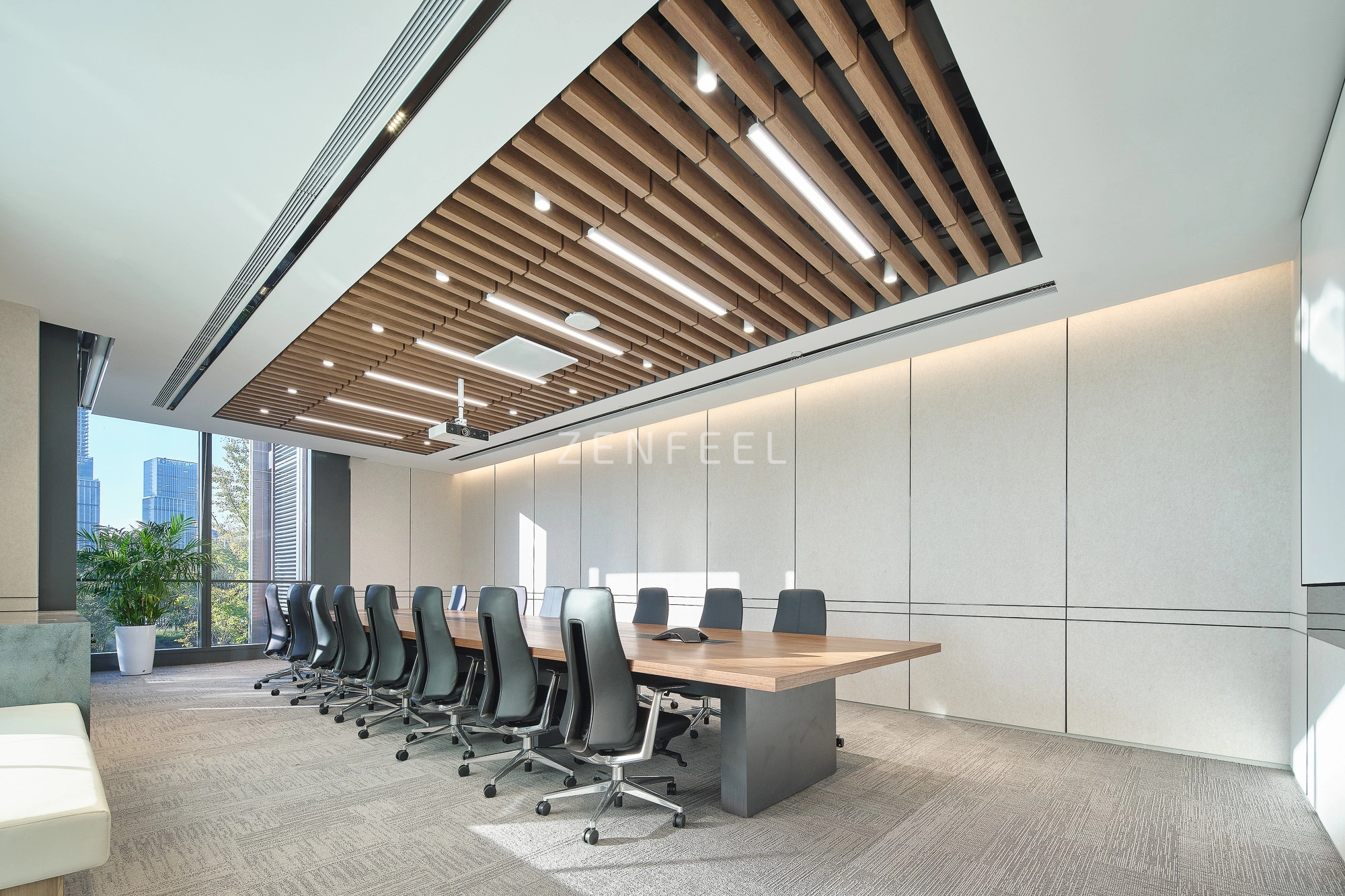
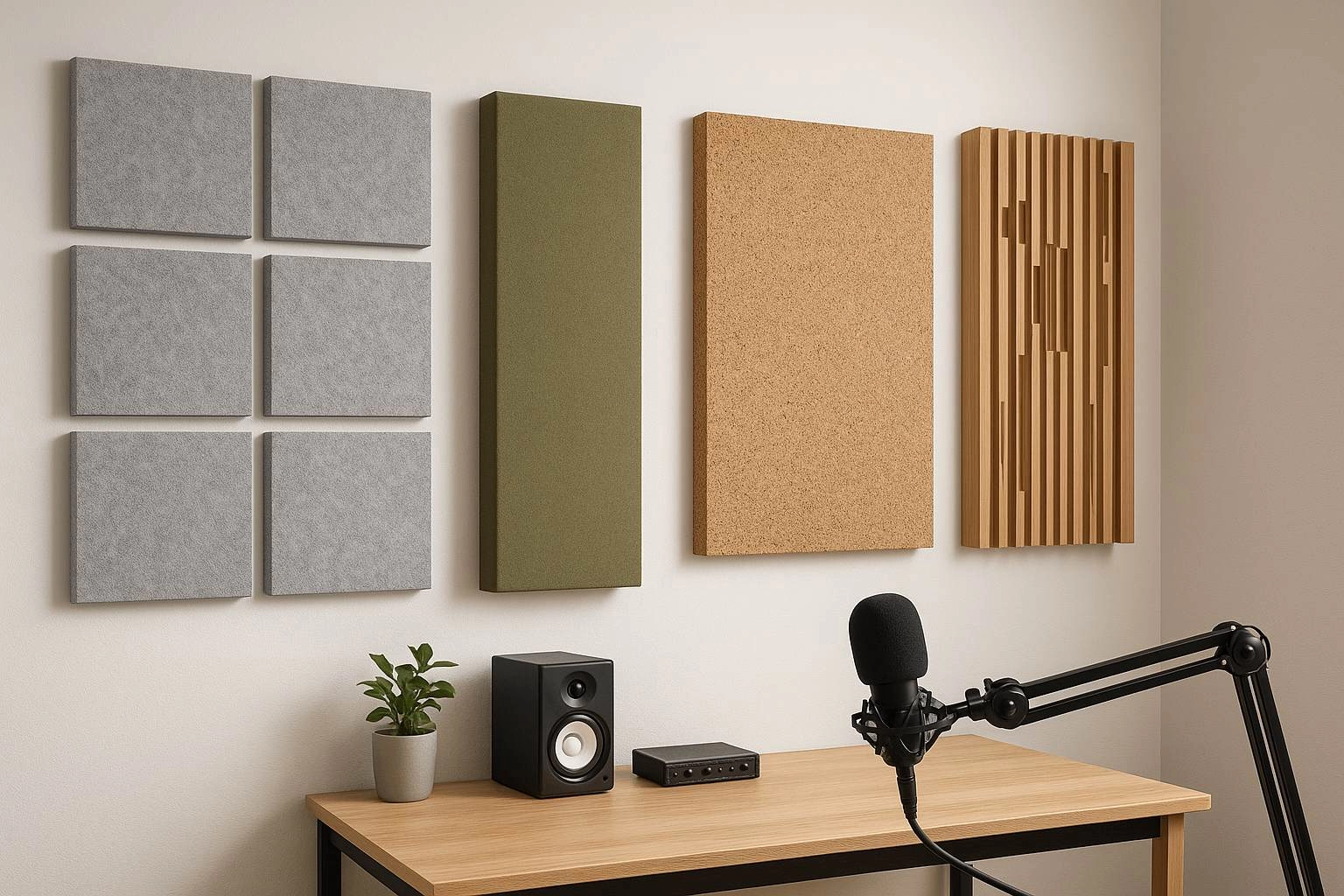
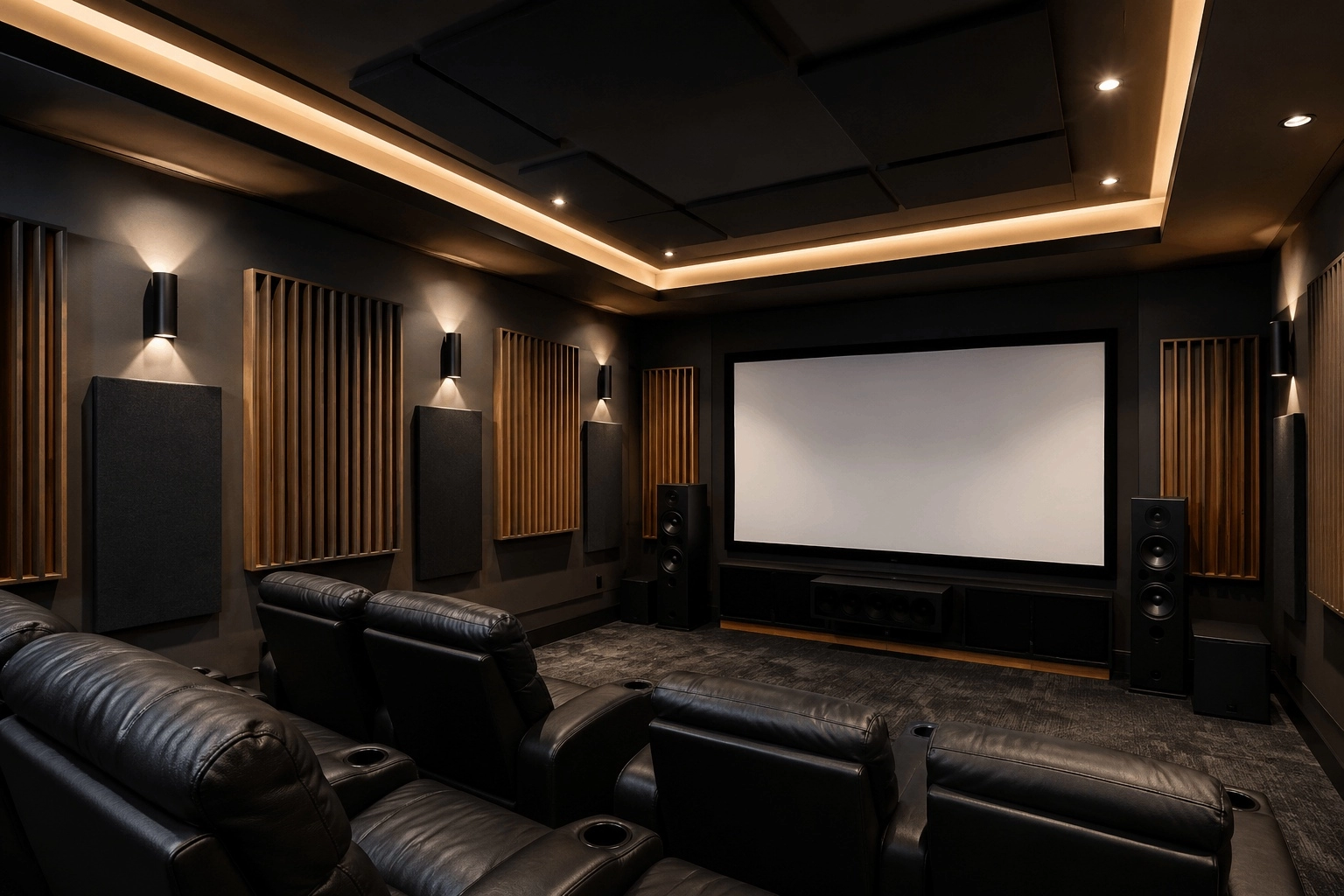
A dedicated home theater is designed to deliver more than an impressive picture. The quality of the sound environment has an equally important influence on the viewing experience. Dialogue should remain clear, sound effects should feel immersive, and music should retain its detail without excessive echo or unwanted reflections. This is why acoustic panels for home theater applications have become an important part of modern theater-room design.
However, sound absorption is not the only factor homeowners should consider. Because acoustic treatment is often installed across walls, ceilings, and other large surfaces, fire safety deserves careful attention as well. Choosing fire-rated acoustic panels can help reduce the potential contribution of wall and ceiling treatments to fire development while maintaining the acoustic performance required for a high-quality listening environment.
The challenge is that not every acoustic panel offers the same combination of sound absorption, fire performance, durability, appearance, and installation flexibility. A panel that performs well in a recording studio may not necessarily be the best choice for a residential home theater.
This guide explains the key factors to consider when selecting fire-rated acoustic panels for home theater applications, including acoustic performance, fire classifications, materials, thickness, installation, aesthetics, and long-term maintenance.
Why Fire Safety Matters in a Home Theater
Home theaters can contain a surprisingly large number of combustible materials. Upholstered theater seats, carpets, curtains, wall coverings, furniture, electronic equipment, cables, and decorative materials can all contribute to the overall fire load of a room.
Acoustic treatment is another element that should be considered as part of the room's fire-safety strategy. Large acoustic panels may cover substantial portions of walls or ceilings, so their reaction to fire can be an important consideration when designing the space.
This does not mean that installing a fire-rated acoustic panel makes a home theater fireproof. Fire safety depends on the complete construction of the room, electrical systems, furnishings, ventilation, exits, smoke detection, and other factors.
For homeowners, architects, interior designers, and contractors, the right approach is to evaluate acoustic treatment and fire performance together rather than treating them as completely separate requirements.
What Are Fire-Rated Acoustic Panels?
Fire-rated acoustic panels are sound-absorbing products designed and tested to meet specified fire-performance requirements in addition to providing acoustic treatment.
The term "fire-rated" can refer to different types of fire-related performance depending on the product and applicable testing standard. For example, a product may be evaluated for flame spread, smoke development, ignition characteristics, or other aspects of reaction to fire.
It is important not to assume that every product described as "fire resistant" has the same certification or performance level. Buyers should always request technical documentation from the manufacturer and verify which standard was used for testing.
In a home theater project, the appropriate panel should ideally provide:
Effective sound absorption
Documented fire-performance characteristics
Suitable mechanical strength
Appropriate thickness and density
A durable acoustic fabric or finish
Low-maintenance performance
Aesthetic compatibility with the theater interior
The best solution is therefore not simply the panel with the highest fire rating. It is the product that provides the right balance between safety, acoustic performance, appearance, and installation requirements.
Start With the Acoustic Requirements
Before choosing a fire-rated product, determine what acoustic problems the room actually has.
A home theater may suffer from several different issues, including excessive reverberation, strong early reflections, flutter echo, poor dialogue intelligibility, or excessive sound energy in certain frequency ranges. The correct home theater acoustic panels should be selected according to these problems rather than installed randomly.
For example, a room with bare drywall walls, a hard ceiling, and a wood or tile floor may produce strong reflections. In this situation, broadband absorption can help control reflected sound and improve clarity.
On the other hand, a room with thick carpeting, upholstered seating, heavy curtains, and existing wall treatments may already have considerable high-frequency absorption. Adding too many thin panels could make the room acoustically unbalanced.
A good design therefore considers the room as a complete acoustic system.
Consider Panel Thickness
Panel thickness is one of the most important factors when selecting acoustic wall panels for home theater use.
Generally, thicker porous absorbers are more effective at controlling lower frequencies than very thin materials. Thin panels can provide useful high-frequency absorption, but their ability to absorb deeper bass frequencies is more limited.
Common acoustic panel thicknesses include approximately 25 mm, 40 mm, 50 mm, 75 mm, and 100 mm, although manufacturers may offer many other configurations.
For many home theater applications, panels around 40–50 mm thick can provide useful broadband absorption when strategically positioned. Thicker panels can be considered when stronger low-frequency absorption is required.
However, thickness alone does not determine acoustic performance. Material density, airflow resistance, mounting method, air gaps, and construction all influence the actual absorption characteristics.
Look at the Noise Reduction Performance
When evaluating sound absorption panels for home theaters, look for objective acoustic data.
Depending on the market and manufacturer, acoustic performance may be represented using measurements such as Noise Reduction Coefficient (NRC), sound absorption coefficients at individual frequencies, or other standardized acoustic metrics.
NRC can be useful for comparing general absorption performance, but it should not be treated as a complete description of a panel's acoustic behavior.
For a home theater, frequency-specific data can be particularly valuable. Human speech, music, sound effects, and room modes cover a broad range of frequencies. A panel that performs exceptionally well at high frequencies may not provide enough low-frequency control.
Ideally, the manufacturer's test data should show absorption across a range of frequencies rather than providing only one summary number.
Fire Classification Should Be Verified
One of the most important steps when purchasing fire-rated acoustic wall panels is verifying the actual fire test documentation.
Different countries and regions use different fire-testing systems and building regulations. A panel may comply with one standard but not another. Therefore, buyers should determine which regulations apply to their project before placing an order.
Ask the manufacturer for information such as:
Applicable fire-testing standard
Fire classification
Flame spread performance
Smoke development information, where applicable
Test report or certification
Product construction tested
Fabric or finish included in the test
Conditions and limitations of the certification
A panel may achieve a specific fire classification when tested with one fabric, backing, adhesive, or mounting configuration. Changing the outer fabric or installation method could potentially affect the tested performance.
Therefore, the exact product configuration should be verified rather than assuming that all variations of the same panel have identical fire characteristics.
Choose the Right Acoustic Core Material
The core material is another important consideration when selecting fire-resistant acoustic panels.
Common acoustic absorber materials include mineral fiber, fiberglass, polyester fiber, and other engineered porous materials. Each has different characteristics related to acoustic absorption, density, rigidity, fire performance, weight, and installation.
Mineral fiber and fiberglass products are widely used for broadband acoustic absorption and can offer strong performance across a broad frequency range. Polyester-based products can provide an alternative for applications where lightweight construction, design flexibility, or specific environmental considerations are important.
However, the material name alone is not enough to determine fire performance. A particular core may have good fire characteristics while the complete finished panel performs differently because of its fabric covering, adhesive, backing, frame, or other components.
For this reason, evaluate the finished acoustic panel rather than looking only at the raw core material.
Pay Attention to the Fabric Cover
The visible fabric is a major part of a decorative acoustic panel, but it also plays a role in the product's overall fire performance.
Home theater designers often choose dark-colored fabrics to reduce unwanted reflections around the projection screen. Black, charcoal, dark gray, and deep neutral tones are popular because they help create a cinema-like environment.
But appearance should not override technical requirements.
The fabric should have suitable acoustic transparency so that sound can reach the absorbing core behind it. If the fabric is too acoustically reflective, it can reduce the effectiveness of the absorber.
At the same time, the fabric should be appropriate for the intended fire-performance requirements.
When ordering fabric acoustic panels, confirm whether the exact fabric specification has been included in the manufacturer's acoustic and fire testing.
Consider the Panel's Position in the Room
Even the best acoustic panels for home theaters will not perform optimally if they are installed in the wrong locations.
A common strategy is to identify major reflection points on the side walls and ceiling. These areas can be treated to reduce strong early reflections reaching the listening position.
The rear wall can also require attention, particularly in rooms where sound reflects strongly from the wall behind the audience.
However, the exact treatment plan depends on room dimensions, speaker placement, listening position, existing finishes, and the desired acoustic character.
Instead of covering every available surface with absorbers, combine absorption with other acoustic strategies when appropriate.
Air Gaps Can Improve Low-Frequency Absorption
The way an acoustic panel is mounted can influence its performance.
Installing a porous absorber directly against a wall provides useful absorption, but leaving an air gap behind the panel can increase its effectiveness, particularly at lower frequencies.
For example, a 50 mm thick acoustic wall panel mounted with an air space behind it may perform differently from the same panel installed directly against the drywall.
This can be particularly useful in home theaters where wall space is available but deeper construction is undesirable.
However, installation should always follow the manufacturer's recommendations and the acoustic design requirements of the room.
Do Not Forget Ceiling Acoustic Treatment
Walls are not the only surfaces that reflect sound.
A hard ceiling can create strong vertical reflections between the floor and ceiling. Depending on the room design, ceiling-mounted acoustic treatment can help reduce these reflections and improve overall sound clarity.
Acoustic ceiling panels for home theaters can be particularly useful in rooms with high ceilings, hard flooring, or minimalist interiors.
Fire performance becomes especially relevant for ceiling-mounted products because the installation location may be subject to specific building requirements. Always check local code requirements and verify the mounting system before installation.
Balance Absorption and Diffusion
A high-quality home theater should not necessarily be completely dead acoustically.
If every surface is heavily covered with thick absorption material, the room may lose natural spaciousness and become excessively dry. This can negatively affect music playback and the overall sense of immersion.
A better approach may involve a combination of:
For example, fire-rated acoustic panels can be placed at major reflection points while diffusion is used elsewhere to maintain a more natural sound field.
The correct balance depends on whether the room is primarily designed for movies, music, gaming, or multiple entertainment purposes.
Think About Bass Management Separately
One common mistake is expecting standard wall panels to solve every acoustic problem.
Low-frequency energy generated by subwoofers can create room modes and uneven bass response. These problems are strongly influenced by room dimensions and speaker positioning.
A typical 25–50 mm acoustic panel may be highly effective at controlling mid and high frequencies but have limited impact on deep bass.
Home theaters with powerful subwoofers may therefore require dedicated bass traps or thicker low-frequency absorbers.
When selecting home theater sound absorption panels, consider the complete frequency range rather than focusing exclusively on NRC.
Consider Aesthetics and Interior Design
A home theater is also an interior space. Acoustic treatment should complement the room rather than looking like an afterthought.
Fortunately, modern acoustic panels are available in a wide range of colors, shapes, sizes, and finishes.
Panels can be designed to:
Match wall colors
Create geometric patterns
Frame the projection screen
Integrate with columns
Cover selected architectural features
Blend into dark cinema interiors
Create decorative feature walls
Custom decorative acoustic panels can therefore serve both acoustic and visual functions.
For premium theater rooms, fabric-wrapped panels are particularly popular because the fabric can provide a sophisticated appearance while allowing sound to pass into the absorbing core.
Evaluate Installation and Maintenance
Installation should be considered before purchasing the panels.
Depending on the design, panels may be installed using mechanical fasteners, clips, rails, adhesive systems, or other mounting solutions.
For a home theater, the mounting method should provide secure attachment while allowing future access when necessary. This is especially useful when panels are positioned near speakers, wiring, outlets, or other equipment.
Maintenance is another consideration.
Fabric-covered acoustic panels can collect dust over time. Choose a finish that can be maintained according to the manufacturer's recommendations. In high-use entertainment rooms, durable fabrics may provide better long-term value than delicate decorative materials.
Check Product Documentation Before Buying
A professional manufacturer should be able to provide more than a product photograph and a general statement such as "fire resistant."
Before purchasing, ask for:
Acoustic absorption test data
Fire-performance documentation
Panel thickness and dimensions
Core material specifications
Fabric specifications
Installation instructions
Recommended mounting systems
Cleaning and maintenance information
Available customization options
Relevant certifications
This information makes it much easier to compare different acoustic panel suppliers objectively.
It also reduces the risk of selecting a product that looks appropriate but does not meet the technical requirements of the project.
Avoid Choosing Panels Based Only on Price
Cost is an important consideration, but the cheapest panel is not necessarily the most economical choice.
A low-cost product may have limited acoustic data, inconsistent manufacturing quality, fewer customization options, or insufficient documentation. If the panels need to be replaced later because they do not perform as expected, the total project cost can increase significantly.
Instead, evaluate the total value of the product.
A slightly more expensive fire-rated acoustic panel may provide better absorption, documented fire performance, improved appearance, easier installation, and longer service life.
For a dedicated home theater that is expected to remain in use for many years, these factors can be more important than the initial purchase price.
Questions to Ask an Acoustic Panel Manufacturer
Before placing an order, homeowners and contractors should ask several practical questions.
Does the complete panel have fire-test documentation?
Do not rely solely on the fire properties of the core material. Confirm the performance of the finished product.
What are the absorption coefficients at different frequencies?
This helps determine whether the panel is appropriate for broadband sound control.
What thicknesses are available?
Different thicknesses may be required for different acoustic goals.
Can the fabric be customized?
This is particularly important for home theater interiors where visual design is part of the project.
Can the panels be installed with an air gap?
If lower-frequency performance is important, mounting configuration can make a meaningful difference.
Are custom sizes available?
Custom dimensions can simplify installation around doors, columns, speakers, lighting, and other architectural elements.
What maintenance is recommended?
Understanding how the surface should be cleaned can help preserve the appearance and performance of the panels.
A Practical Selection Process
A systematic selection process can make the project much easier.
Start by evaluating the room's dimensions, surfaces, speaker locations, seating arrangement, and existing acoustic conditions.
Next, identify the primary problems. Are you dealing with excessive echo, strong wall reflections, poor dialogue clarity, or uneven bass?
Then determine the desired acoustic treatment strategy. This may include broadband absorption, bass trapping, diffusion, or a combination of approaches.
After that, shortlist fire-rated acoustic panels that provide suitable absorption performance and documented fire characteristics.
Compare their core materials, thicknesses, fabric options, mounting systems, dimensions, certifications, and prices.
Finally, confirm that the selected configuration is suitable for the local building requirements and the specific installation environment.
Final Thoughts
Choosing the right acoustic treatment for a home theater involves more than finding a panel that absorbs sound. A successful solution should provide effective acoustic control while fitting naturally into the room's interior design and satisfying appropriate fire-safety requirements.
Fire-rated acoustic panels for home theaters offer a practical way to address these requirements together. However, buyers should look beyond marketing terms and evaluate verified fire-performance documentation, acoustic test data, core construction, fabric specifications, thickness, mounting method, and long-term durability.
The most effective approach is to treat the room as a complete acoustic environment. Use strategically positioned acoustic wall panels, consider ceiling treatment where appropriate, address low-frequency problems separately, and maintain a healthy balance between absorption and diffusion.
When acoustic performance, fire safety, installation, and aesthetics are considered from the beginning, acoustic panels can become an integral part of the theater design rather than simply an add-on. The result is a more controlled listening environment, clearer dialogue, more immersive sound effects, and a home theater that is both comfortable and thoughtfully designed.




 +86 18963687089

 en
en it
it es
es hu
hu ja
ja sv
sv pt
pt ms
ms ko
ko ru
ru fr
fr de
de ar
ar