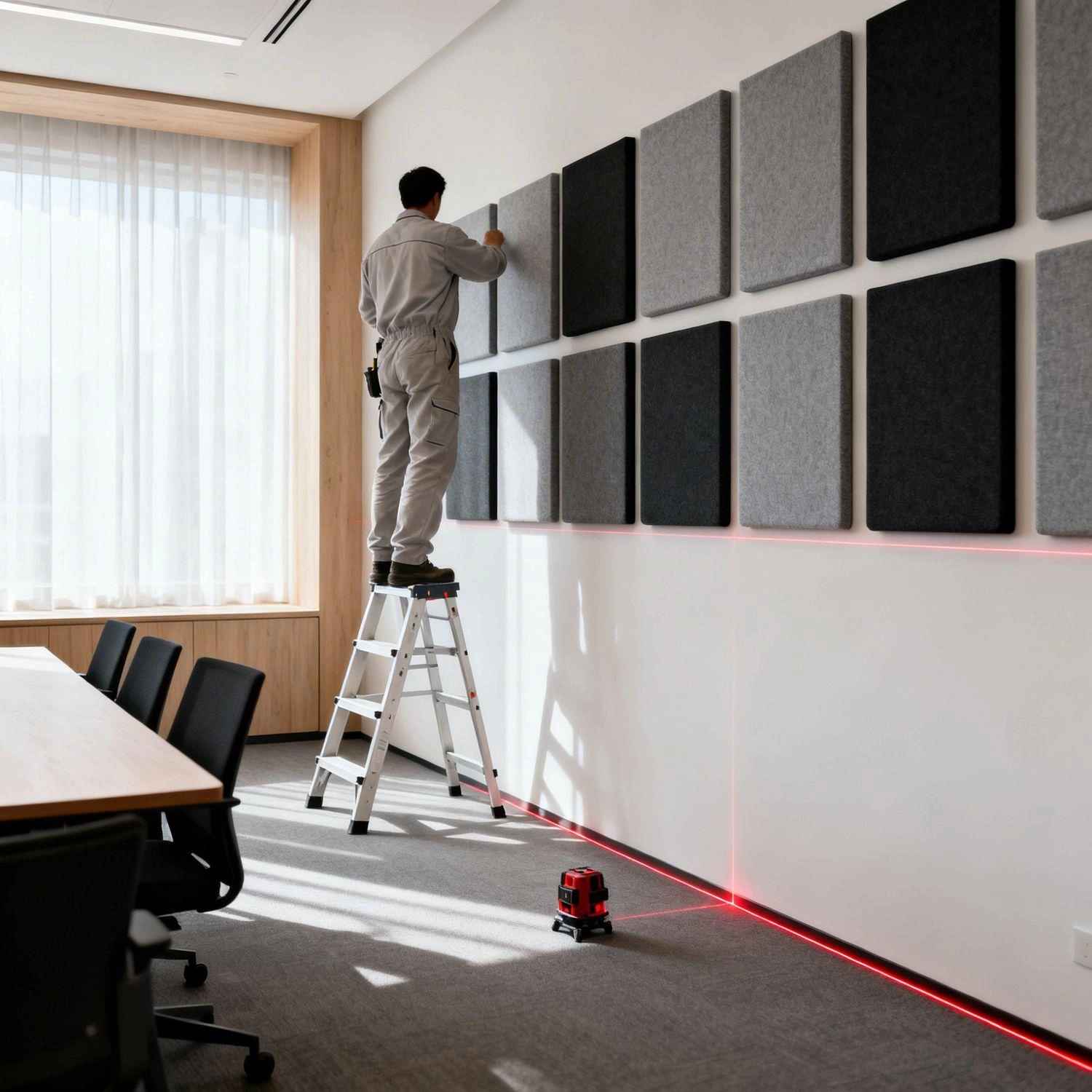
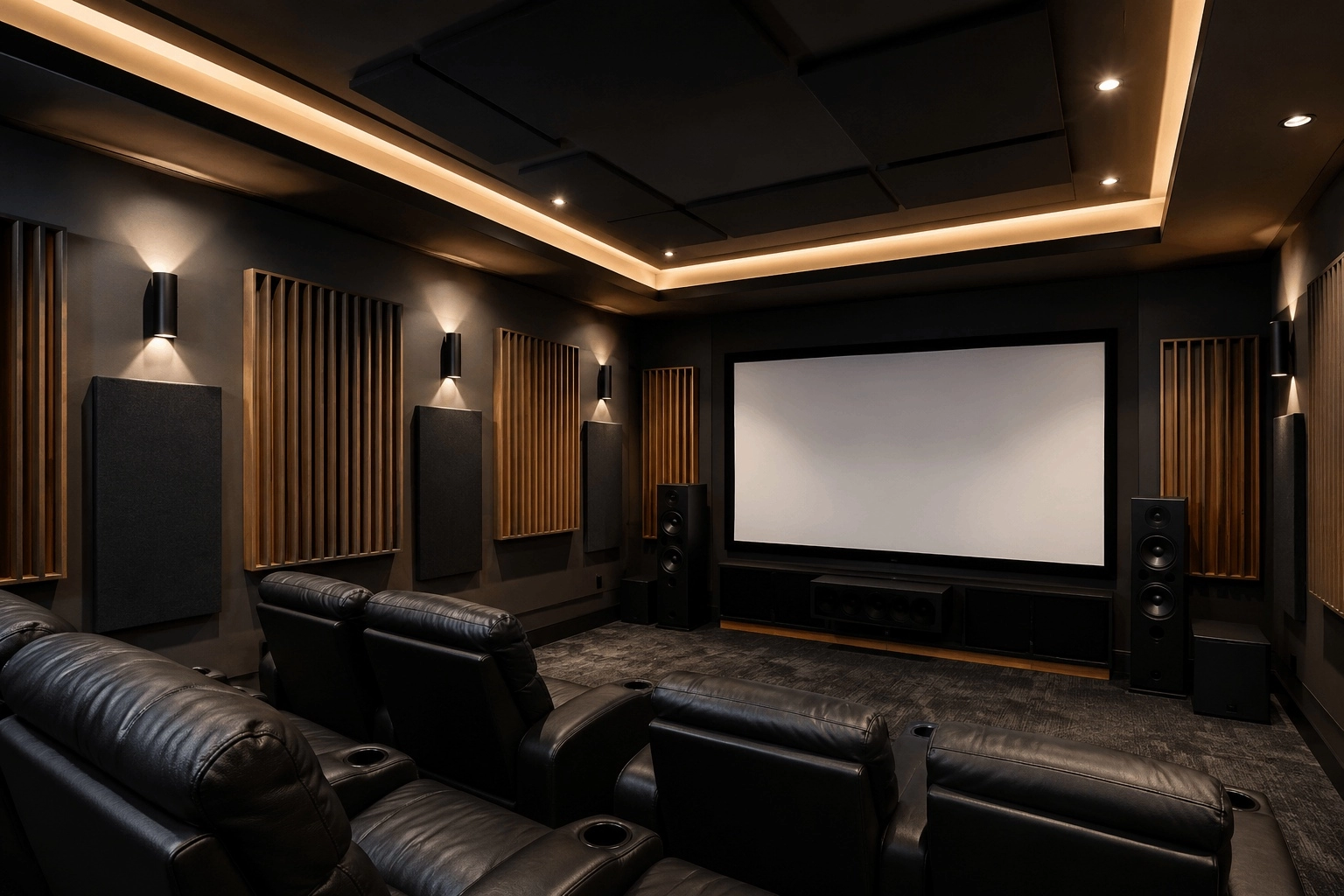
A meeting room should make communication easier, not harder. Yet many modern conference rooms are built with glass partitions, concrete floors, painted walls, large tables, and other hard surfaces that reflect sound. When several people speak at the same time, these reflections can create an unpleasant combination of echo, reverberation, and background noise.
The problem becomes even more obvious during video conferences. A voice that sounds reasonably clear to people sitting in the room may sound distant, hollow, or unclear through a conference microphone.
This is why acoustic treatment has become an important part of modern meeting room design. Among the available solutions, honeycomb acoustic panels are increasingly used to control sound reflections while maintaining a clean and contemporary interior appearance.
However, simply installing acoustic panels on a wall does not guarantee good acoustics. The panel type, room layout, surface materials, installation position, and amount of acoustic treatment all influence the final result.
So, how can honeycomb acoustic panels for meeting rooms actually reduce echo and noise? And how should businesses, architects, and interior designers approach the selection and installation process?
This guide explains the key considerations.
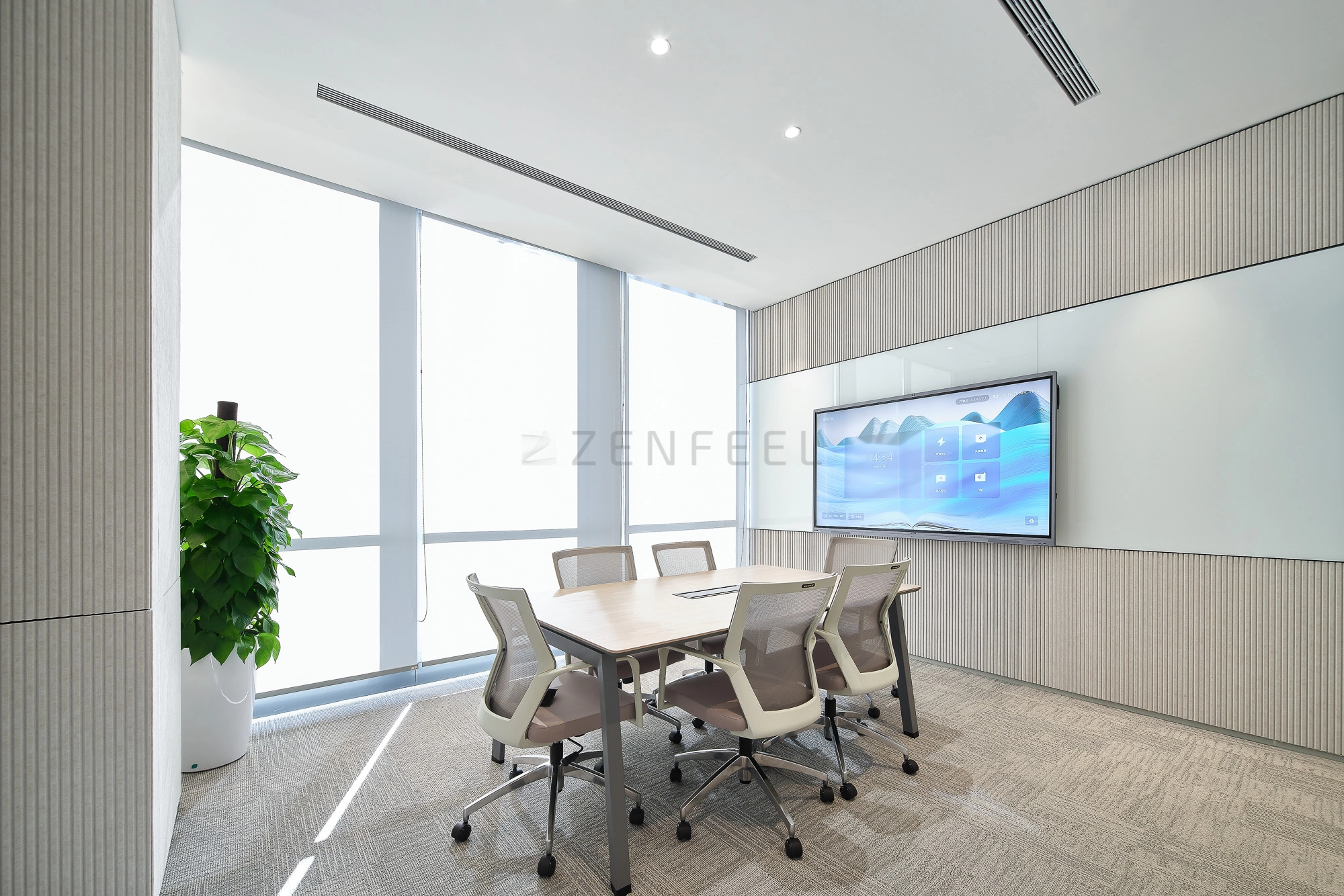
Why Do Meeting Rooms Have So Much Echo?
The first step in solving a meeting room acoustic problem is understanding where the echo comes from.
When someone speaks, sound travels directly toward the other people in the room. At the same time, part of the sound energy hits nearby surfaces and is reflected.
In a room containing many hard surfaces, these reflections can continue bouncing between walls, the ceiling, floor, and furniture.
Common reflective surfaces include:
The larger and harder these surfaces are, the more sound they can reflect.
A small amount of reflection is normal and even desirable. It gives a room a natural acoustic character. The problem occurs when too many reflections arrive at the listener within a short period of time.
Instead of hearing a clean voice, listeners hear the original speech mixed with reflected sound.
This is particularly problematic for speech because meeting rooms depend on speech intelligibility, not simply low noise levels.
Echo and Noise Are Not Exactly the Same Problem
One common mistake in meeting room design is treating echo and noise as if they were the same thing.
They are related, but they require different strategies.
Echo and Reverberation
Echo and excessive reverberation are mainly caused by sound reflections inside the room.
Acoustic absorption is one of the primary ways to control these reflections.
This is where honeycomb acoustic panels can play an important role.
Background Noise
Background noise may come from:
Acoustic panels can help control how sound behaves inside a room, but they do not automatically stop external noise from entering.
If a meeting room has poor wall construction, a lightweight partition, or gaps around doors, the project may also require sound insulation measures.
Therefore, a good meeting room should address both sound absorption and sound isolation rather than expecting acoustic panels to solve every noise problem.
How Honeycomb Acoustic Panels Help Reduce Echo
The primary purpose of an acoustic panel is to absorb a portion of the sound energy that would otherwise be reflected into the room.
The honeycomb structure can be incorporated into an acoustic panel construction to provide structural and design benefits, while the overall acoustic performance depends on the complete panel system, including its facing, core, thickness, density, and backing.
When sound reaches an appropriately designed honeycomb acoustic panel, part of the sound energy is absorbed rather than being reflected from a hard wall.
When enough strategically positioned absorption is introduced into a meeting room, the overall reverberation can be reduced.
This can produce several noticeable improvements:
Voices become clearer
Conversations feel less "boomy"
Reflections are reduced
People do not need to speak as loudly
Remote participants can hear speech more clearly
Listening becomes less tiring
The important point is that acoustic panels should not simply be viewed as decorative wall coverings. Their real value comes from changing the acoustic behavior of the room.
Why Glass Meeting Rooms Need Acoustic Treatment
Glass meeting rooms look modern, open, and professional. They are particularly popular in offices where natural light and visual transparency are important.
Acoustically, however, glass presents a challenge.
Glass is a highly reflective material. If a meeting room has glass walls on multiple sides, sound can bounce between these surfaces.
Now imagine the room also has:
A hard ceiling
A large conference table
Vinyl flooring
Minimal soft furniture
The room may have very little effective sound absorption.
This creates an environment where multiple reflections build up quickly.
Installing honeycomb acoustic wall panels on suitable non-glass surfaces can help introduce absorption without removing the glass design concept.
In some projects, designers may also combine wall panels with suspended ceiling absorbers, acoustic furniture, carpeting, or curtains.
The goal is not to eliminate every reflective surface. It is to create a more balanced acoustic environment.
Where Should Honeycomb Acoustic Panels Be Installed?
Panel placement is one of the most important factors in meeting room acoustic treatment.
A common mistake is to install panels wherever there is available wall space. This may improve the appearance of the room, but it is not necessarily the most effective acoustic strategy.
1. Side Walls
Side walls can create strong reflection paths between the speaker and listeners.
Installing acoustic panels on appropriate sections of the side walls can help absorb reflected speech.
For rectangular meeting rooms, this can be particularly useful when two parallel walls are highly reflective.
2. Front Wall
If a meeting room has a presentation screen or display, the surrounding wall can become a significant reflective surface.
Acoustic treatment around or near the presentation area can help control reflections generated by speakers and presenters.
3. Rear Wall
The rear wall can reflect sound back toward the speaker and participants.
This becomes more important in larger conference rooms where sound has enough distance to travel before returning to the occupants.
4. Ceiling
The ceiling is often one of the largest uninterrupted surfaces in a meeting room.
If the ceiling is made from concrete, metal, or another reflective material, ceiling-mounted or suspended acoustic treatment may provide significant benefits.
For some designs, honeycomb acoustic ceiling panels can complement wall-mounted solutions.
How Much Wall Area Should Be Covered?
There is no universal answer.
The amount of acoustic treatment required depends on the room's dimensions, surface materials, occupancy, furniture, ceiling height, and acoustic objectives.
A room filled with upholstered chairs, carpet, curtains, and other soft materials may need less additional absorption.
By contrast, a minimalist boardroom with glass walls, a hard floor, and a suspended metal ceiling may require considerably more.
For this reason, it is better to think about acoustic coverage and placement rather than simply counting panels.
A professional project may start with an assessment of:
Room volume
Existing surface materials
Reverberation characteristics
Primary reflection paths
Number of occupants
Intended use of the room
Video conferencing requirements
The final panel quantity can then be determined according to the project's acoustic target.
How to Choose Honeycomb Acoustic Panels for a Meeting Room
Not every acoustic panel is suitable for every conference room.
Before purchasing, project managers should evaluate several factors.
Acoustic Performance
The first consideration should be acoustic performance rather than appearance.
Ask the supplier for relevant test data and determine how the panel performs across different frequency ranges.
Speech is concentrated in the mid-frequency range, but meeting rooms also contain lower-frequency sounds from HVAC systems, equipment, and general building activity.
Therefore, understanding the panel's actual acoustic characteristics is important.
Panel Thickness
Panel thickness can influence sound absorption.
A thicker acoustic construction may offer different performance from a thin decorative panel.
The correct specification depends on the room's acoustic requirements rather than simply choosing the thickest available option.
Surface Material
The facing material influences both appearance and acoustic behavior.
Fabric finishes, perforated surfaces, decorative layers, and other constructions may be available depending on the manufacturer.
The selected finish should meet both aesthetic and functional requirements.
Installation Method
Direct wall mounting and suspended installation can produce different results.
Some applications may benefit from an air gap behind the panel, while others may require direct installation because of space limitations.
The installation method should therefore be considered during the design stage.
What About Custom Honeycomb Acoustic Panels?
Commercial meeting rooms often have architectural features that make standard panels difficult to use.
For example, a project may require:
Custom dimensions
Special geometric patterns
Corporate colors
Curved or irregular layouts
Ceiling integration
Decorative feature walls
Specific mounting systems
In these situations, custom honeycomb acoustic panels can provide more flexibility.
Customization is especially valuable for corporate headquarters, hotels, conference centers, coworking spaces, and high-end commercial interiors where acoustic products need to match the overall design language.
Rather than hiding acoustic treatment, designers can make it part of the room's visual identity.
For example, panels can be arranged in repeating geometric patterns to create a feature wall while simultaneously contributing to sound absorption.
This approach allows acoustic performance and interior design to work together instead of competing with each other.
Can Honeycomb Acoustic Panels Reduce Outside Noise?
This question is particularly important for buyers.
The answer is: not by themselves.
Acoustic absorption and sound insulation are different functions.
A wall-mounted acoustic panel primarily helps control sound inside the room. It can reduce reflections and reverberation, but it does not replace a properly constructed sound-insulating wall.
If conversations from an adjacent office are clearly audible, the underlying problem may involve:
In these cases, the project may need additional sound isolation measures.
A good meeting room acoustic strategy therefore separates two objectives:
Inside the room: use acoustic absorption to control reflections.
Between spaces: use appropriate construction and sound isolation measures to limit noise transmission.
Understanding this distinction prevents buyers from expecting acoustic panels to solve a problem they were not designed to address.
Common Mistakes When Using Acoustic Panels in Meeting Rooms
Covering Only the Most Visible Wall
One feature wall may look attractive, but it may not address the room's primary reflection paths.
Acoustic treatment should be based on room behavior rather than aesthetics alone.
Ignoring the Ceiling
A highly reflective ceiling can continue to create significant reflections even after the walls have been treated.
Choosing Panels Only by Color
Color and appearance matter in commercial interiors, but acoustic performance should come first.
Installing Too Little Absorption
A few small decorative panels may not provide enough effective absorption for a large conference room.
Assuming More Absorption Is Always Better
The goal is not to make the room acoustically "dead." Excessive absorption can create an unnatural environment.
The objective is controlled reverberation and clear communication.
Treating External Noise with Absorption Panels Alone
If the main problem is noise coming from another room, the project may require sound insulation rather than simply adding more wall panels.
How to Create a Balanced Meeting Room Acoustic Design
The best meeting rooms typically use a combination of acoustic strategies rather than relying on one product.
A practical approach may include:
Step 1: Identify reflective surfaces
Look at glass, concrete, drywall, ceilings, flooring, and large furniture.
Step 2: Identify the main sound paths
Determine where speech is reflected and where excessive reverberation is occurring.
Step 3: Add strategically placed absorption
Use honeycomb acoustic panels on walls or ceilings where they can have the greatest effect.
Step 4: Address background noise
Check HVAC equipment, doors, adjacent rooms, and other sources.
Step 5: Consider furniture and interior finishes
Carpet, upholstered furniture, curtains, acoustic partitions, and other materials can complement wall panels.
Step 6: Evaluate the finished room
For larger or technically demanding projects, acoustic measurements can help determine whether the treatment has achieved the desired result.
This process is much more effective than simply installing a fixed number of panels in predetermined locations.
Why Honeycomb Acoustic Panels Are a Practical Choice for Commercial Meeting Rooms
For commercial projects, acoustic products need to meet several requirements simultaneously.
They should provide useful acoustic performance, fit the interior design, support efficient installation, and be suitable for long-term use.
This is where honeycomb acoustic panels can offer an appealing combination of acoustic functionality and visual flexibility.
They can be used in corporate offices, boardrooms, training rooms, coworking spaces, hotel conference rooms, educational facilities, and other commercial environments where speech clarity matters.
Their geometric structure can also support contemporary interior concepts, making them suitable for designers who want acoustic treatment to become part of the architecture rather than an obvious technical addition.
For projects involving multiple meeting rooms, standardized panel systems can also simplify procurement and installation while allowing different layouts and finishes across individual spaces.
Final Considerations for Architects and Buyers
A successful meeting room is not necessarily the quietest room. It is a room where people can communicate comfortably and understand each other without unnecessary listening effort.
Honeycomb acoustic panels for meeting rooms can contribute to this goal by reducing unwanted reflections and controlling reverberation. But their effectiveness depends heavily on proper specification and placement.
Before selecting a product, consider the room's size, wall and ceiling materials, glass area, furniture, number of occupants, conferencing equipment, and primary acoustic problems.
For a simple office meeting room, strategically placed acoustic wall panels may provide a noticeable improvement. For a large boardroom or glass-enclosed conference facility, a more comprehensive approach involving wall and ceiling treatment may be necessary.
Most importantly, distinguish between sound absorption and sound insulation. Acoustic panels are highly useful for controlling sound inside a room, but external noise transmission may require additional construction solutions.
When these factors are considered together, honeycomb acoustic panels can become more than a decorative element. They can form an important part of a professional acoustic design that improves speech clarity, supports video conferencing, reduces distracting reverberation, and creates a more comfortable environment for both in-person and remote participants.




 +86 18963687089

 en
en it
it es
es hu
hu ja
ja sv
sv pt
pt ms
ms ko
ko ru
ru fr
fr de
de ar
ar