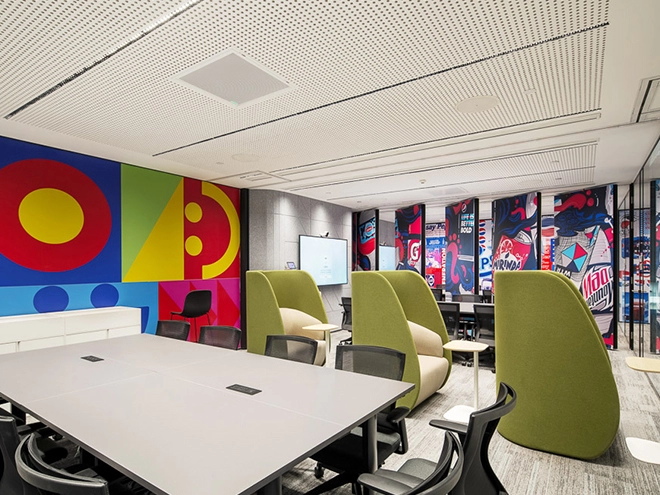
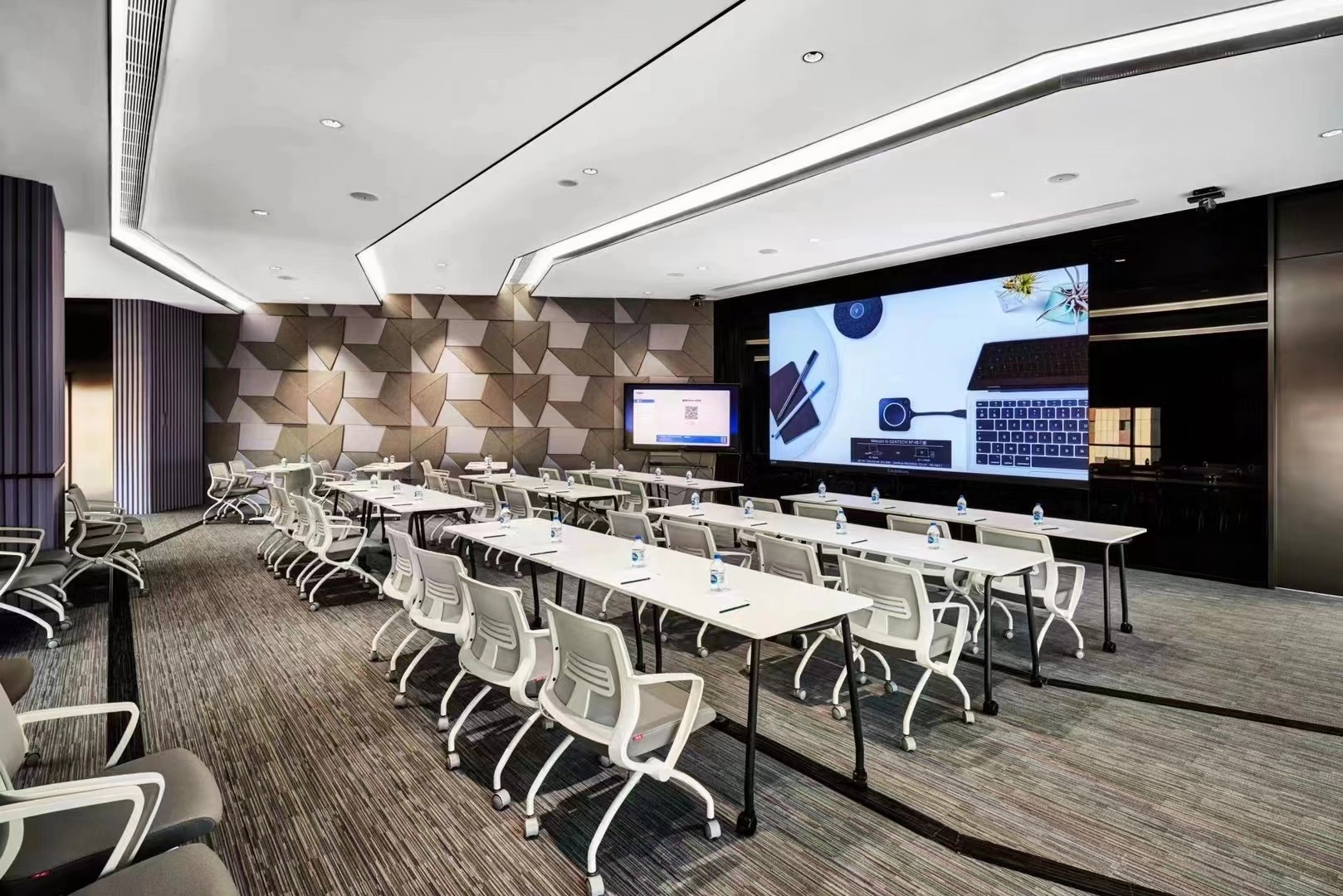
Designing a home theater involves much more than choosing a large screen, comfortable seating, and a powerful sound system. Room acoustics play a major role in determining how clearly dialogue can be heard, how accurately music is reproduced, and how immersive movie sound effects feel. This is why acoustic panels for home theater applications are increasingly used in dedicated entertainment rooms.
One of the most common questions homeowners face is simple: How many acoustic panels do you need for a home theater?
There is no universal number that works for every room. A small room with hard walls may need a different amount of acoustic treatment than a large theater with carpet, upholstered seats, curtains, and other sound-absorbing surfaces. Speaker configuration, room dimensions, panel thickness, listening position, and the desired acoustic character also influence the quantity required.
Rather than covering every available surface with panels, the goal should be to use the right amount of acoustic treatment in the right locations. This article explains how to estimate the number of panels needed, where to install them, and what factors should be considered before making a purchase.
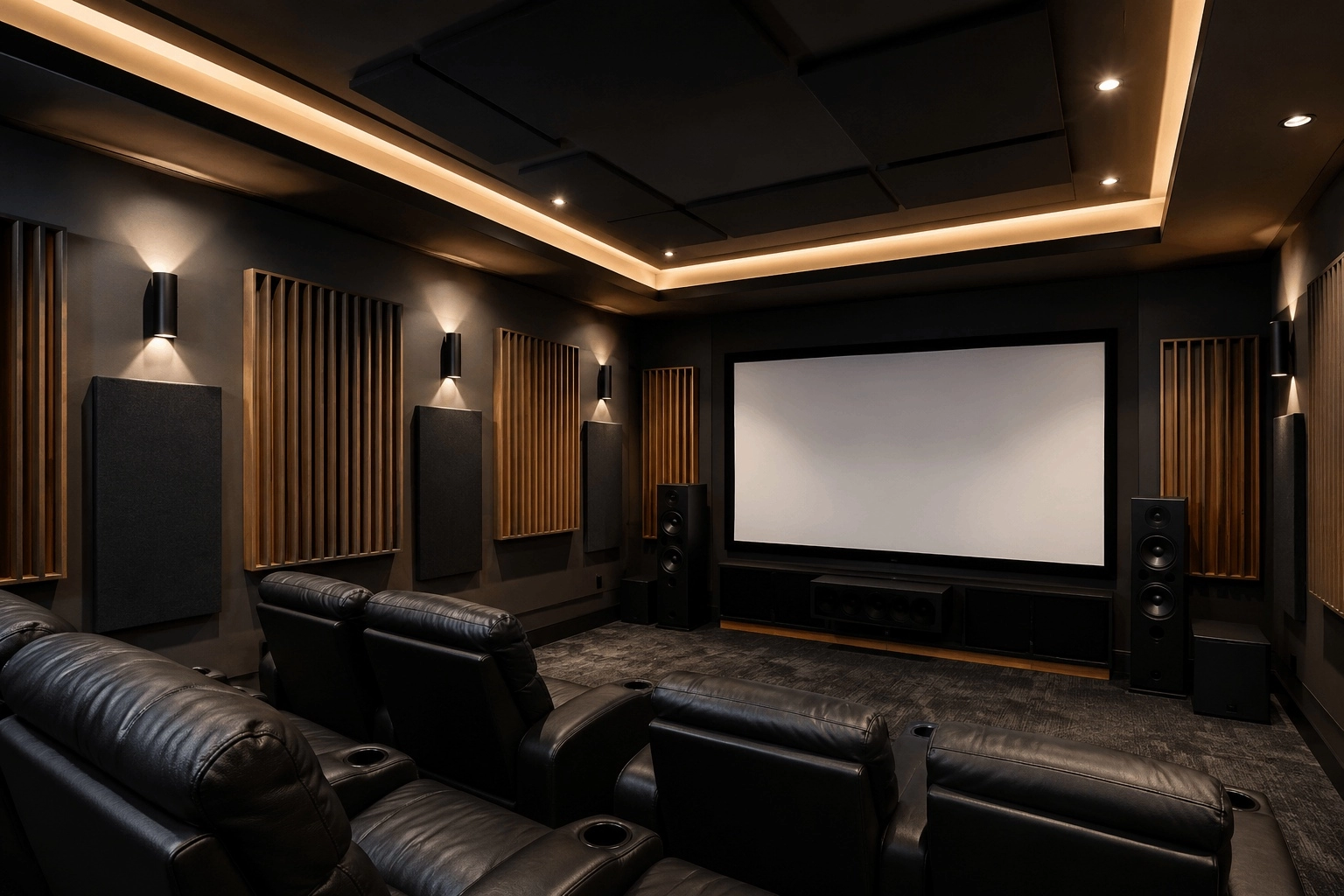
Why the Number of Acoustic Panels Matters
Acoustic panels are designed primarily to absorb unwanted sound reflections. When sound from speakers reaches hard walls, ceilings, floors, and other reflective surfaces, it can bounce around the room before reaching the listener.
Some reflections are useful and contribute to a sense of spaciousness. Too many uncontrolled reflections, however, can make dialogue less intelligible and cause music and sound effects to lose definition.
Installing acoustic wall panels can help reduce excessive reflections and shorten reverberation time. But installing too many absorbers can create another problem: the room may become overly "dead."
An acoustically balanced home theater should provide controlled reflections rather than eliminating every reflection. Therefore, the number of panels should be based on the acoustic requirements of the room rather than a simple rule such as "one panel per wall."
There Is No Fixed Number for Every Home Theater
A common misconception is that a certain number of panels is always required for a home theater.
For example, someone may suggest installing 10, 20, or 30 panels regardless of room size. Such recommendations can be misleading because acoustic performance depends on much more than quantity.
Consider two theaters with the same floor area. One may have concrete walls, a hard ceiling, and wood flooring. The other may have drywall, carpeting, heavy curtains, and upholstered furniture.
The first room will generally have more reflective surfaces and may require more acoustic treatment. The second room may already contain substantial absorption.
Therefore, instead of asking only, "How many panels do I need?" it is better to ask:
How reflective is the room?
What frequencies need to be controlled?
Where are the strongest reflection points?
How much existing absorption is already present?
What type and thickness of panels will be used?
Is the room intended primarily for movies, music, or both?
Answering these questions provides a much more accurate starting point.
Start by Measuring the Room
The first step in estimating the quantity of home theater acoustic panels is to measure the room.
Record the room's:
For example, imagine a rectangular theater measuring 16 feet long by 12 feet wide with an 8-foot ceiling.
The room has approximately 192 square feet of floor area. The wall surfaces and ceiling add considerably more area that can reflect sound.
However, this does not mean that all of these surfaces should be covered with acoustic panels.
The measurements simply provide a foundation for determining the room's acoustic characteristics and identifying the surfaces that need attention.
Identify the Main Reflection Points
For most home theaters, the first priority should be controlling strong early reflections.
The side walls are particularly important because sound from the left and right speakers can reflect toward the listening position.
One useful method is the "mirror point" technique. Sit in the main listening position while another person moves a mirror along the side wall. Wherever you can see one of the main speakers in the mirror represents a potential first-reflection point.
These locations are often good candidates for acoustic wall panels.
Treating these areas can improve clarity without requiring panels to cover the entire wall.
For a typical small or medium-sized theater, you may find that several strategically positioned panels on each side wall provide more benefit than installing a large number of panels randomly.
Consider the Front Wall
The front wall behind the screen and speakers requires careful consideration.
If the front wall is highly reflective, sound from the speakers may bounce back into the room and interfere with the direct sound.
However, the appropriate treatment depends on the theater's speaker configuration and screen design.
In some rooms, broadband absorption behind or around the speakers can help reduce unwanted reflections. In other rooms, a combination of absorption and controlled reflection may produce better results.
If an acoustically transparent projection screen is used, the space behind the screen may also provide opportunities for acoustic treatment.
The key is to consider the speaker system and screen construction before deciding how many acoustic panels should be installed on the front wall.
Don't Ignore the Rear Wall
The wall behind the seating area can also produce strong reflections.
This is particularly important when the rear wall is close to the main listening position. Sound energy can travel toward the back wall, reflect forward, and arrive at the listener shortly after the direct sound.
In a small home theater, the rear wall may therefore require substantial acoustic treatment.
Thicker sound absorption panels can be useful in this location, especially when the room has a short distance between the seating position and rear wall.
However, absorption is not always the only option. Diffusion can also be used in appropriate situations to scatter reflections rather than absorbing them completely.
How Much Wall Area Should Be Covered?
Instead of focusing solely on the number of panels, it can be more useful to consider the percentage of wall area that should receive treatment.
A common starting point for a home theater is to treat the most important reflection zones rather than covering every wall.
Depending on the room, approximately 20% to 40% of the available wall surface may be treated with acoustic materials as an initial design approach. This is not a universal requirement, but it can provide a useful starting point for planning.
For example, if a room has 500 square feet of usable wall area, treating 100 to 200 square feet may be a reasonable initial range to investigate.
The actual amount may be higher or lower depending on the room's surfaces and acoustic goals.
The important point is that acoustic panel quantity should follow acoustic requirements, not an arbitrary percentage.
Panel Size Changes the Calculation
The number of panels needed depends heavily on their dimensions.
Suppose you are comparing two options:
24 × 48 inch panels
12 × 24 inch panels
The larger panel covers four times as much surface area as the smaller panel.
Therefore, saying that a theater needs "20 panels" without specifying panel dimensions does not provide much useful information.
For example, twenty large 24 × 48 inch panels cover approximately 160 square feet.
Twenty small 12 × 24 inch panels cover only about 40 square feet.
Both may be called "20 panels," but their acoustic contribution can be dramatically different.
When comparing acoustic panel suppliers, always compare panel dimensions and absorption performance rather than quantity alone.
Panel Thickness Also Matters
Panel thickness is another important variable.
Thin panels are generally useful for controlling higher-frequency reflections, while thicker porous absorbers can provide better broadband absorption and improved performance at lower frequencies.
Common thicknesses include 1 inch, 2 inches, 3 inches, and 4 inches, depending on the manufacturer and application.
For many home theater projects, 2-inch or thicker sound absorption panels can provide useful broadband treatment. Thicker panels may be preferable when stronger low-frequency absorption is required.
However, thicker does not automatically mean better in every situation.
A carefully designed room may use different panel thicknesses in different locations.
For example, thinner panels might be installed at first-reflection points, while thicker absorbers or bass traps are used on the rear wall.
Air Gaps Can Increase Panel Effectiveness
The installation method also affects how much acoustic treatment you need.
A porous panel mounted directly against a hard wall can absorb sound effectively, but creating an air gap behind the panel can improve its low-frequency absorption.
For example, a 2-inch panel installed with a gap behind it may provide different performance from the same panel installed directly against the wall.
This means that two theaters using the same number of acoustic panels may achieve different acoustic results because the panels are installed differently.
Before increasing panel quantity, consider whether optimizing thickness and mounting configuration could provide better results.
What About the Ceiling?
The ceiling is often overlooked when homeowners calculate the number of panels needed.
A hard ceiling can reflect sound between the floor and ceiling, contributing to excessive reverberation.
Ceiling treatment can be particularly useful in rooms with:
Acoustic ceiling panels or suspended acoustic clouds can help control these reflections.
However, ceiling treatment should be planned carefully because excessive absorption above the seating area can alter the room's acoustic balance.
In some home theaters, treating selected ceiling reflection points may be sufficient rather than covering the entire ceiling.
Don't Forget the Floor and Furniture
The number of panels required also depends on what is already inside the room.
A carpeted floor naturally absorbs some high-frequency sound. Upholstered theater seats can also contribute to sound absorption.
Heavy curtains, fabric wall coverings, bookshelves, and other soft furnishings may further reduce reflections.
This means a fully furnished theater usually needs fewer additional acoustic panels for home theater applications than an empty room with bare concrete or drywall surfaces.
When planning your acoustic treatment, evaluate the room after the major furniture and finishes have been selected.
Acoustic Panels Are Not Bass Traps
One of the most important distinctions to understand is the difference between broadband acoustic panels and bass traps.
Standard acoustic panels are generally designed to absorb mid and high frequencies. They may have limited effectiveness against the deep bass produced by subwoofers.
Home theaters can experience significant low-frequency problems because bass wavelengths are long and can interact strongly with the room's dimensions.
If you install dozens of standard panels but ignore low-frequency issues, the room may still have uneven bass response.
For this reason, the total acoustic treatment plan may include:
The number of standard acoustic wall panels should therefore not be considered separately from the rest of the acoustic system.
A Practical Example for a Small Home Theater
Consider a small home theater measuring approximately 12 × 16 feet with an 8-foot ceiling.
The room has drywall walls, carpeted flooring, upholstered seating, and a standard 5.1 surround sound system.
A reasonable starting treatment plan might include:
2–4 panels on the left and right first-reflection areas
2–4 panels on the rear wall
Additional treatment near the front wall if required
1–2 ceiling treatment areas if strong ceiling reflections are present
Dedicated bass traps in selected corners
This could result in approximately 10–16 acoustic treatment elements, depending on panel size and configuration.
But this is only an example, not a universal formula.
If larger panels are used, fewer units may be required. If smaller decorative panels are used, more individual pieces may be needed to cover the same area.
A Practical Example for a Larger Theater
Now consider a larger dedicated theater measuring 20 × 15 feet.
The room has a hard floor, drywall walls, a high ceiling, multiple rows of seating, and a high-powered surround sound system.
This room may require significantly more acoustic treatment.
A possible approach could include:
Multiple first-reflection panels along both side walls
Broadband absorption on the rear wall
Selected front-wall treatment
Ceiling absorption at critical reflection points
Bass traps in corners
Diffusion on selected surfaces
Depending on panel size and acoustic requirements, the room could require 20–30 or more individual acoustic treatment elements.
Again, the number should be determined by the room's acoustic behavior rather than simply its floor area.
Should You Cover Every Wall With Acoustic Panels?
Usually, no.
Covering every wall with thick absorbers may seem like the easiest way to control reflections, but it can create an acoustically unbalanced environment.
Excessive absorption can make the room sound unnaturally dry and reduce the sense of spaciousness that contributes to an immersive theater experience.
Instead, consider a combination of absorption and diffusion.
For example, decorative acoustic panels can be installed at important reflection points while diffusers are positioned on selected rear or side-wall surfaces.
This approach allows you to control unwanted reflections while preserving a more natural acoustic character.
How to Know If You Need More Panels
After installing the initial acoustic treatment, listen carefully to the room.
Signs that additional acoustic treatment may be necessary include:
Dialogue still sounds unclear
Loud effects create excessive echo
Music sounds harsh or uncontrolled
Clapping produces a long ringing sound
Reflections are clearly audible
Sound changes dramatically between seating positions
If these problems remain, additional treatment may help.
However, don't automatically assume that more acoustic panels are the answer.
For example, if the main problem is uneven bass, adding more thin wall panels may have little effect. If the problem is speaker positioning, room correction or speaker adjustment may provide better results.
How to Know If You Have Too Many Panels
Over-treatment can also produce noticeable symptoms.
A theater may sound excessively dry, muffled, or lacking in natural ambience. Music can lose some of its openness, while dialogue may sound unnaturally controlled.
If the room already contains heavy carpeting, thick curtains, upholstered furniture, and extensive acoustic treatment, adding more absorption may not be necessary.
The goal is not maximum absorption.
The goal is controlled acoustics.
Consider the Purpose of the Theater
The ideal quantity of acoustic panels also depends on how the room will be used.
A theater designed primarily for blockbuster movies may prioritize dialogue clarity, surround immersion, and controlled reflections.
A room used for both movies and music may require a more balanced acoustic environment with a combination of absorption and diffusion.
A gaming room may have different requirements again, particularly if several people regularly use the room simultaneously.
Understanding the primary use of the space helps determine how aggressively it should be treated.
Use Acoustic Testing for Better Accuracy
For a high-end home theater, professional acoustic measurement can provide much more accurate results than estimating panel quantity by eye.
A specialist can measure parameters such as:
Reverberation time
Frequency response
Early reflections
Room modes
Sound pressure levels
Decay characteristics
These measurements can reveal exactly where treatment is needed.
For a relatively simple residential theater, homeowners may not need a full professional acoustic analysis. However, even basic measurements can help avoid unnecessary panel purchases.
If the project has a significant budget, professional acoustic design is often worth considering.
How to Choose the Right Acoustic Panels
Once you know approximately how much treatment is required, the next step is choosing the right products.
Look at the following characteristics:
Acoustic Performance
Check absorption coefficients across different frequencies rather than relying only on a single NRC value.
Thickness
Choose panel thickness according to the frequency range you need to control.
Core Material
Fiberglass, mineral wool, polyester fiber, and other materials can offer different combinations of acoustic and physical performance.
Fire Performance
For residential and commercial projects where fire safety is important, consider fire-rated acoustic panels with appropriate testing and documentation.
Fabric
The fabric should be acoustically transparent and visually compatible with the room.
Size
Larger panels can cover more area with fewer individual units, while smaller panels may provide greater design flexibility.
Installation
Consider whether the panels can be mounted directly, with an air gap, or using a specialized mounting system.
Plan the Quantity Before Ordering
A simple way to estimate the number of panels is to calculate the total treatment area first.
For example:
Required treatment area ÷ area covered by one panel = approximate number of panels
Suppose you determine that 120 square feet of acoustic treatment is appropriate.
If each panel covers 8 square feet:
120 ÷ 8 = 15 panels
You may then want to purchase one or two additional panels for installation flexibility, future replacement, or unexpected layout changes.
However, this calculation only estimates surface coverage. It does not replace acoustic analysis.
Two panels with the same physical dimensions can have very different absorption performance.
Work With an Experienced Acoustic Panel Supplier
If the project is large or customized, working with an experienced acoustic panel manufacturer can simplify the selection process.
A knowledgeable supplier should be able to provide information about panel dimensions, thicknesses, core materials, acoustic test results, fire performance, fabric choices, and mounting methods.
For custom home theaters, manufacturers may also be able to produce panels in specific colors, shapes, dimensions, and configurations.
This can be particularly useful when the panels need to fit around doors, lighting, speakers, columns, screens, or other architectural elements.
Final Thoughts
So, how many acoustic panels do you need for a home theater?
There is no single number that applies to every room. A better approach is to evaluate the theater's dimensions, wall and ceiling surfaces, flooring, furniture, speaker configuration, reflection points, and acoustic goals.
For a small or medium-sized home theater, strategically placed panels may be enough to control the most important reflections. Larger rooms or spaces with highly reflective surfaces may require more extensive treatment, including broadband absorption, bass traps, and ceiling treatment.
The most important principle is to focus on placement and acoustic performance rather than quantity alone. Ten well-positioned, properly selected panels can sometimes provide greater benefits than twenty panels installed without a clear acoustic strategy.
When selecting acoustic panels for home theater applications, consider panel size, thickness, core material, absorption performance, fire resistance, installation method, and overall room design. Combine wall treatment with appropriate bass management and diffusion when necessary.
Ultimately, the goal is not to make the room as quiet or absorptive as possible. The goal is to create a controlled acoustic environment where dialogue remains clear, sound effects feel immersive, music sounds natural, and every seat provides an enjoyable listening experience. With a thoughtful approach to acoustic panel quantity and placement, a home theater can deliver significantly better sound without becoming over-treated or visually overwhelming.




 +86 18963687089

 en
en it
it es
es hu
hu ja
ja sv
sv pt
pt ms
ms ko
ko ru
ru fr
fr de
de ar
ar