As recording studios, broadcast rooms, podcast spaces, and home studios continue to grow in popularity, acoustic treatment has become a key factor in achieving professional sound quality. However, beyond sound absorption and aesthetics, fire safety is an equally critical consideration. This is where fire-rated studio acoustic panels play an essential role.
Many studio owners focus heavily on acoustic performance while overlooking safety regulations. In commercial environments, failing to comply with fire standards can result in legal penalties, insurance issues, or even life-threatening risks. This article explores what fire-rated studio acoustic panels are, why they matter, and the safety standards you should know before making a purchase.
What Are Fire-Rated Studio Acoustic Panels?
Fire-rated studio acoustic panels are sound-absorbing panels that have been tested and certified to meet specific fire safety standards. Unlike standard foam or untreated fabric panels, fire-rated panels are designed to resist ignition, slow flame spread, and reduce smoke development during a fire.
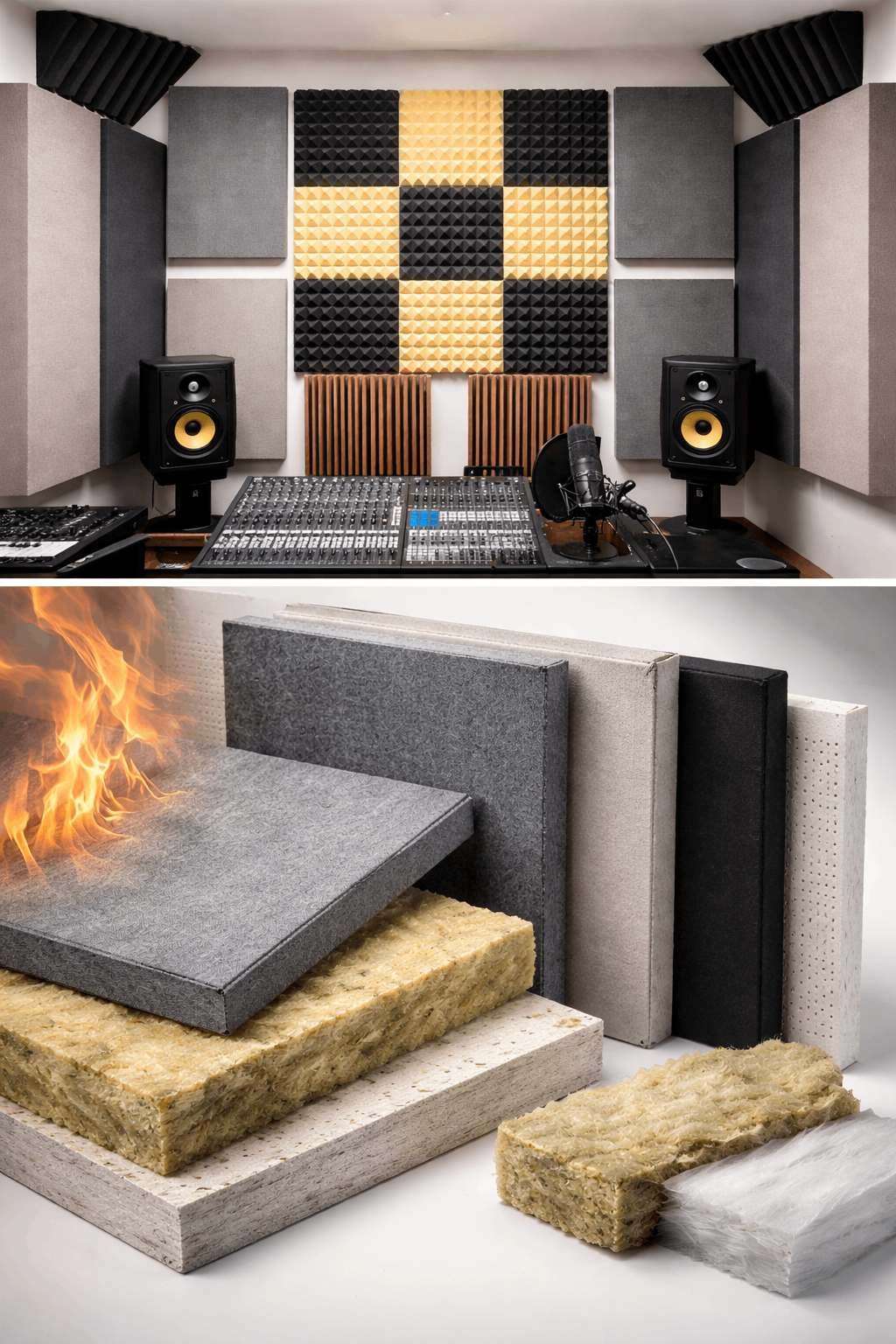
These panels typically consist of fire-resistant core materials—such as mineral wool, fiberglass, or treated polyester fiber—combined with flame-retardant fabrics or coatings. Their purpose is not to make a studio fireproof, but to minimize fire hazards and provide additional time for evacuation in the event of an emergency.
Why Fire Rating Matters in Studio Environments
Studios are uniquely vulnerable to fire risks due to the presence of:
Electrical equipment and wiring
Heat-generating devices such as amplifiers and lighting
Dense acoustic treatments covering large wall and ceiling areas
Enclosed spaces with limited ventilation
Without fire-rated studio acoustic panels, a small electrical fault can quickly turn into a major hazard. In commercial settings such as recording studios, rehearsal rooms, and educational facilities, fire-rated materials are often mandatory under building codes.
Even for home studios, using fire-rated panels is strongly recommended, particularly in rooms with extensive acoustic treatment.
Common Fire Safety Standards for Acoustic Panels
Understanding fire ratings can be confusing, as different regions follow different testing systems. Below are the most widely recognized fire safety standards you should be aware of.
ASTM E84 / UL 723 (United States)
ASTM E84, also known as the Steiner Tunnel Test, measures two critical factors:
Fire-rated studio acoustic panels typically aim for Class A certification, which means:
Class A panels are suitable for use in most commercial and residential studios in the U.S.
EN 13501-1 (European Union)
In Europe, fire performance is classified under EN 13501-1, using ratings such as:
A1 / A2: Non-combustible or very limited combustibility
B: Limited contribution to fire
C / D: Moderate fire contribution
For studio acoustic panels, Class B-s1,d0 is commonly required, indicating low flame spread, minimal smoke production, and no flaming droplets.
BS 476 (United Kingdom)
BS 476 is a traditional British fire testing standard, focusing on:
Surface spread of flame
Fire propagation
Panels rated Class 0 or Class 1 are considered suitable for studio environments.
Materials Used in Fire-Rated Studio Acoustic Panels
The fire performance of acoustic panels depends heavily on their core and surface materials.
Mineral Wool and Fiberglass
These materials are naturally non-combustible and offer excellent sound absorption, particularly in mid and low frequencies. They are commonly used in professional fire-rated studio acoustic panels due to their reliability and compliance with international standards.
Fire-Retardant Polyester Fiber
Polyester panels can be treated with flame-retardant additives to meet Class A or equivalent standards. They are lightweight, durable, and environmentally friendly, making them popular in modern studio designs.
Flame-Retardant Fabrics
The outer fabric covering must also meet fire standards. Certified fabrics resist ignition and prevent flame spread, ensuring the panel maintains its fire rating as a complete system.
Fire-Rated Panels vs Standard Acoustic Foam
While acoustic foam is widely used, many low-cost foam panels lack proper fire certification. Standard polyurethane foam can ignite easily and produce toxic smoke when burned.
| Feature | Fire-Rated Acoustic Panels | Standard Foam Panels |
|---|
| Fire Resistance | Certified, tested | Often uncertified |
| Smoke Emission | Low | High |
| Durability | Long-lasting | Can degrade |
| Compliance | Meets building codes | Often non-compliant |
| Safety | High | Low to moderate |
For professional or commercial studios, fire-rated studio acoustic panels are the safer and more responsible choice.
Where Fire-Rated Acoustic Panels Are Required
Fire-rated panels are strongly recommended or legally required in:
Commercial recording studios
Broadcasting and podcast facilities
Music schools and educational institutions
Theaters and performance venues
Corporate media rooms
In many jurisdictions, insurance companies also require fire-rated materials for coverage approval.
Installation Considerations for Fire Safety
Even certified fire-rated studio acoustic panels must be installed correctly to maintain compliance:
Use approved mounting systems that do not compromise fire resistance
Avoid covering emergency exits, sprinklers, or detectors
Follow manufacturer spacing and placement guidelines
Retain certification documents for inspections and insurance
Improper installation can void fire ratings and create safety risks.
Acoustic Performance Without Compromise
A common misconception is that fire-rated panels sacrifice sound quality. In reality, many fire-rated studio acoustic panels offer equal or superior acoustic performance compared to non-rated alternatives. Their dense materials effectively control echo, flutter, and standing waves while maintaining safety compliance.
Long-Term Benefits of Fire-Rated Studio Acoustic Panels
Investing in fire-rated panels provides multiple long-term advantages:
These benefits make fire-rated studio acoustic panels a smart investment rather than an optional upgrade.
Conclusion
Fire-rated studio acoustic panels are not just an accessory—they are a critical safety component in any serious studio environment. By understanding fire safety standards such as ASTM E84, EN 13501-1, and BS 476, studio owners can make informed decisions that protect both people and property.
Whether you are building a professional recording studio or upgrading a home setup, choosing certified fire-rated studio acoustic panels ensures that excellent sound quality and fire safety go hand in hand. Prioritizing safety today can prevent costly and dangerous consequences tomorrow.
ROYDAA, as a professional supplier of fire-rated studio acoustic panels, provides high-quality solutions that combine superior sound absorption with certified fire safety standards. Our panels are ideal for recording studios, broadcast rooms, home studios, and educational facilities, offering durability, aesthetic design, and compliance with international fire regulations to ensure both safety and exceptional acoustic performance.




 +86 18963687089

 en
en it
it es
es hu
hu ja
ja sv
sv pt
pt ms
ms ko
ko ru
ru fr
fr de
de ar
ar