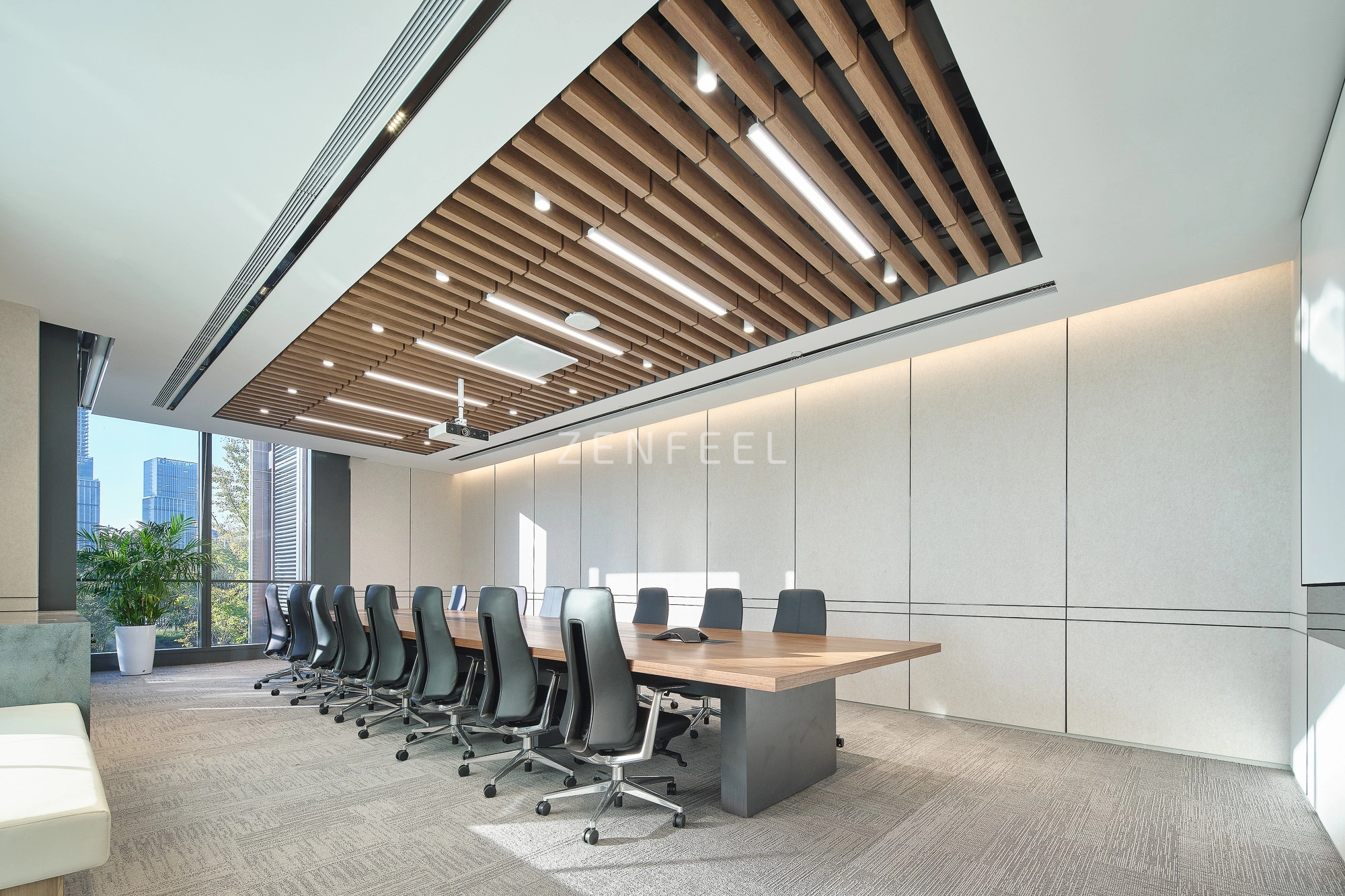
When designing a quieter and more comfortable interior, choosing the right acoustic treatment can make a significant difference. Unwanted reflections, excessive reverberation, background noise, and poor speech clarity can affect everything from productivity in an office to the listening experience in a home theater. Among the many sound-absorbing products available today, honeycomb acoustic panels and acoustic foam panels are two commonly considered solutions.
At first glance, the two products may appear to serve the same purpose. Both can be installed on walls or ceilings, both are designed to manage reflected sound, and both can improve the acoustic characteristics of a room. However, their construction, appearance, performance, durability, installation requirements, and application possibilities can be quite different.
So, when comparing honeycomb acoustic panels vs. foam panels, which option is better for noise control?
The answer depends on the type of noise problem, the room environment, the desired acoustic performance, and the priorities of the project. Understanding these differences can help architects, interior designers, contractors, facility managers, studio owners, and other buyers select a more appropriate acoustic solution.
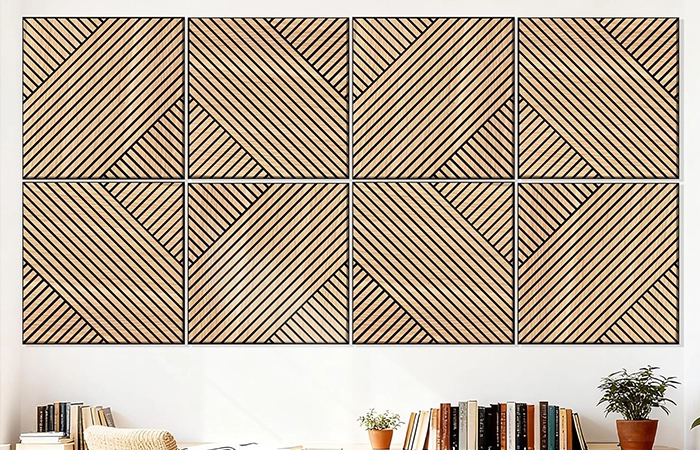
Understanding What Acoustic Panels Actually Do
Before comparing honeycomb acoustic panels with foam panels, it is important to understand the role of an acoustic panel.
Acoustic panels are primarily designed to absorb sound energy. When sound waves travel through a room, some energy is absorbed by furniture, curtains, carpets, wall treatments, and other materials, while the rest is reflected by hard surfaces such as concrete, glass, tile, and painted walls.
Too many reflections can create:
Excessive reverberation
Echoes
Reduced speech intelligibility
Harsh or uncomfortable sound
Increased perceived noise
Poor audio recording quality
Acoustic treatment helps control these reflections by converting part of the sound energy into a small amount of heat within the absorbing material.
This is different from true soundproofing.
A wall-mounted acoustic panel generally does not stop sound from passing through a wall or ceiling in the same way that a properly designed sound isolation system does. Instead, it improves the acoustic environment inside the room.
Therefore, both honeycomb acoustic panels and foam panels should primarily be viewed as sound absorption and room acoustic treatment products, rather than complete soundproofing systems.
What Are Honeycomb Acoustic Panels?
Honeycomb acoustic panels are acoustic treatment products that incorporate a honeycomb-inspired structure into their construction or design. Depending on the manufacturer and product configuration, the honeycomb structure can contribute to a combination of sound absorption, lightweight construction, rigidity, visual appeal, and structural efficiency.
The honeycomb concept has long been used in engineering because it can provide a favorable strength-to-weight ratio. In acoustic applications, the structure can be combined with porous or fibrous sound-absorbing materials to create a panel suitable for commercial and architectural interiors.
The exact acoustic performance of a honeycomb acoustic panel depends on its materials, thickness, density, surface construction, internal structure, mounting method, and the frequencies being treated.
This is important because there is no single performance level shared by every honeycomb acoustic panel.
Some products may be designed primarily for architectural aesthetics, while others are engineered specifically for sound absorption.
For professional projects, buyers should therefore examine actual acoustic test data rather than selecting a product solely because of its appearance or name.
What Are Acoustic Foam Panels?
Acoustic foam panels are typically made from open-cell polyurethane or melamine foam. Their porous structure allows sound waves to enter the material, where part of the acoustic energy is dissipated.
Foam panels are widely used in:
Recording studios
Podcast rooms
Voice-over booths
Home studios
Music practice rooms
Home theaters
Offices
Gaming rooms
Small commercial spaces
Their popularity comes partly from their lightweight construction and relatively simple installation.
Acoustic foam is especially useful for controlling mid- and high-frequency reflections. However, thin foam products generally have limited effectiveness at very low frequencies.
This means that covering a wall with a large amount of thin foam does not automatically create a fully balanced acoustic environment.
Honeycomb Acoustic Panels vs. Foam Panels: Key Differences
The most useful way to compare the two solutions is to examine several practical factors rather than asking which material is universally better.
1. Sound Absorption Performance
Sound absorption is one of the most important considerations.
Acoustic foam works by allowing sound waves to penetrate its porous structure. Its performance is strongly influenced by thickness and density. Thicker foam generally has greater potential for absorbing lower frequencies than very thin foam.
Honeycomb acoustic panels can use different structural and absorbing materials, meaning their acoustic behavior can vary considerably from one product to another.
A properly engineered honeycomb panel can offer effective absorption across relevant frequency ranges, particularly when its structure and absorbing core are designed for the application.
However, the word "honeycomb" alone does not guarantee superior acoustic performance.
For either product, buyers should look for measurable acoustic data such as Noise Reduction Coefficient (NRC), sound absorption coefficients by frequency, or other relevant laboratory test results.
For example, a product may have a high overall NRC but still provide limited absorption at low frequencies. Looking only at one number can therefore hide important differences.
2. Low-Frequency Noise Control
Low-frequency sound is one of the most challenging acoustic problems.
Bass energy has longer wavelengths and can travel through rooms differently from higher-frequency sound. Thin decorative panels or thin foam products may not provide enough depth to absorb significant amounts of low-frequency energy.
If a project involves:
Bass-heavy music
Mechanical equipment
HVAC noise
Industrial machinery
Large sound systems
Low-frequency room modes
then a complete acoustic design may require thicker absorbers, bass traps, suspended treatments, or other specialized solutions.
In this situation, neither a thin honeycomb acoustic panel nor a thin foam panel should be considered a universal answer.
The better option is the product that provides the appropriate absorption characteristics for the target frequency range.
3. Appearance and Interior Design
This is an area where honeycomb acoustic panels can offer a significant advantage for architectural projects.
Foam panels are often associated with studio-style environments. Although modern acoustic foam is available in different colors, profiles, and shapes, its visual appearance can still be difficult to integrate into premium commercial interiors.
Honeycomb acoustic panels can be designed with more architectural flexibility.
Depending on the product, they may be available in different:
Colors
Surface finishes
Patterns
Sizes
Shapes
Textures
Edge configurations
This makes them suitable for environments where acoustic performance and visual design need to work together.
For offices, conference rooms, hospitality spaces, educational facilities, restaurants, and public interiors, acoustic treatment often needs to look like part of the interior rather than an afterthought.
In these cases, decorative acoustic panels can provide a more integrated solution.
4. Durability
Durability is another important difference.
Acoustic foam is relatively soft. It can be compressed, torn, damaged, or deformed through repeated physical contact. In areas where panels are exposed to frequent handling, furniture movement, cleaning, or accidental impact, this can become a concern.
Depending on their construction, honeycomb acoustic panels may provide a more rigid and durable surface.
This can make them attractive for commercial environments where acoustic products are expected to remain in place for many years.
However, durability still depends on the specific material and manufacturing process.
A buyer should evaluate:
rather than assuming that every honeycomb acoustic panel will automatically outperform foam.
5. Fire Safety Considerations
Fire performance is particularly important for commercial and public buildings.
Foam products can have different fire characteristics depending on their formulation and certification. Some acoustic foams are specifically manufactured to meet applicable fire-resistance or flame-retardancy requirements, while others may not be suitable for certain commercial applications.
Honeycomb acoustic panels also vary significantly depending on their core and facing materials.
Therefore, fire performance should always be verified through the appropriate documentation and certifications for the intended market and building type.
For projects such as hotels, schools, cinemas, offices, transportation facilities, and public buildings, buyers should confirm that the selected acoustic wall panels comply with applicable local building and fire regulations.
This should be treated as a project requirement rather than simply a product preference.
6. Installation
Acoustic foam panels are generally easy to install because they are lightweight. Adhesive, double-sided mounting systems, or other simple attachment methods can sometimes be used depending on the surface and application.
Honeycomb acoustic panels may require a more structured mounting system, especially when they are larger, heavier, or designed as part of an architectural installation.
However, this can also be an advantage.
A professional mounting system can make it easier to create organized wall layouts, maintain consistent spacing, and remove or replace panels when required.
For large commercial projects, installation should be considered together with maintenance and future renovation requirements.
The cheapest installation method is not necessarily the most cost-effective solution over the product's entire service life.
Acoustic Performance and Panel Placement
Regardless of which material is selected, acoustic panel placement is critical.
Installing panels randomly across a wall may produce less effective results than strategically treating the major reflection points.
For example, in a meeting room, panels may be positioned to reduce reflections between opposing walls and improve speech clarity.
In a home theater, acoustic treatment may be placed at first reflection points while additional low-frequency treatment addresses room modes.
In a recording studio, wall and ceiling treatments need to be carefully planned according to the room's dimensions, speaker positions, listening position, and desired acoustic response.
This means the question should not simply be:
"How many acoustic panels should I buy?"
A better question is:
"Where will the acoustic treatment have the greatest impact?"
Which Is Better for an Office?
For modern offices, honeycomb acoustic panels may be the more attractive choice when appearance, durability, and acoustic performance all matter.
Open-plan offices often suffer from conversations, telephone calls, meeting activity, and general background noise. Excessive reflections can make these sounds feel more noticeable and make speech harder to understand.
Strategically installed office acoustic panels can help reduce reverberation and improve speech intelligibility.
Honeycomb acoustic panels are particularly worth considering when the design team wants acoustic treatment that integrates with the interior concept.
However, if the office has a very limited budget and the treatment will be installed in a low-visibility area, acoustic foam may still be a practical solution.
Which Is Better for a Recording Studio?
The answer is more complicated for recording studios.
Studios require careful frequency control. Simply covering walls with foam can create an acoustically unbalanced room by absorbing too much high-frequency energy while leaving lower frequencies relatively untreated.
High-quality acoustic panels, bass traps, ceiling clouds, diffusers, and other treatments may need to work together.
For professional recording environments, the best choice should therefore be based on measured acoustic performance rather than panel type alone.
Honeycomb acoustic panels can be suitable when they provide the required absorption characteristics and integrate with the studio's design. Acoustic foam remains useful for targeted high- and mid-frequency reflection control.
Which Is Better for Home Theaters?
Home theaters require a balanced acoustic environment.
Hard walls, ceilings, flooring, and screens can produce strong reflections that interfere with dialogue and music.
A combination of home theater acoustic panels, bass traps, carpeting, curtains, and other treatments can help create a more controlled listening environment.
Honeycomb panels can be particularly attractive for homeowners who want acoustic treatment that looks more sophisticated than conventional foam.
However, the acoustic design should still consider low-frequency management. Decorative wall panels alone may not solve bass problems.
Which Is Better for Restaurants and Hospitality Spaces?
Restaurants are often challenging acoustic environments because they contain many hard surfaces.
Tables, glass, tile, concrete, and exposed architectural elements can all reflect sound.
As the number of customers increases, conversations can become louder. This can create a cycle in which people speak louder because the environment is noisy, making the overall acoustic environment even worse.
In these applications, attractive commercial acoustic panels can help reduce reverberation while maintaining the visual character of the space.
Honeycomb acoustic panels can be a strong option when the restaurant or hotel wants acoustic treatment to become part of the interior design.
Foam is generally less appropriate for highly visible hospitality areas because its appearance may not match the desired design language.
Cost: Are Honeycomb Acoustic Panels More Expensive?
Cost depends heavily on the specific construction, materials, finish, dimensions, manufacturing process, and order quantity.
Basic acoustic foam is usually inexpensive and easy to produce in standardized forms.
Honeycomb acoustic panels may involve more complex manufacturing, architectural finishes, structural components, or customized dimensions. As a result, the initial purchase price may be higher.
However, initial price should not be the only consideration.
A commercial buyer should consider total value, including:
Acoustic performance
Product lifespan
Installation cost
Maintenance
Fire requirements
Visual appearance
Replacement frequency
Customization
Long-term usability
A slightly more expensive acoustic panel may deliver better value if it lasts longer and meets the design requirements more effectively.
How to Choose Between Honeycomb Acoustic Panels and Foam Panels
A practical selection process can begin with five questions.
What Type of Noise Problem Are You Solving?
Determine whether the main issue is echo, reverberation, speech clarity, music reflections, mechanical noise, or sound transmission.
If sound is passing through walls, acoustic absorption alone will not solve the problem.
What Frequency Range Needs Treatment?
Determine whether the problem primarily involves high, medium, or low frequencies.
This helps identify the appropriate panel thickness and acoustic construction.
How Important Is Appearance?
For a recording booth, appearance may be secondary.
For a luxury hotel, office, restaurant, or corporate meeting room, aesthetics may be equally important as acoustic performance.
What Environmental Requirements Apply?
Consider fire performance, moisture, cleaning, impact resistance, and other building requirements.
Is Customization Necessary?
If the project requires custom dimensions, colors, patterns, or architectural integration, honeycomb acoustic panels may provide greater design flexibility than standard foam products.
Can Honeycomb Acoustic Panels and Foam Panels Be Used Together?
Absolutely.
There is no requirement to select only one acoustic treatment material.
In fact, combining different types of acoustic products can be an effective way to address different acoustic problems.
For example, a room might use:
Honeycomb acoustic panels for broad wall absorption
Acoustic foam for targeted reflection control
Bass traps for low-frequency management
Ceiling acoustic panels for overhead reflections
Acoustic clouds for large open spaces
Carpeting or rugs for additional surface absorption
The goal should be to create a balanced acoustic environment rather than simply maximize the amount of absorption.
Too much absorption in certain frequency ranges can make a room sound unnaturally dead, while insufficient absorption can leave the space excessively reverberant.
What Should Buyers Look for in Acoustic Panels?
When purchasing acoustic treatment for a professional project, avoid selecting products based solely on photographs or marketing descriptions.
Instead, ask the supplier for technical information such as:
Acoustic test results: Look for absorption coefficients or NRC data where applicable.
Material specifications: Understand the panel core, surface, backing, and structural components.
Fire performance: Confirm relevant certifications for the intended application.
Panel thickness: Thickness can have a major effect on frequency-dependent absorption.
Mounting method: Consider whether the installation system is suitable for the wall or ceiling.
Environmental resistance: For humid or demanding environments, check moisture and durability characteristics.
Customization options: Confirm available dimensions, colors, finishes, and shapes.
Application recommendations: A knowledgeable manufacturer should be able to explain where and how the panels are best used.
The Importance of Professional Acoustic Design
One common mistake is treating acoustic panels as decorative products rather than functional acoustic components.
A room's dimensions, construction materials, furniture, occupancy, sound sources, speaker locations, and intended use all influence acoustic performance.
For a small office, a basic treatment strategy may be sufficient.
For a cinema, recording studio, conference center, auditorium, or industrial facility, professional acoustic analysis may be more appropriate.
Acoustic treatment should ideally be based on the actual characteristics of the room.
The best acoustic panel is not necessarily the one with the highest advertised absorption rating. It is the one that provides appropriate performance in the right location and works as part of the overall acoustic strategy.
Final Verdict: Honeycomb Acoustic Panels or Foam Panels?
So, which is better for noise control?
Honeycomb acoustic panels can be the better choice when a project requires a combination of acoustic performance, durability, architectural appearance, and customization. They are especially attractive for offices, hospitality environments, commercial interiors, educational facilities, and other spaces where acoustic treatment needs to blend with the overall design.
Acoustic foam panels can be the better choice when affordability, lightweight construction, and straightforward installation are the main priorities. They remain useful for recording spaces, home studios, small rooms, and targeted reflection control.
However, neither product should be considered a universal solution for every noise problem.
The right choice depends on the room, the frequency range being treated, the desired acoustic performance, installation conditions, appearance, safety requirements, and project budget.
For professional applications, buyers should compare acoustic panels based on verified performance data rather than simply choosing between honeycomb and foam based on appearance. A well-designed acoustic treatment system can combine multiple materials to achieve better overall results.
Ultimately, the goal is not to make a room completely silent. The goal is to create a controlled, comfortable, and functional acoustic environment where speech is easier to understand, unwanted reflections are reduced, and the space performs the way its occupants expect.




 +86 18963687089

 en
en it
it es
es hu
hu ja
ja sv
sv pt
pt ms
ms ko
ko ru
ru fr
fr de
de ar
ar