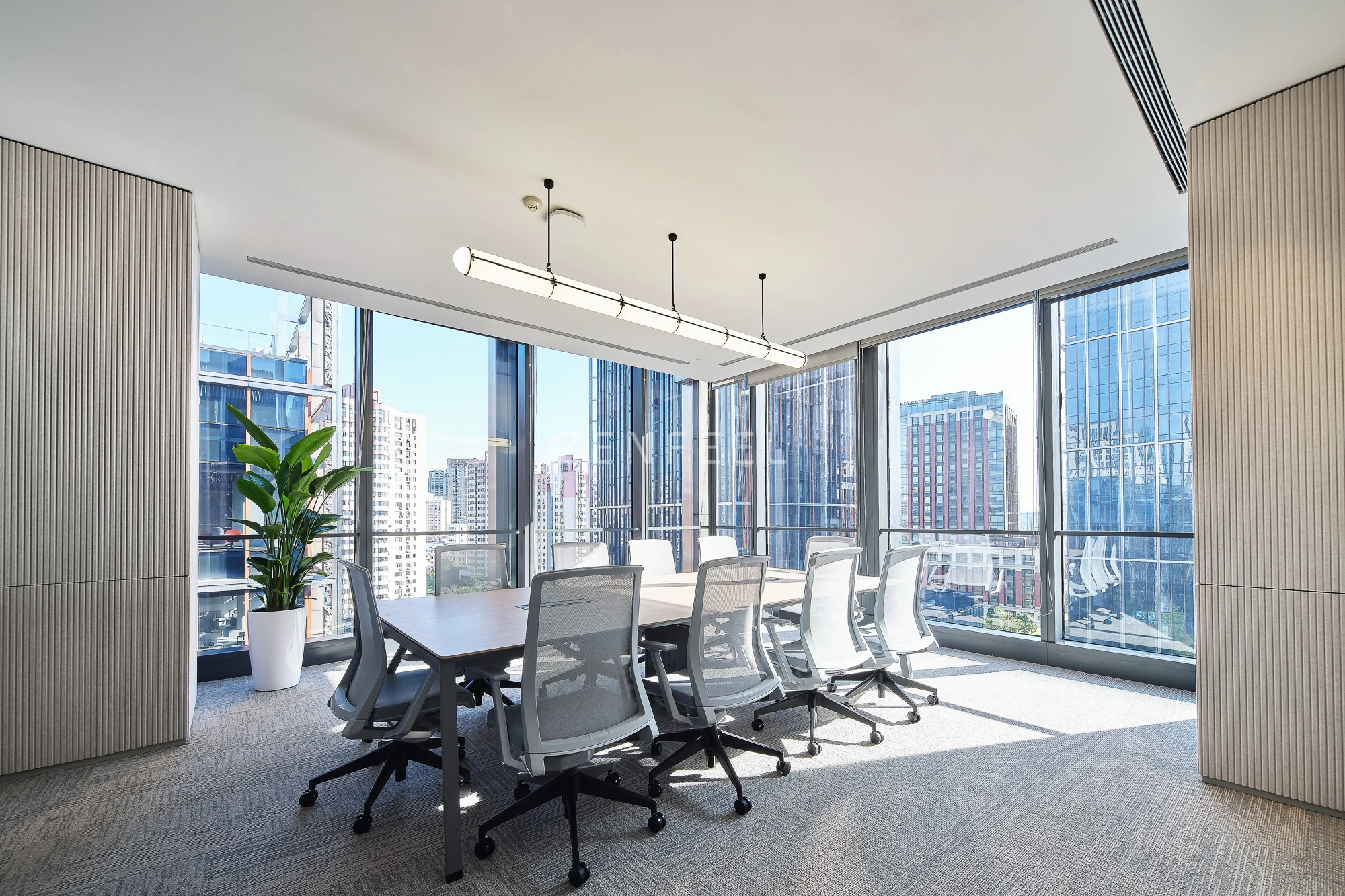
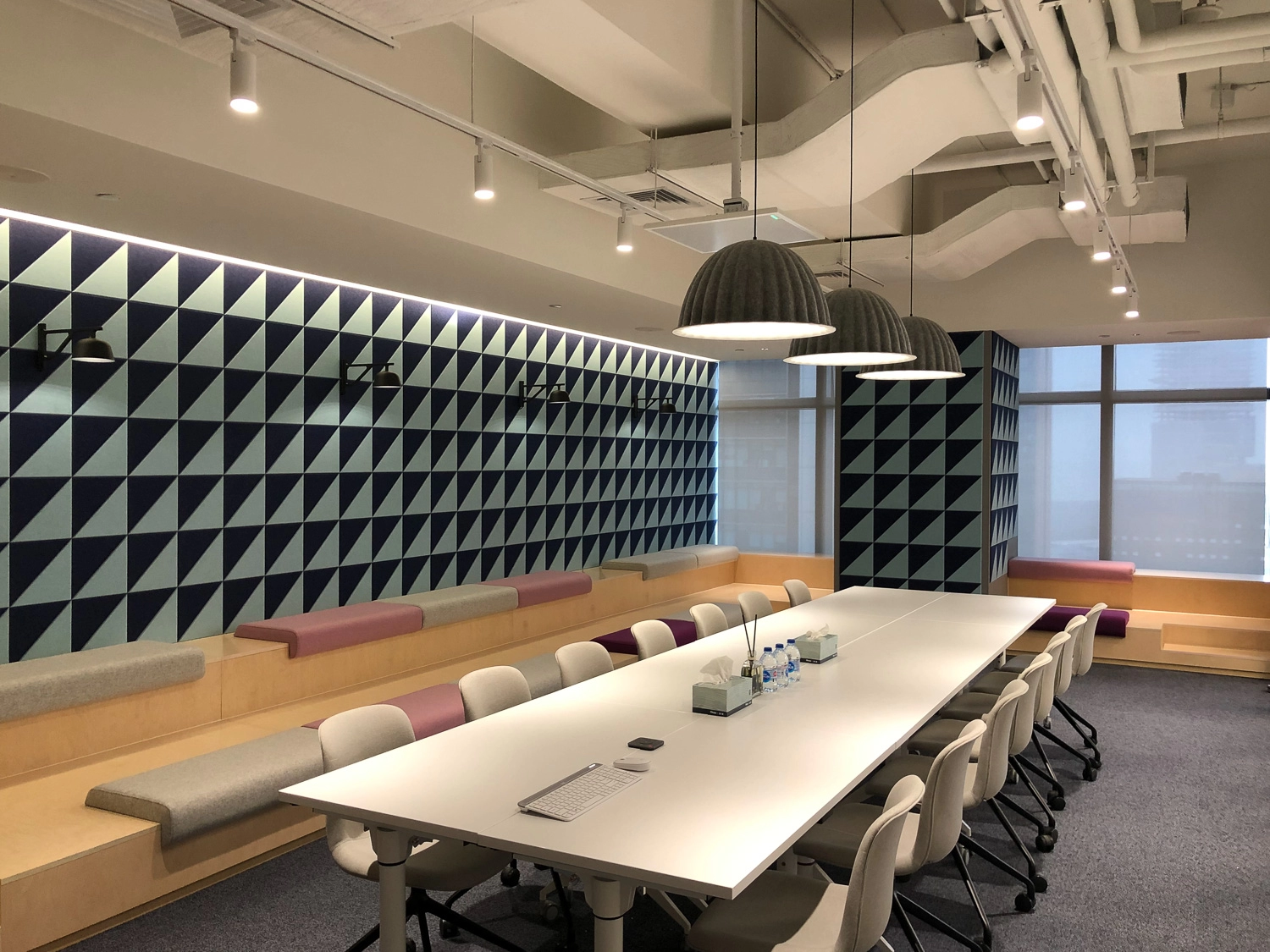
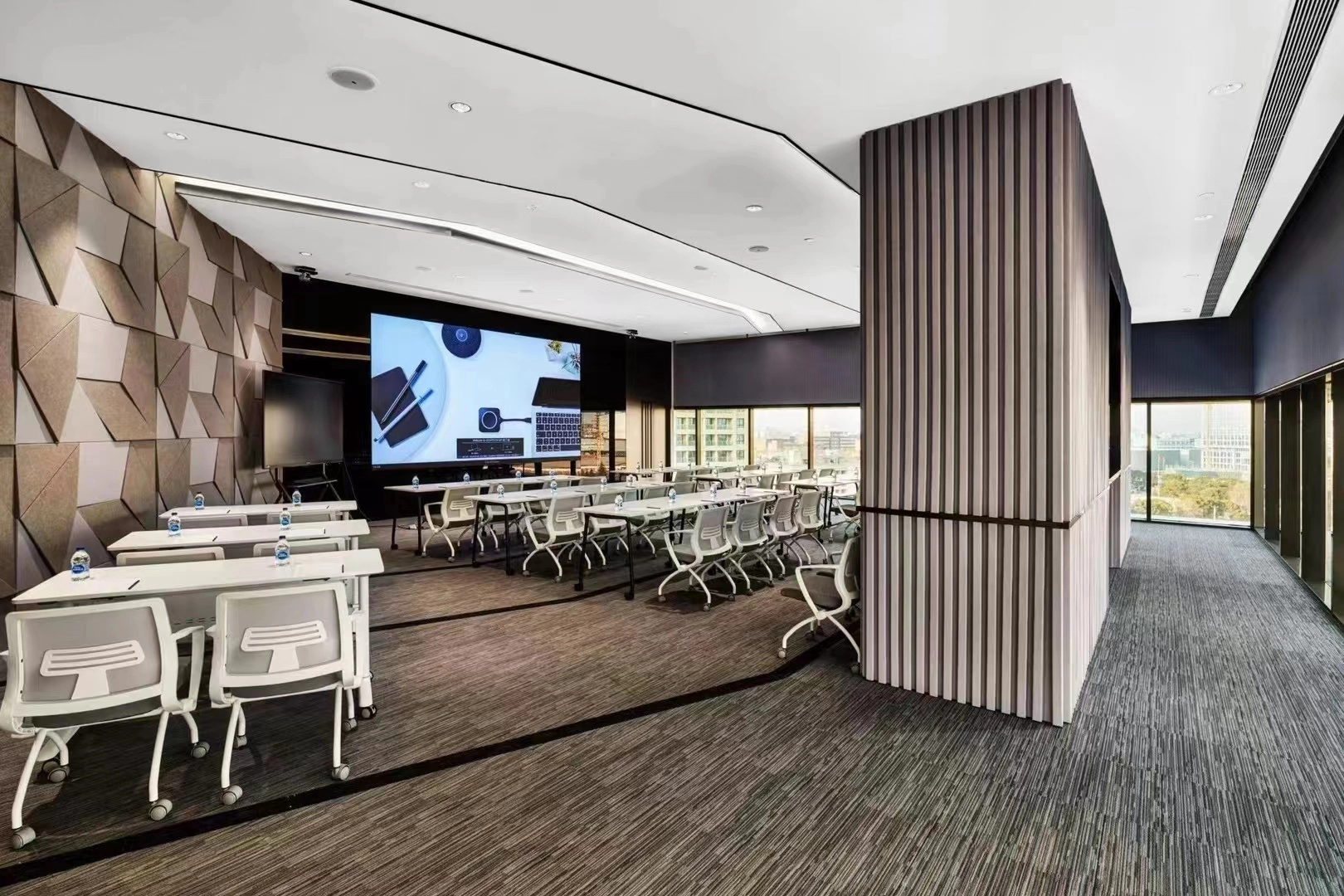
Acoustic performance is rarely the same from one building to another. A recording studio may need highly controlled reflections, a conference room may prioritize speech intelligibility, an open-plan office may need to reduce distracting conversations, while a restaurant may require a more comfortable sound environment without making the space feel acoustically dead.
Because these environments have different room dimensions, surface materials, sound sources, occupancy levels, and architectural layouts, a standard acoustic panel does not always provide the most suitable solution. This is where custom noise-reduction acoustic panels become valuable.
Custom acoustic treatment allows manufacturers, architects, acoustic consultants, and project buyers to adjust panel dimensions, materials, thickness, shapes, finishes, mounting methods, and installation layouts according to the requirements of a specific space. Instead of treating acoustic panels as generic decorative products, customization turns them into part of a broader acoustic design strategy.
For commercial, industrial, educational, entertainment, and public buildings, the right acoustic solution should address the actual source and behavior of unwanted sound. This may involve reducing reverberation, controlling reflections, improving speech clarity, minimizing background noise, or creating a more balanced acoustic environment.
This article explores how custom noise-reduction acoustic panels can meet different acoustic requirements and what buyers should consider when developing a customized acoustic treatment solution.
Why Different Spaces Need Different Acoustic Solutions
The first reason customization matters is simple: no two rooms behave acoustically in exactly the same way.
Room dimensions have a direct effect on how sound travels. A large auditorium can produce long reverberation times, while a small meeting room may suffer from strong reflections between parallel walls. An open office can contain numerous simultaneous conversations, whereas a music studio requires precise control over reflections and frequency response.
The materials used in a room also matter.
Concrete, glass, metal, ceramic tile, and other hard surfaces tend to reflect significant amounts of sound. Carpeting, upholstered furniture, curtains, and absorptive wall materials can reduce reflections.
The location and type of sound sources are equally important. A restaurant may have conversations distributed throughout the room, while an industrial facility may have concentrated noise from machinery. In a conference room, speech is usually the primary sound that needs to remain clear.
Therefore, choosing noise-reduction acoustic panels should begin with the acoustic problem rather than the appearance of the product.
A customized solution can be developed around factors such as:
Room dimensions and geometry
Primary noise sources
Frequency range of the unwanted sound
Reverberation requirements
Desired speech intelligibility
Existing wall and ceiling materials
Interior design requirements
Fire and safety requirements
Available installation space
Cleaning and maintenance requirements
This approach makes acoustic treatment more targeted and effective.
What Does Customization Mean for Acoustic Panels?
Customization does not simply mean choosing a different color.
For acoustic panels, customization can involve the entire construction and installation system.
Depending on the manufacturer and project requirements, buyers may be able to customize:
Each of these factors can influence the final performance or practical application of the acoustic treatment.
For example, a designer may require large-format panels for a high-ceilinged auditorium, while a small office may benefit from compact wall-mounted panels. A modern interior may call for geometric custom acoustic panels, while an industrial environment may prioritize durability and easy maintenance.
The value of customization lies in matching the product to the actual project.
Custom Panel Thickness for Different Acoustic Needs
Panel thickness is one of the most important variables in acoustic treatment.
Sound absorption is frequency-dependent. Different materials and panel constructions perform differently across low, medium, and high frequencies.
Thin absorptive panels can be useful for controlling certain mid- and high-frequency reflections. However, when a project requires broader frequency absorption, a thicker acoustic structure or additional air space may be appropriate.
For example, a recording environment may require a carefully balanced combination of absorption and diffusion. An office may primarily need to reduce speech reflections and reverberation. An industrial application could require a more robust acoustic system designed for a larger and noisier environment.
By adjusting panel thickness, manufacturers can create noise-reduction acoustic panels that better match the performance objectives of a specific application.
However, thickness should not be selected in isolation. The acoustic core, surface material, mounting configuration, and distance from the wall can all influence performance.
Adjusting Acoustic Materials for Different Applications
The internal material of an acoustic panel plays a major role in its performance.
Common acoustic panel constructions may include porous or fibrous absorptive materials, PET-based materials, mineral fiber solutions, foam-based materials, or other engineered acoustic cores.
Each material has different characteristics in terms of:
For example, a commercial office may prioritize lightweight panels with an attractive fabric finish. A public building may place greater emphasis on fire performance and durability. A specialized acoustic space may require a more carefully engineered material combination.
This means custom noise-reduction acoustic panels can be designed around both acoustic performance and the practical conditions of the installation environment.
Custom Shapes Can Solve Architectural Challenges
Not every wall is a simple rectangle.
Modern buildings often include curved walls, columns, sloped ceilings, recessed areas, decorative structures, and irregular architectural features.
Standard rectangular panels may leave awkward gaps or fail to integrate properly with the surrounding design.
Custom shapes can help overcome these challenges.
Acoustic panels can potentially be manufactured in different:
For example, honeycomb acoustic panels can be arranged in repeating geometric patterns to combine acoustic treatment with architectural decoration.
Custom geometric acoustic panels are particularly suitable for offices, hotels, restaurants, theaters, educational facilities, and public spaces where visual appearance is an important part of the project.
Matching Acoustic Panels to Frequency Requirements
One of the biggest mistakes in acoustic treatment is assuming that all noise behaves in the same way.
It does not.
Low-frequency noise can come from machinery, HVAC systems, subwoofers, transportation equipment, and other sources. Mid-frequency sound often includes human speech and many common indoor noise sources. High-frequency sound can include sharper reflections and certain mechanical sounds.
Different acoustic materials and panel constructions have different absorption characteristics at different frequencies.
Therefore, a project that primarily suffers from speech-related reverberation may require a different treatment strategy from a factory dealing with substantial low-frequency machinery noise.
Custom noise-reduction acoustic panels allow designers to select panel constructions according to the frequency characteristics of the space.
Where necessary, acoustic panels can also be combined with other solutions such as bass traps, diffusers, ceiling absorbers, acoustic barriers, and architectural sound isolation.
The goal is not simply to absorb as much sound as possible. The goal is to achieve the appropriate acoustic balance.
Customizing the Panel Surface
The visible surface of an acoustic panel is particularly important in commercial and architectural projects.
Acoustic treatment is often installed in highly visible locations. A product that performs well but does not fit the interior design may not be acceptable to the project owner or architect.
Custom surface options can help acoustic panels integrate into the overall space.
Possible choices include:
For example, a hotel lobby may use acoustic panels that match the brand's interior color palette. A corporate office may use company colors to create a consistent visual identity. A theater may incorporate acoustic treatment into the architectural design through geometric patterns.
In this way, custom acoustic wall panels can serve both functional and aesthetic purposes.
Custom Dimensions Improve Installation Efficiency
Standard panel sizes can be convenient for general applications, but they may not always be efficient for large-scale projects.
Imagine a wall that is 2.8 meters wide but the selected panel has a fixed width that creates an undesirable narrow gap at the edge.
Custom dimensions can reduce these problems.
Manufacturers can produce panels according to project measurements, helping designers create more consistent layouts.
This can be especially useful for:
Large auditoriums
Conference centers
Office interiors
Hotels
Restaurants
Schools
Recording facilities
Cinemas
Industrial buildings
Custom dimensions can also simplify coordination with doors, windows, lighting fixtures, ventilation openings, and other architectural elements.
Wall-Mounted and Ceiling-Mounted Acoustic Panels
Acoustic treatment does not have to be limited to walls.
Ceilings can provide significant opportunities for sound absorption, especially in spaces with large hard surfaces.
Custom noise-reduction acoustic panels can be designed for different mounting methods, depending on the project.
Wall-mounted panels can target reflection points and provide visible acoustic treatment.
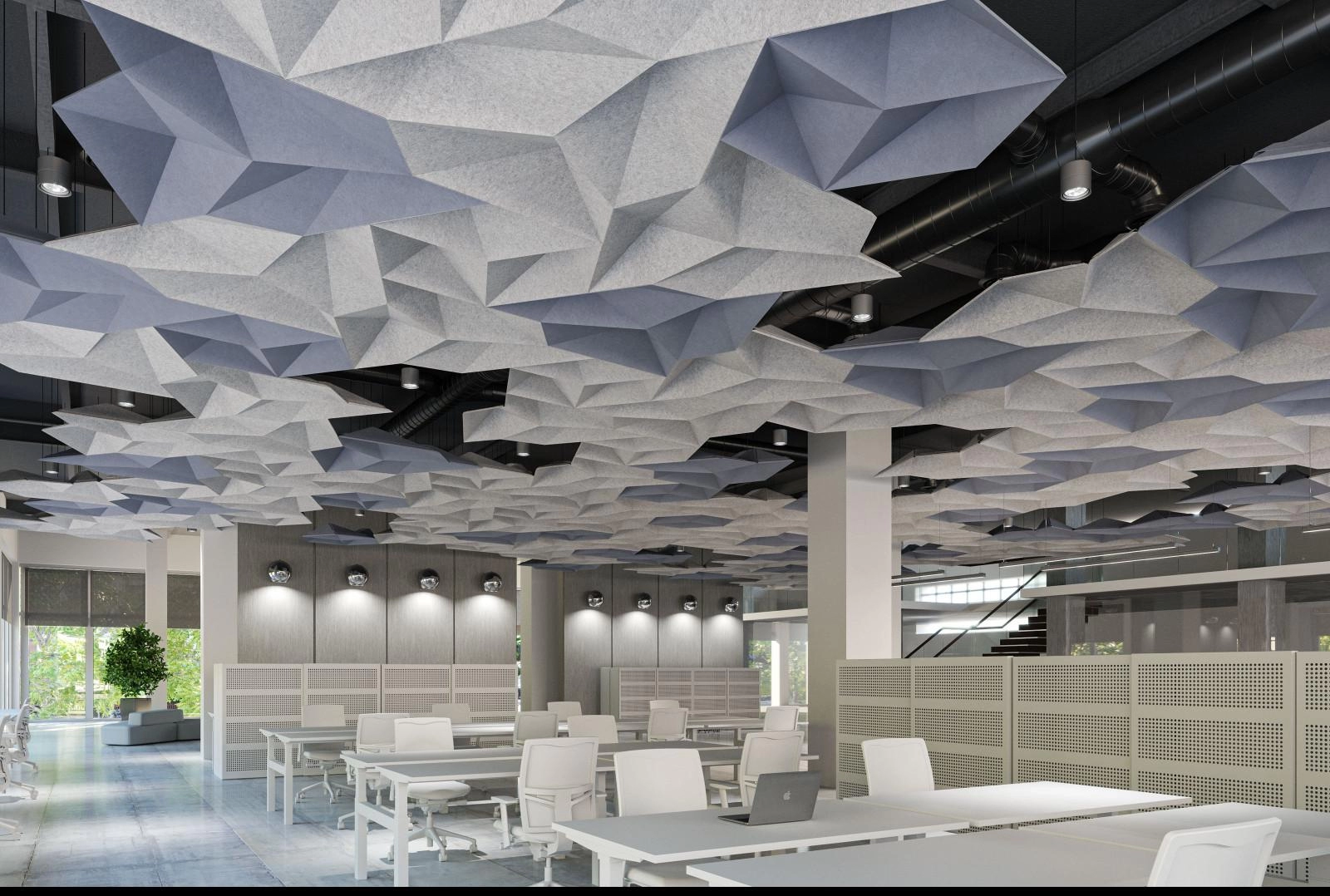
Ceiling-mounted panels can be suspended as acoustic clouds or integrated into ceiling systems.
Freestanding acoustic partitions can be used to divide open areas while reducing sound transmission between work zones.
The best configuration depends on the room's geometry and acoustic objectives.
Using Air Gaps to Improve Acoustic Performance
The distance between an acoustic panel and the wall can influence its absorption characteristics.
An air gap behind a porous acoustic panel can improve the panel's ability to absorb certain lower-frequency sound compared with direct mounting, depending on the panel construction.
This provides another opportunity for customization.
Instead of changing the material itself, a manufacturer or acoustic designer may adjust the mounting system to create a specific distance between the panel and the wall.
However, the effect depends on the material, thickness, frequency range, and installation configuration. Buyers should therefore evaluate tested performance for the actual installation method whenever possible.
Custom Acoustic Panels for Offices
Open-plan offices are a common application for acoustic treatment.
Employees may need to communicate while also concentrating on individual tasks. When sound travels freely across a large open workspace, conversations, telephone calls, meetings, and equipment noise can become distracting.
Custom acoustic treatment can address several parts of this problem.
Wall panels can reduce reflections from large hard surfaces. Ceiling absorbers can help control sound from above. Freestanding acoustic screens can create separation between workstations.
The objective is not to eliminate communication but to create a more comfortable acoustic environment.
For office projects, the appearance of the panels is often just as important as their acoustic performance. Custom colors, shapes, and dimensions can help the treatment blend into modern workplace interiors.
Custom Acoustic Panels for Restaurants and Hospitality Spaces
Restaurants face a different acoustic challenge.
High occupancy levels, conversations, kitchen equipment, hard floors, glass surfaces, and compact layouts can all contribute to excessive noise.
A restaurant can look beautiful while still being acoustically uncomfortable.
Custom noise-reduction acoustic panels can be integrated into walls, ceilings, decorative structures, or partitions.
Because hospitality environments are highly visual, designers may prefer decorative acoustic panels that resemble architectural features rather than conventional sound-control products.
Geometric solutions such as honeycomb acoustic panels can provide a distinctive visual element while contributing to sound absorption.
Custom Acoustic Treatment for Theaters and Auditoriums
Performance spaces require particularly careful acoustic planning.
The goal is usually not maximum absorption. Instead, designers need to control reflections and reverberation while preserving the desired acoustic character of the room.
Custom panels can be positioned according to the room's geometry and expected sound paths.
Different areas may require different acoustic treatments. Side walls, rear walls, ceilings, stage areas, and balcony structures can all behave differently.
For theaters and auditoriums, customization can therefore involve both panel construction and panel placement.
This makes project-specific acoustic design especially important.
Custom Solutions for Industrial Environments
Industrial facilities often face much higher noise levels than offices or commercial buildings.
Machinery, compressors, motors, production lines, ventilation systems, and material-handling equipment can create continuous or intermittent noise.
In such environments, acoustic treatment needs to consider durability and safety in addition to sound absorption.
Custom panels may be designed around:
High-noise areas
Machinery locations
Available wall space
Ceiling height
Cleaning requirements
Temperature and humidity
Fire requirements
Impact resistance
It is also important to recognize that acoustic panels are not always sufficient for industrial noise control. Depending on the problem, machinery enclosures, acoustic barriers, vibration isolation, equipment-room isolation, and other engineering measures may be necessary.
Customization for Speech Intelligibility
In classrooms, meeting rooms, lecture halls, hospitals, and conference facilities, speech clarity is often one of the main acoustic priorities.
Excessive reverberation can cause words to overlap, making it harder for listeners to understand speakers.
Well-positioned acoustic wall panels can reduce excessive reflections and help create a clearer sound field.
Customization can allow panels to be positioned at reflection points and adapted to the dimensions of the room.
For speech-focused environments, the objective is to create a balance where speech remains audible and clear without producing an excessively dry acoustic environment.
Custom Acoustic Panels and Fire Safety
Public and commercial buildings have strict safety requirements.
The materials used for acoustic panels may need to meet specific fire performance standards depending on the building type, location, and local regulations.
This is particularly important for:
When sourcing custom noise-reduction acoustic panels, buyers should request relevant fire-test documentation and confirm that the proposed construction meets the project's applicable requirements.
Fire performance should be considered during the design stage rather than after the panels have already been manufactured.
Durability and Maintenance Considerations
Acoustic panels are often expected to remain functional for many years.
However, different environments place different demands on them.
An office panel may only need routine dusting, while panels in a restaurant, school, transportation facility, or industrial environment may face greater exposure to dirt, impact, or frequent cleaning.
Custom construction can take these conditions into account.
When selecting acoustic treatment, buyers should consider:
Surface durability
Cleaning methods
Resistance to wear
Moisture exposure
Impact risk
Replacement requirements
Long-term appearance
The most acoustically effective panel is not necessarily the best solution if it cannot withstand the conditions of the installation environment.
Why Acoustic Testing Matters
Customization should be based on measurable performance whenever possible.
Product descriptions alone cannot tell buyers how an acoustic panel will behave in every environment.
Useful technical information may include:
Sound absorption coefficients
Frequency-dependent absorption data
NRC values where applicable
Reverberation-related test data
Fire performance
Material specifications
Mounting conditions
Installation instructions
It is important to remember that laboratory performance can depend on how a panel is mounted and tested.
A panel installed directly against a wall may perform differently from the same panel installed with an air gap or suspended from the ceiling.
Therefore, buyers should review test data that corresponds as closely as possible to the intended installation configuration.
Customization Does Not Mean "More Absorption Is Better"
One of the most important principles in acoustic design is balance.
If too much sound absorption is introduced into a room, the acoustic environment can become excessively dry. This can negatively affect music, communication, and the overall perception of the space.
A successful acoustic design may combine:
Absorption
Diffusion
Reflection
Sound isolation
Mechanical noise control
Custom noise-reduction acoustic panels should therefore be selected according to the desired acoustic outcome, not simply the maximum possible absorption rating.
This is why professional acoustic analysis can be valuable for larger or more complex projects.
How to Work with a Custom Acoustic Panel Manufacturer
A successful customization project usually begins with detailed project information.
Buyers should provide manufacturers with as much relevant information as possible, such as:
Room dimensions
Floor plans or elevations
Intended application
Main noise sources
Existing wall and ceiling materials
Desired acoustic performance
Panel installation locations
Required dimensions
Preferred colors and finishes
Fire and safety requirements
The manufacturer can then evaluate the available construction options and recommend a suitable panel configuration.
For larger projects, CAD drawings, acoustic simulations, samples, and technical testing may also be part of the process.
What to Consider When Comparing Custom Acoustic Panel Suppliers
Not every supplier offers the same level of customization.
When comparing manufacturers, buyers should look beyond product photographs and basic specifications.
Consider whether the supplier can provide:
Custom panel dimensions
Multiple material options
Different thicknesses
Acoustic test reports
Fire-test documentation
Custom colors and finishes
OEM or project-based production
Sample development
Installation guidance
Consistent production quality
A supplier's ability to understand the acoustic objective is often more valuable than simply offering a large catalog of shapes and colors.
A Practical Workflow for Developing Custom Noise-Reduction Acoustic Panels
A well-organized project can follow a relatively straightforward process.
Step 1: Identify the Acoustic Problem
Determine whether the main issue is reverberation, echo, speech clarity, background noise, or sound transmission.
Step 2: Analyze the Space
Review room dimensions, surfaces, furniture, sound sources, and architectural features.
Step 3: Define Performance Requirements
Establish the desired acoustic characteristics and frequency range.
Step 4: Select the Panel Construction
Choose the appropriate material, thickness, density, surface, and backing.
Step 5: Develop the Appearance
Select dimensions, colors, shapes, patterns, and finishes that complement the space.
Step 6: Determine Installation
Choose wall-mounted, ceiling-mounted, suspended, freestanding, or other configurations.
Step 7: Review Technical Documentation
Check acoustic data, fire performance, durability, and installation specifications.
Step 8: Manufacture and Install
Produce the panels according to approved drawings and install them according to the acoustic design.
Step 9: Evaluate the Final Environment
Where appropriate, acoustic measurements can be used to determine whether the treatment has achieved the intended result.
The Future of Customized Acoustic Treatment
As modern architecture becomes more flexible and visually sophisticated, acoustic treatment is increasingly expected to perform multiple functions.
Panels are no longer viewed only as technical components. They can also become part of the architectural identity of a space.
This trend is encouraging greater development of decorative acoustic systems, modular panels, geometric designs, sustainable materials, and customized manufacturing.
Solutions such as honeycomb acoustic panels demonstrate how acoustic functionality and visual design can be combined in a single product concept.
For architects and project owners, this creates more opportunities to design spaces that are both acoustically comfortable and visually distinctive.
Conclusion
Different spaces create different acoustic challenges, which is why a one-size-fits-all approach does not always deliver the best results.
Custom noise-reduction acoustic panels allow acoustic treatment to be adapted to the specific requirements of a room. By adjusting panel thickness, materials, dimensions, shapes, surface finishes, mounting methods, and installation layouts, manufacturers can develop solutions for offices, theaters, restaurants, schools, studios, industrial facilities, and many other environments.
However, effective customization should begin with the acoustic objective. The right panel is not necessarily the thickest, largest, or most absorptive option. Instead, it should provide the appropriate balance between sound absorption, room acoustics, durability, safety, installation requirements, and visual design.
For projects where architectural appearance is also important, decorative options such as honeycomb acoustic panels can help integrate acoustic treatment into the overall interior concept.
Ultimately, the most effective acoustic solution is one that is designed around the space rather than forced into it. By combining reliable acoustic data, appropriate materials, customized dimensions, strategic placement, and professional installation, project owners can achieve a more comfortable, controlled, and functional sound environment.




 +86 18963687089

 en
en it
it es
es hu
hu ja
ja sv
sv pt
pt ms
ms ko
ko ru
ru fr
fr de
de ar
ar