Choosing the right acoustic treatment is not simply a matter of selecting a panel that looks attractive or has a high sound absorption rating. Different projects have different acoustic problems, room structures, usage requirements, and design expectations. A panel that works well in an open-plan office may not be the most suitable option for a restaurant, classroom, recording studio, or industrial facility.
The right noise-reduction acoustic panels should be selected according to how sound behaves in the space, what type of noise needs to be controlled, how much acoustic absorption is required, and how the panels will be installed and maintained. Material, thickness, size, coverage, mounting method, fire performance, appearance, and customization can all affect the final result.
For architects, interior designers, contractors, facility managers, and project buyers, understanding these factors can make the selection process much more efficient. This guide explains how to choose acoustic panels for different project types and what to consider before placing an order.
Start by Identifying the Acoustic Problem
Before comparing different acoustic panel products, identify what is actually causing the acoustic discomfort.
A room can feel noisy for several different reasons. Excessive sound reflection is one of the most common. When sound hits hard surfaces such as concrete, glass, tile, metal, or untreated drywall, much of the energy is reflected back into the room. Multiple reflections can increase reverberation and make speech harder to understand.
Other projects may have different requirements. A factory may need to control reflected equipment noise, while a conference room may primarily need better speech intelligibility. A restaurant may need to reduce the buildup of conversations, and a recording studio may require more carefully balanced absorption across different frequencies.
Ask several basic questions before choosing the panels:
What is the main source of unwanted sound?
Is the problem caused by reverberation or sound transmission?
Which surfaces are highly reflective?
Is speech clarity important?
Is the room used continuously or occasionally?
Are there specific frequency ranges that need attention?
How much wall or ceiling space is available?
Are there fire, hygiene, or durability requirements?
This initial assessment helps prevent a common mistake: selecting acoustic products based only on appearance or price.
Understand Sound Absorption vs Soundproofing
One of the most important distinctions in acoustic treatment is the difference between sound absorption and sound isolation.
Noise reduction acoustic panels are generally designed to absorb reflected sound within a room. They can reduce reverberation and help create a more controlled acoustic environment.
Soundproofing, on the other hand, focuses on reducing the transmission of sound from one space to another. This usually involves building construction, wall assemblies, doors, windows, ceilings, floors, seals, insulation, or other isolation measures.
For example, if employees in an office complain that conversations inside a meeting room can be heard through the wall, installing acoustic panels inside the meeting room may reduce reflections but may not provide sufficient sound isolation.
If the problem is that the room itself sounds excessively echoey, acoustic panels may be highly relevant.
Understanding this difference allows project teams to select the right solution instead of expecting one product to solve every type of noise problem.
Consider the Project Type
The intended application should strongly influence acoustic panel selection.
A panel designed for a decorative office environment may have different requirements from one installed in a factory or recording studio. Consider the following common project categories.
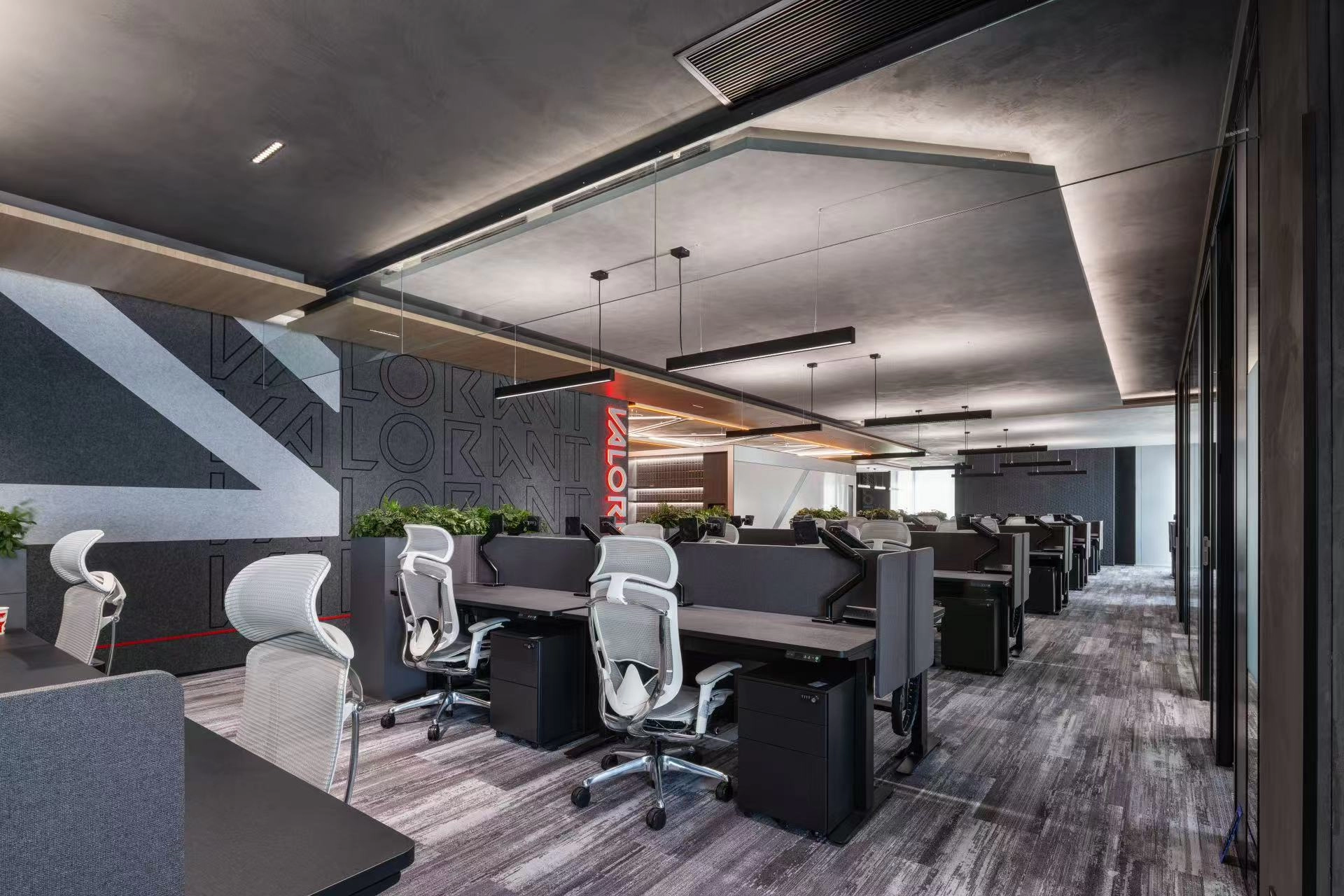
Open-Plan Offices
Open offices often contain multiple conversations, phone calls, meetings, and equipment operating in the same area. Because there are fewer physical partitions, sound can travel and reflect over relatively large distances.
For these projects, acoustic wall panels can be distributed around work zones, meeting areas, circulation spaces, and other locations where reflections are particularly noticeable.
Ceiling-mounted acoustic products can also be considered when wall space is limited. Desk screens and acoustic partitions may complement wall treatment when speech privacy between individual workstations is a concern.
For office projects, appearance is often important. PET felt panels, fabric-wrapped panels, and decorative acoustic systems can allow acoustic treatment to become part of the interior design instead of appearing as a purely technical installation.
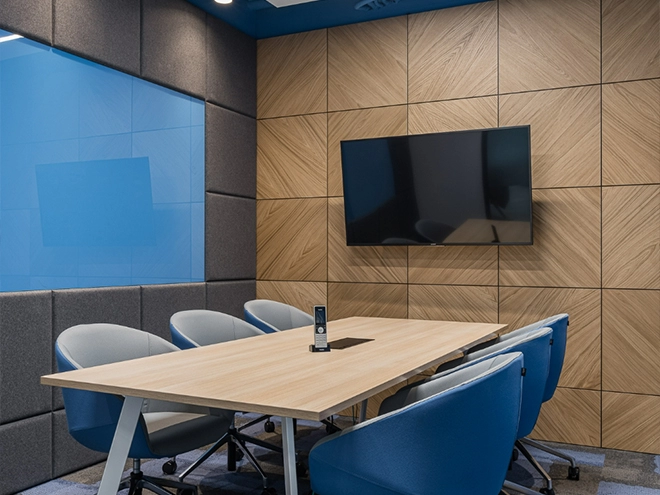
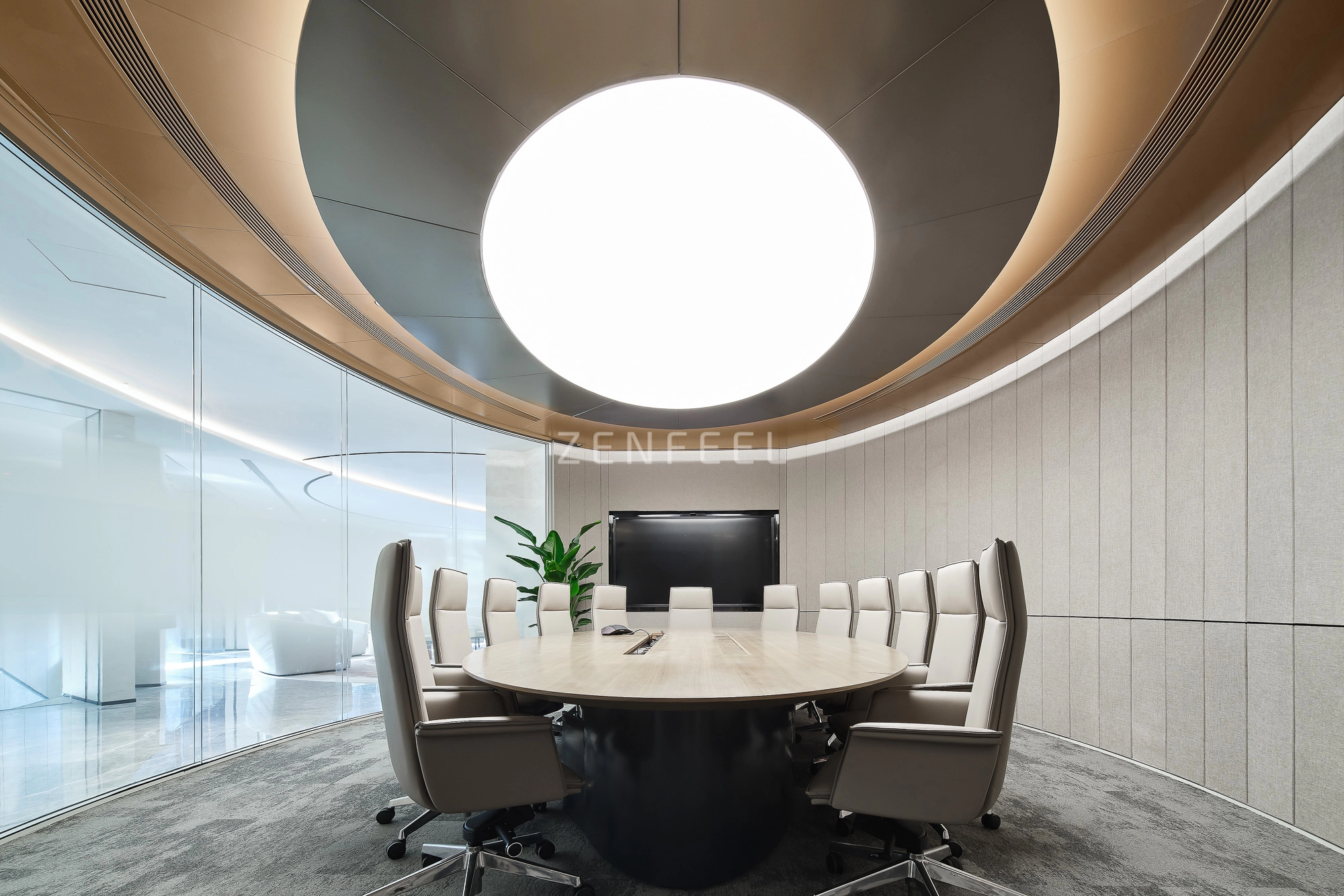
Conference and Meeting Rooms
Conference rooms typically require good speech clarity. Participants need to hear voices from different positions without excessive echo.
For these spaces, acoustic wall panels can be placed on selected side walls, rear walls, or other major reflection points.
The objective is not to absorb every sound reflection. Some natural acoustic energy is useful. Instead, the treatment should reduce excessive reflections while maintaining a comfortable listening environment.
Panel thickness and coverage should be selected according to the room size and acoustic requirements.
Classrooms and Training Rooms
In classrooms, speech intelligibility is particularly important. Teachers and students need to communicate clearly, often across relatively long distances.
Hard walls, floors, ceilings, windows, and desks can create numerous reflections. Acoustic panels for noise reduction can help control these reflections and reduce excessive reverberation.
For educational projects, durability and fire performance should be considered in addition to acoustic performance. Panels should also be selected with the room's cleaning and maintenance requirements in mind.
A balanced combination of wall and ceiling treatment may be appropriate for larger classrooms or lecture spaces.
Restaurants and Cafés
Restaurants can become uncomfortable when conversations accumulate across a large open dining area.
Unlike a quiet office, restaurants have continuously changing sound levels. Conversations, kitchen activity, music, tableware, and customer movement can all contribute to the overall acoustic environment.
For this type of project, acoustic panels should be integrated with the interior concept. Decorative wall panels, ceiling baffles, suspended panels, or upholstered acoustic elements may be used depending on the space.
Materials should also be durable and easy to maintain. In high-traffic environments, the surface finish can be just as important as the acoustic performance.
Recording Studios and Media Rooms
Recording studios require a more specialized approach.
The objective is not simply to make the room quieter. The acoustic environment must be controlled carefully so that recordings, monitoring, and mixing can be performed consistently.
Broadband absorption, low-frequency control, diffusion, and room geometry may all need to be considered.
Standard decorative noise reduction acoustic panels may be useful for certain areas, but professional studio projects often require a complete acoustic design rather than relying on basic wall absorption alone.
Industrial Facilities
Industrial environments can contain large open areas, hard surfaces, machinery, metal structures, and high ceilings. These conditions can produce significant sound reflection.
Acoustic panels may help reduce reflected noise within the facility, potentially improving the overall acoustic environment.
However, industrial noise control often requires several measures working together. Depending on the source, projects may also require equipment enclosures, acoustic barriers, vibration control, isolation systems, or hearing protection.
Panels for industrial applications should be selected with particular attention to durability, fire performance, environmental conditions, and installation security.
Select the Right Acoustic Panel Material
The material is another important factor.
Common acoustic panel materials include PET fiber, fiberglass, mineral fiber, acoustic foam, wood-based systems, and fabric-wrapped constructions. Each material has different characteristics.
PET acoustic panels, for example, are commonly used in offices, commercial interiors, educational facilities, and other spaces where acoustic performance and visual flexibility are both important.
Fabric-wrapped panels can provide a softer architectural appearance and are available in many colors and textures. They may be particularly suitable for offices, meeting rooms, hospitality spaces, and educational environments.
Fiberglass and mineral fiber products can provide high sound absorption and are widely used in commercial acoustic treatment.
Wood-based acoustic products can combine sound absorption or diffusion with a natural architectural appearance, depending on their construction.
The correct material should therefore be selected according to the project's acoustic requirements, interior design, environmental conditions, and budget.
Check Panel Thickness and Acoustic Performance
Thickness should not be overlooked.
In general, thicker porous acoustic materials can provide stronger absorption across certain frequency ranges than thinner materials. However, thickness alone does not determine overall performance.
When evaluating a product, check its tested acoustic performance rather than assuming that a thicker panel is automatically better.
If available, review technical information such as:
Noise Reduction Coefficient (NRC)
Sound absorption coefficients
Frequency-specific absorption data
Panel density
Panel thickness
Mounting configuration
Test standards
NRC can provide a convenient general reference for sound absorption, but it does not describe every aspect of acoustic performance.
For projects with specific acoustic targets, frequency-dependent test data can provide more useful information.
Think About Low-Frequency Sound
Not all noise behaves in the same way.
High-frequency sounds are often easier for conventional porous absorbers to control. Low-frequency sound can be more difficult because it has longer wavelengths and interacts differently with room boundaries.
If a project contains significant low-frequency energy, such as music, mechanical equipment, HVAC systems, or heavy industrial machinery, standard thin wall panels may not be sufficient by themselves.
The acoustic design may need thicker absorbers, air gaps, bass traps, specialized constructions, or other measures.
This is another reason why sound absorbing panels for noise reduction should be selected according to the actual acoustic problem rather than simply by appearance.
Decide Where the Panels Will Be Installed
Panel location has a major influence on performance.
Do not automatically install all the panels on the largest empty wall. Consider where sound originates, where people are located, and where strong reflections occur.
For example, in a meeting room, treating the walls around the main speaking and listening areas may be useful.
In an open office, panels can be distributed across several zones rather than concentrated in one location.
For large commercial spaces, ceiling-mounted acoustic panels may provide additional absorption while preserving valuable wall surfaces for signage, furniture, windows, or other design elements.
A combination of wall and ceiling treatment can often provide more balanced acoustic coverage.
Consider the Amount of Acoustic Coverage
The amount of panel coverage should be based on room conditions and performance requirements.
Installing too few panels may produce only a subtle improvement. Installing an excessive amount of absorption can also change the acoustic character of a room in ways that may not be desirable.
Factors affecting the required coverage include:
Room volume
Existing sound absorption
Wall and ceiling materials
Floor finish
Furniture
Number of occupants
Noise sources
Desired reverberation time
Panel absorption performance
For professional projects, an acoustic consultant can calculate the required treatment based on measured or modeled room conditions.
For smaller projects, manufacturers and acoustic specialists can often provide preliminary recommendations based on room dimensions and intended use.
Evaluate the Mounting Method
A suitable mounting system should be selected together with the panel.
Lightweight panels may be installed with adhesive, while larger or heavier systems may require mechanical fasteners, clips, rails, brackets, or suspended hardware.
If an air gap is required behind the panel, the mounting system should be designed to create the specified distance from the wall.
Ceiling installations require particular attention to structural support. Suspended acoustic panels should be securely attached using appropriate hardware and should not interfere with lighting, sprinklers, HVAC systems, or other building services.
For projects where the interior layout may change, removable mounting systems can offer greater flexibility.
Consider Fire and Safety Requirements
Commercial acoustic projects should not focus exclusively on sound absorption.
Fire performance may be a critical requirement, particularly in offices, schools, hotels, public buildings, transportation facilities, and other occupied spaces.
Depending on the project location and building regulations, acoustic materials may need to meet specific fire-testing or building-code requirements.
The same applies to hygiene and durability in environments such as healthcare facilities, restaurants, and manufacturing plants.
Before ordering, request the relevant technical documentation and confirm that the selected panel is appropriate for the intended environment.
Consider Appearance and Customization
Acoustic treatment does not have to compromise interior design.
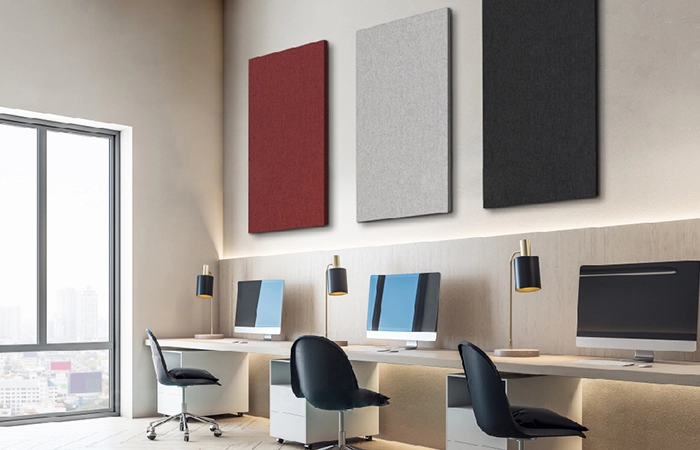
Modern acoustic panels are available in many colors, shapes, thicknesses, and surface finishes. Some manufacturers also offer custom dimensions, printed surfaces, logos, geometric patterns, and project-specific configurations.
For commercial interiors, customized noise-reduction acoustic panels can help combine acoustic performance with branding and architectural design.
Customization can be especially useful when a project requires panels to match furniture, wall colors, corporate branding, or a particular interior concept.
However, customization should be based on technical requirements first. A visually attractive design should still provide the necessary acoustic performance.
Compare Samples Before Bulk Ordering
For larger projects, requesting samples before placing a bulk order is a practical step.
A physical sample allows buyers and designers to evaluate:
Surface appearance
Color consistency
Material texture
Panel rigidity
Edge finishing
Mounting method
Thickness
Overall build quality
If possible, review technical test reports alongside the physical sample.
For projects involving hundreds or thousands of square meters, sample approval can help prevent costly inconsistencies between the specification and the final installation.
Work with an Experienced Acoustic Panel Supplier
Supplier selection can affect more than product availability.
An experienced acoustic panel manufacturer should be able to provide technical specifications, material information, installation recommendations, sample support, and customization options when required.
For commercial and architectural projects, buyers may also need consistent dimensions, color matching, packaging, production capacity, and reliable delivery schedules.
Before choosing a supplier, consider asking:
What acoustic test data is available?
What materials are used?
Can panel dimensions be customized?
What mounting systems are supported?
Are samples available?
What fire-performance documentation is provided?
Can the supplier handle bulk production?
Are OEM or custom design services available?
How does the supplier control product consistency?
These questions can help project teams compare suppliers based on actual project requirements instead of relying only on product photographs or price.
Avoid Choosing Panels Based Only on Price
Budget is naturally an important factor, but the lowest initial purchase price does not always represent the lowest overall project cost.
A cheaper panel may require greater coverage, additional mounting components, more installation labor, or earlier replacement. A product with better acoustic performance may achieve the target using less material.
The total project cost should therefore include:
A cost-effective acoustic solution is one that meets the project's performance requirements while remaining practical to install and maintain.
Build the Selection Around the Project, Not the Product
There is no universal acoustic panel that is perfect for every application.
A small conference room, open-plan office, restaurant, classroom, recording studio, and factory each present different acoustic challenges. The right solution depends on room dimensions, surface materials, noise sources, frequency requirements, design objectives, installation conditions, and applicable safety requirements.
When selecting noise-reduction acoustic panels, start with the acoustic problem rather than the product catalog. Determine whether you need sound absorption, sound isolation, or a combination of both. Then evaluate panel material, thickness, acoustic ratings, coverage, mounting method, durability, fire performance, and appearance.
For larger or technically demanding projects, professional acoustic analysis can further improve the selection process.
The most effective acoustic treatment is not necessarily the panel with the highest specification or the lowest price. It is the solution that is properly matched to the room and installed in the locations where sound control is actually needed. With careful planning and the right supplier, acoustic panels can provide a practical way to reduce unwanted reflections, improve speech clarity, and create more comfortable indoor spaces across a wide range of projects.




 +86 18963687089

 en
en it
it es
es hu
hu ja
ja sv
sv pt
pt ms
ms ko
ko ru
ru fr
fr de
de ar
ar