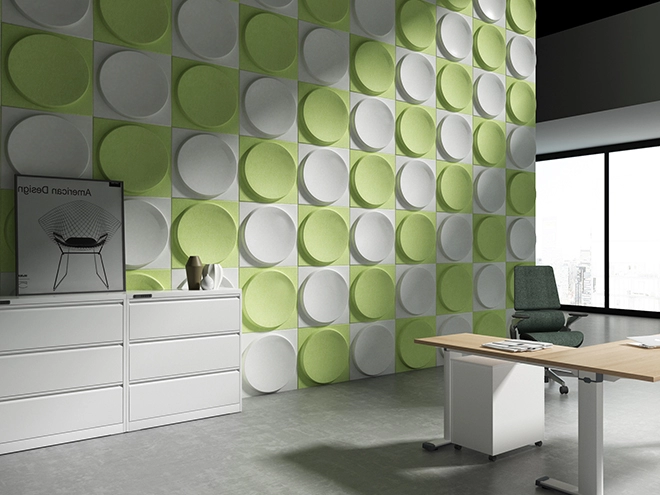
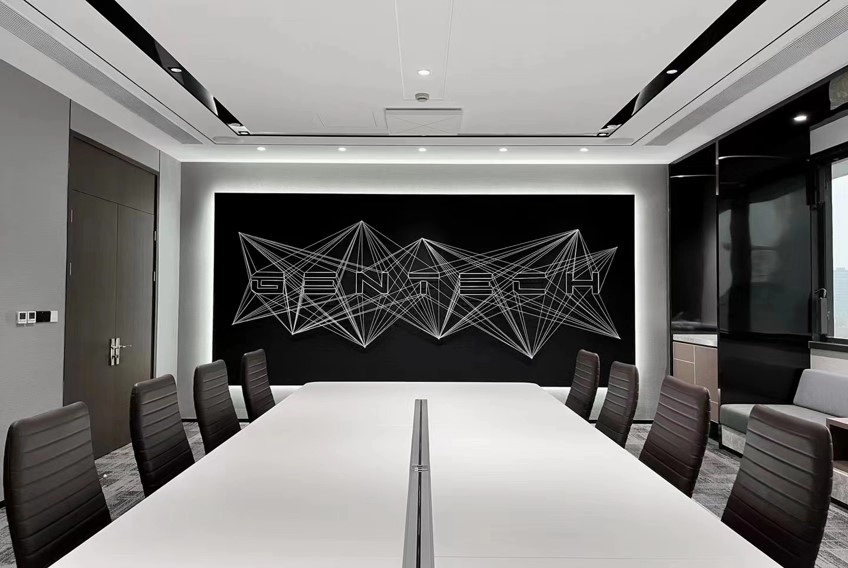
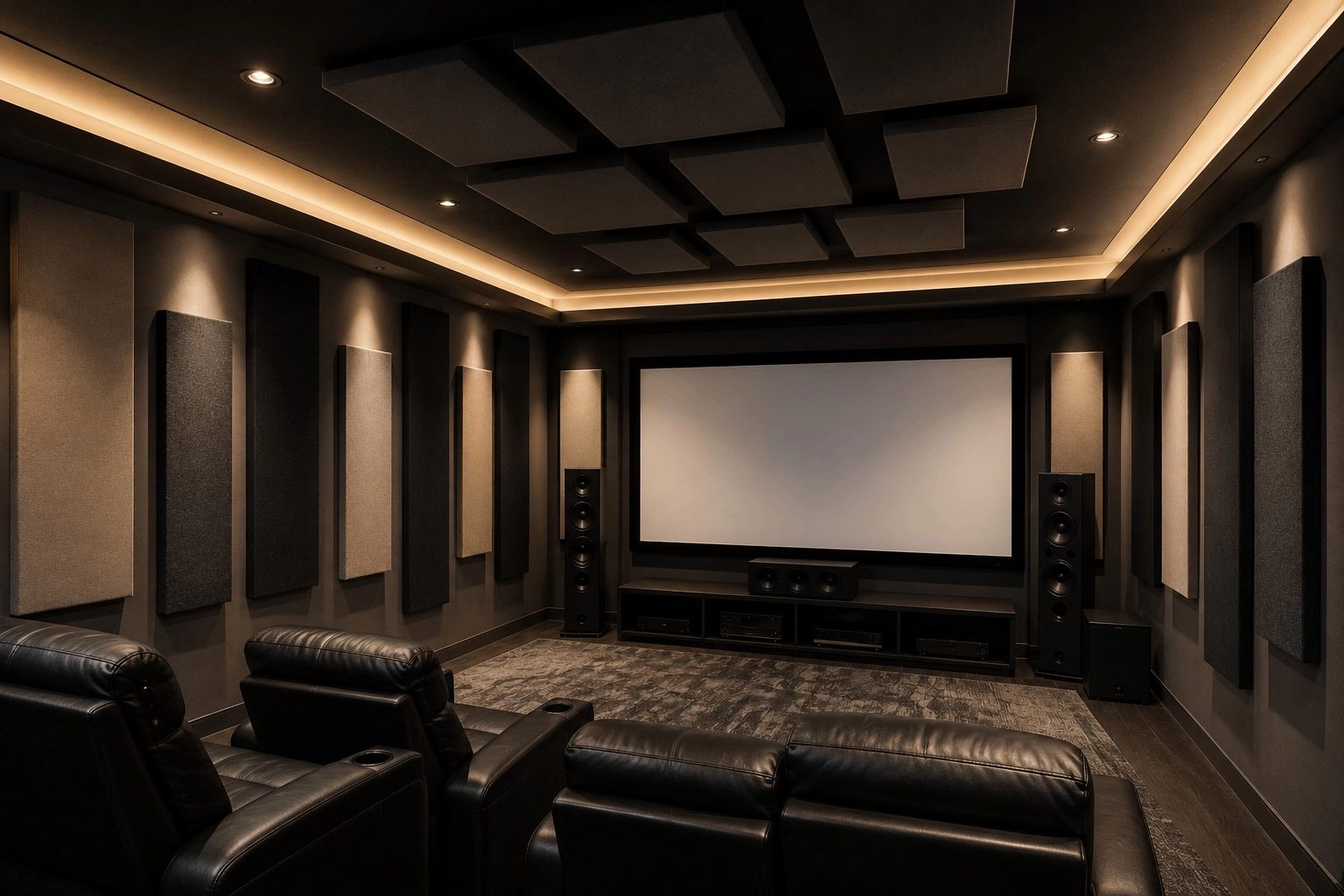
Choosing the right wall treatment involves more than selecting a color or decorative finish. In offices, hotels, conference rooms, restaurants, educational facilities, and residential interiors, sound quality can significantly influence comfort, communication, and the overall experience of a space. Excessive echo, reflected noise, and poor speech intelligibility can make even a beautifully designed room feel uncomfortable.
Fabric acoustic wall panels offer a practical way to address these challenges while enhancing interior aesthetics. Available in different sizes, thicknesses, colors, fabrics, and core materials, they can be adapted to a wide range of architectural and acoustic requirements. However, not every panel is suitable for every environment. A product that works well in a private office may not provide the durability, fire performance, or sound absorption needed in a busy restaurant or commercial meeting room.
Understanding how to evaluate acoustic performance, choose suitable materials, determine the required coverage, and coordinate panels with interior design is essential for making the right decision.
This guide explains how to choose fabric acoustic wall panels based on your space, functional requirements, installation conditions, and long-term maintenance needs.
1. Identify the Main Acoustic Problem in Your Space
Before comparing products, determine what you want to achieve with acoustic treatment. Different spaces experience different types of noise, and identifying the main problem will help you select a suitable solution.
Excessive Echo and Reverberation
Echo and reverberation are common problems in rooms with large areas of hard, reflective surfaces. Glass partitions, concrete walls, tile floors, stone finishes, and exposed ceilings can reflect sound waves instead of absorbing them.
As sound continues to bounce between surfaces, the room may feel noisy even when conversations are not particularly loud. Speech can become less distinct, making it difficult for people to understand one another.
Fabric acoustic wall panels for sound absorption can help reduce these reflections by allowing sound energy to enter an absorptive core. This is particularly useful in conference rooms, hotel lobbies, restaurants, classrooms, and open-plan offices.
If excessive reverberation is your primary concern, prioritize panels with reliable sound absorption data and an installation configuration appropriate for the room.
Background Noise and Poor Speech Intelligibility
In shared workplaces and public environments, conversations from multiple directions can create distracting background noise. Even when individual voices are not especially loud, overlapping conversations can make communication difficult.
Acoustic wall panels can help reduce reflected sound and improve the overall listening environment. In meeting rooms, they may support clearer communication during presentations and video conferences. In restaurants, they can help create a more comfortable atmosphere for conversations.
However, acoustic panels do not eliminate every source of noise. Mechanical equipment, loud music, external traffic, and sound traveling through walls may require additional measures.
Noise Transmission Between Rooms
If you can hear conversations through a shared wall, the problem may involve inadequate sound insulation rather than excessive reverberation inside the room.
Fabric-wrapped acoustic panels primarily absorb sound reflections within the treated space. They should not be assumed to provide substantial soundproofing when installed directly over an existing wall.
For noise transmission problems, consider the construction of the wall assembly, gaps around doors, electrical penetrations, ceiling connections, and other potential sound paths. A professional acoustic assessment may be necessary to identify the most effective solution.
Understanding this distinction prevents you from purchasing a decorative acoustic product that cannot solve the underlying problem.
2. Consider the Purpose and Characteristics of the Room
The best fabric acoustic wall panel depends heavily on how the space is used. Room size, occupancy, furniture, ceiling height, and the amount of reflective surface all influence acoustic performance.
Offices and Open-Plan Workspaces
Offices often need to balance collaboration with concentration. Employees may share the same area while participating in meetings, making phone calls, and completing individual tasks.
In these environments, fabric acoustic wall panels can help control reflections from hard walls and support a more comfortable working atmosphere.
For open-plan offices, consider panels that complement existing partitions, workstations, and furniture. Neutral colors may create a consistent appearance, while contrasting colors can define meeting zones or collaborative areas.
The panel layout should be coordinated with the office's overall acoustic strategy. Wall panels may need to be combined with ceiling absorbers, workstation screens, or other treatments when the space is large or densely occupied.
Hotels and Hospitality Spaces
Hotels contain several different acoustic environments, including guest rooms, reception areas, corridors, restaurants, and meeting facilities.
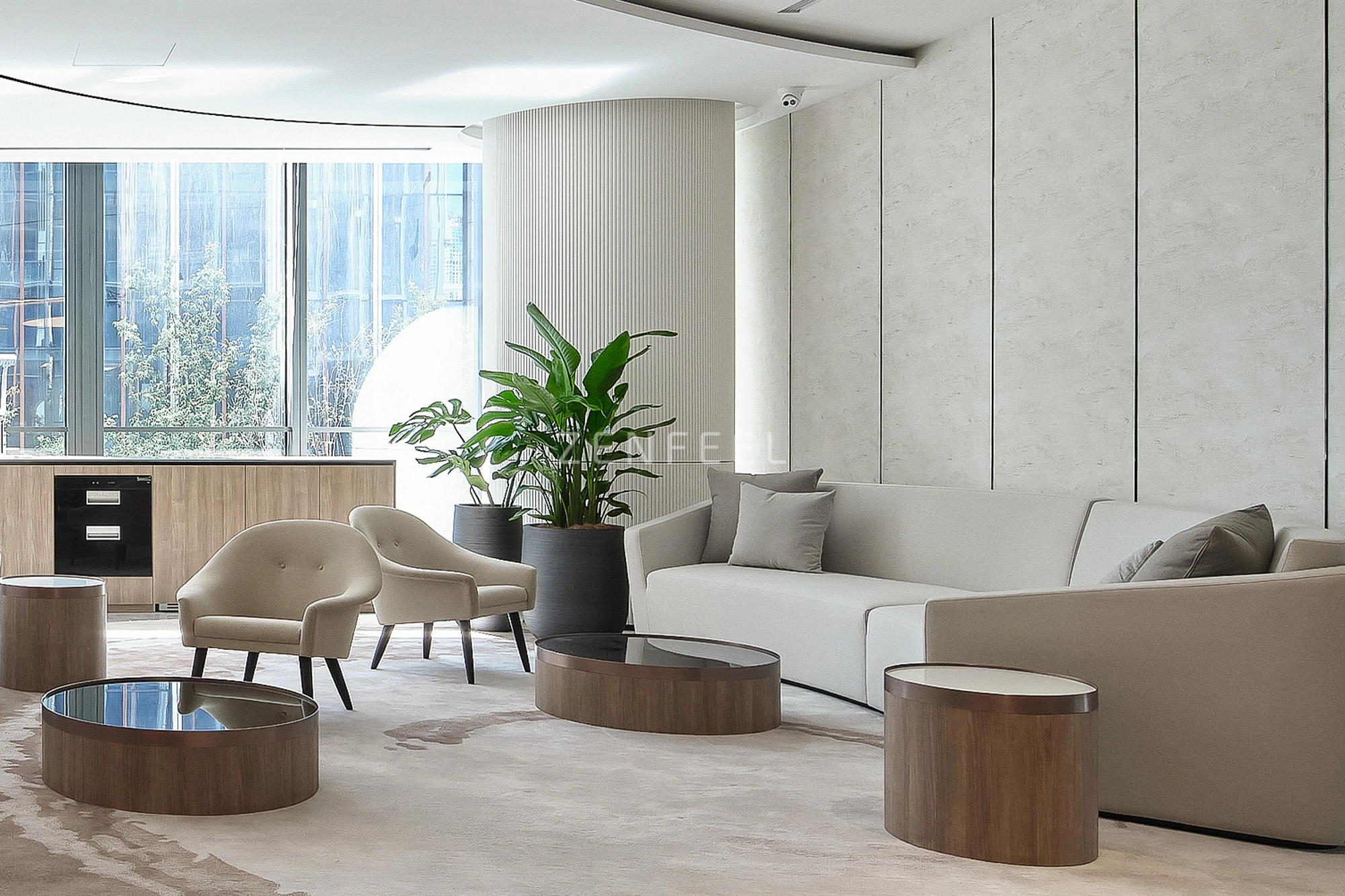
In guest rooms, fabric acoustic wall panels can provide a decorative finish behind beds or along selected feature walls. In lobbies and lounges, larger panels may help control reflections while contributing to the interior design.
Restaurants and corridors usually require additional attention to durability and cleaning. Materials should be selected according to expected traffic, the likelihood of stains, and the maintenance procedures used by hotel staff.
For hospitality projects, decorative fabric acoustic wall panels should satisfy both aesthetic and operational requirements.
Conference Rooms and Meeting Spaces
Conference rooms require good speech intelligibility so participants can understand presentations and discussions.
When selecting acoustic wall panels for meeting rooms, consider the room's dimensions, table arrangement, speaker locations, display screens, and video conferencing equipment.
Panels placed on appropriate wall surfaces can help reduce early reflections that interfere with speech clarity. The required amount of absorption will depend on the room's construction and intended use.
For professional meeting environments, look for technical specifications that describe sound absorption across relevant frequencies rather than relying exclusively on product photographs or general marketing descriptions.
Restaurants, Cafés, and Public Areas
Restaurants and cafés often contain numerous sound sources, including conversations, kitchen activity, tableware, background music, and staff movement.
Hard flooring, glass windows, and exposed ceilings can increase reverberation. As occupancy rises, the resulting noise can make conversation less comfortable.
Fabric acoustic wall panels can help absorb some reflected sound, especially when installed across suitable wall sections. However, fabric selection is important because food spills, grease, frequent cleaning, and physical contact may affect the panels over time.
For these environments, prioritize a balance of acoustic performance, stain resistance, durability, and ease of maintenance.
Residential Interiors
In homes, acoustic panels may be used in home offices, entertainment rooms, music rooms, living rooms, or other spaces where sound quality matters.
Residential applications often provide greater flexibility in color, shape, and layout. Panels can serve as decorative feature walls while helping reduce reflections.
Nevertheless, the required product depends on the intended use. A home office may benefit from moderate sound absorption for clearer online meetings, while a music room may require a more detailed acoustic design.
3. Evaluate Sound Absorption Performance
Acoustic performance is one of the most important factors when comparing fabric acoustic wall panels. Products that look similar may deliver very different results because of differences in their core materials, thickness, construction, and installation methods.
Understand the Noise Reduction Coefficient
The Noise Reduction Coefficient, or NRC, is a commonly used rating that summarizes sound absorption performance under specified test conditions.
A higher NRC generally indicates greater average sound absorption across the frequencies included in the rating. However, the rating does not describe every aspect of a panel's acoustic behavior.
For example, two panels with similar NRC values may perform differently at particular frequencies. This difference can matter when designing spaces intended for speech, music, or other specific acoustic requirements.
When reviewing fabric acoustic wall panel specifications, ask for the underlying laboratory test report and frequency-specific absorption data where available.
Also confirm whether the reported results correspond to the intended installation method. A panel mounted directly against a wall may perform differently from one installed with an air gap behind it.
Consider Frequency-Specific Performance
Sound contains a range of frequencies, from low-frequency sounds generated by equipment and music to higher-frequency sounds associated with speech and other everyday activities.
Some acoustic panels are particularly effective at absorbing mid- and high-frequency sound but provide less absorption at lower frequencies.
Panel thickness, core material, and mounting configuration all influence this behavior.
For typical offices and meeting rooms, controlling speech-related reflections is often an important objective. Music rooms, performance spaces, and other specialized environments may require broader frequency control.
If your space has a persistent low-frequency noise problem, simply installing thin fabric-covered panels may not provide the desired result. A more comprehensive acoustic assessment can help determine whether thicker absorbers, air gaps, bass traps, or other treatments are needed.
Review the Complete Panel Assembly
Sound absorption depends on more than the core material alone. The outer fabric, backing, frame, mounting system, and distance from the wall may all influence the finished product.
When comparing high-performance fabric acoustic wall panels, evaluate the complete tested assembly rather than relying on an isolated material specification.
A supplier should be able to explain the available configurations and provide appropriate technical documentation for the product being offered.
4. Choose the Right Panel Thickness and Core Material
The thickness and composition of an acoustic panel influence its sound absorption, weight, installation requirements, and suitability for different applications.
Panel Thickness
Thicker panels often provide improved absorption at lower frequencies than otherwise similar thin panels. However, thickness alone does not guarantee superior performance because the core material and mounting configuration also matter.
Thin panels may be sufficient for selected decorative applications or environments with relatively modest acoustic requirements. More demanding spaces may benefit from thicker panels or a larger total absorption area.
Before choosing a thickness, consider the room's acoustic objectives, available wall depth, mounting restrictions, and design preferences.
For projects with strict performance requirements, compare test data for the exact panel thickness and installation configuration.
Acoustic Core Materials
Fabric acoustic wall panels are available with different absorptive cores, including polyester fiber, fiberglass, mineral fiber, and other porous materials.
Each option has its own characteristics.
Polyester fiber: Often selected for lightweight construction, fabrication flexibility, and a variety of design applications.
Fiberglass: Commonly used in acoustic products where porous sound-absorbing construction is required.
Mineral fiber: May be suitable for selected acoustic assemblies, depending on the product's density, construction, and performance specifications.
These materials should not be treated as interchangeable. Their acoustic performance, fire properties, weight, moisture behavior, and handling requirements can differ.
For commercial projects, evaluate the complete product specification and verify that the proposed materials meet the relevant building requirements.
Fabric Compatibility
The fabric covering must allow sound to pass through to the absorptive core. Some dense or impermeable coatings can interfere with sound absorption.
Therefore, a textile that looks attractive may not be appropriate for an acoustic panel unless its compatibility has been established.
When choosing fabric acoustic wall panels, ask whether the fabric is intended for acoustic applications and whether the finished panel has been tested in the proposed configuration.
This is especially important when custom fabrics, printed designs, or special surface treatments are required.
5. Select a Fabric Finish That Matches Your Interior Design
Fabric acoustic wall panels are visible architectural elements, so their appearance should support the overall design concept.
Color Coordination
Color affects how panels interact with furniture, flooring, lighting, and surrounding wall finishes.
Neutral colors such as beige, gray, cream, and charcoal can work well in offices, hotels, and conference rooms. Stronger colors can introduce contrast or help distinguish different functional areas.
For example, a corporate office may use coordinated neutral panels to maintain a professional appearance, while a hospitality project may incorporate warmer colors to create a more welcoming atmosphere.
Before ordering large quantities, request physical fabric samples. Colors can look different under natural daylight, warm interior lighting, and cool-white lighting.
Texture and Visual Depth
Fabric texture can influence the character of an interior. Smooth textiles may suit minimalist spaces, while woven or textured finishes can add visual depth.
The texture should complement nearby materials rather than compete with them. In a space featuring natural timber, stone, and soft furnishings, a carefully selected fabric can help connect the different elements.
Designers should also consider how the fabric appears from different viewing distances. A small sample may look different when repeated across a large wall.
Panel Shapes and Layouts
Standard rectangular panels are versatile and easy to arrange, but other configurations can create more distinctive interiors.
Vertical panels may emphasize height, horizontal arrangements can visually extend a wall, and geometric layouts can introduce rhythm into a room.
Custom fabric acoustic wall panels may also be coordinated with lighting features, decorative trims, furniture, or existing architectural details.
Before finalizing the layout, verify panel dimensions, joint spacing, mounting hardware, and access to electrical outlets or other wall-mounted equipment.
The most successful design combines visual consistency with practical installation and maintenance requirements.
6. Determine How Many Acoustic Wall Panels You Need
Buying too few panels may limit acoustic improvement, while purchasing excessive quantities can increase project costs without providing a proportionate benefit.
The required quantity depends on the room's size, existing surface materials, ceiling height, furniture, occupancy, and acoustic objectives.
Calculate the Available Wall Area
Start by measuring the wall surfaces that can accommodate acoustic treatment.
For a rectangular wall, multiply its width by its height. Subtract large openings such as doors or windows when appropriate, then calculate the combined area of the selected walls.
Next, determine the dimensions of the proposed panels and calculate their coverage area.
For example, a panel measuring 1.2 meters by 0.6 meters covers 0.72 square meters. If a project requires 14 square meters of panel coverage, approximately 20 panels would be needed before accounting for layout constraints, cuts, and installation allowances.
This is only a material quantity calculation, not an acoustic design recommendation. The amount of panel coverage needed to achieve a particular reverberation target must be determined separately.
Assess Existing Reflective Surfaces
A room with extensive glass, stone, concrete, and other hard finishes may require more absorptive treatment than a similarly sized room containing carpets, curtains, upholstered furniture, and other sound-absorbing materials.
The location of the panels is also important. Treating selected reflection points may be more effective than installing the same total area randomly.
For large commercial spaces, a qualified acoustic consultant can estimate the required absorption and recommend suitable panel placement.
Avoid Relying on a Fixed Coverage Percentage
There is no single wall-coverage percentage that works for every room.
The appropriate amount depends on the existing reverberation time, the intended use of the space, and the performance of the proposed acoustic materials.
If speech clarity is the main objective, the design may prioritize certain wall and ceiling areas. If the room is used for music or presentations, other acoustic considerations may apply.
Use panel coverage calculations as a starting point, then confirm the final specification against the project's acoustic requirements.
7. Consider Fire Safety and Environmental Requirements
Fabric acoustic wall panels used in commercial buildings may need to comply with specific fire-safety and building regulations. Requirements vary according to location, occupancy type, installation area, and applicable codes.
For hotels, schools, offices, and public facilities, compliance should be verified before the materials are purchased.
Check Fire-Performance Documentation
Ask the manufacturer for relevant test reports and certificates for the complete panel assembly.
The fabric, acoustic core, adhesives, backing, and mounting components may affect the performance of the finished product. A fabric that meets a particular standard on its own does not necessarily demonstrate that the assembled panel meets the same requirement.
Confirm the exact classification and test standard required by the project rather than assuming that one certificate is sufficient for every market.
Evaluate Indoor Environmental Considerations
Indoor air quality may also be relevant, particularly in enclosed spaces that are occupied for long periods.
Depending on the application and local requirements, buyers may wish to review information about volatile organic compound emissions, adhesives, and the composition of the panel materials.
Environmental claims should be supported by appropriate documentation. Terms such as eco-friendly, low-emission, or sustainable should not replace specific product evidence.
Evaluating these factors early helps prevent delays during project approval and installation.
8. Assess Durability and Maintenance Requirements
The best acoustic panel is not necessarily the one with the highest sound absorption rating. In many applications, durability and maintenance are equally important.
High-Traffic Environments
Offices, corridors, hotel lobbies, restaurants, and educational facilities may expose panels to frequent contact, accidental impacts, and repeated cleaning.
In these settings, consider the fabric's resistance to wear, the stability of the panel edges, and the suitability of the mounting system.
Panels installed near seating areas or walkways may need additional protection from physical damage.
Cleaning and Stain Resistance
Fabric finishes vary in their response to dust, spills, moisture, and cleaning products.
Before selecting a panel, obtain the manufacturer's recommended cleaning procedures. Some products may support gentle vacuuming or spot cleaning, while others may require specialized maintenance.
Avoid assuming that a fabric can tolerate aggressive detergents, excessive moisture, or steam cleaning without confirmation.
For restaurants and other environments where stains are more likely, choose a material that matches the expected cleaning frequency and operational conditions.
Replacement and Lifecycle Costs
A panel system that allows individual sections or fabric coverings to be replaced may offer practical advantages during long-term operation, provided the product is designed for this purpose.
Buyers should also consider replacement-material availability, installation labor, cleaning costs, and the expected service life of the product.
Comparing these factors provides a more realistic picture of value than focusing exclusively on the initial purchase price.
9. Choose the Right Installation Method
Installation influences both the appearance and performance of fabric acoustic wall panels.
Different products may use mechanical fixings, clips, mounting rails, adhesive systems, or other methods. The appropriate option depends on panel weight, wall construction, access requirements, and the manufacturer's recommendations.
Wall Surface and Fixing Requirements
Before installation, check whether the wall is flat, dry, and structurally suitable for the selected mounting system.
Uneven surfaces can affect panel alignment and create visible gaps. Inadequate fixings may lead to loose panels or damage over time.
The installation plan should account for wall outlets, switches, concealed services, doors, windows, and adjacent finishes.
For large projects, a sample installation can help verify the panel appearance and fixing method before full-scale installation begins.
Direct Mounting Versus an Air Gap
Some acoustic panels are mounted directly against the wall, while others can be installed with a gap behind them.
An air gap may improve sound absorption at certain frequencies, depending on the panel design and mounting arrangement. However, the result varies by product, so it is important to review the relevant test data.
Do not assume that a particular mounting method will always provide the best result. Choose the configuration that meets the project's acoustic targets and physical constraints.
Plan for Future Access
Some walls contain electrical equipment, data connections, inspection points, or other services that may require future access.
The panel layout should allow these areas to remain accessible where necessary. Removable or modular systems may be useful when maintenance access is a priority.
Good installation planning reduces the risk of expensive modifications after the panels have been fitted.
10. Compare Suppliers Before Making a Purchase
Selecting a reliable supplier is an important part of choosing the right fabric acoustic wall panel. Product quality, technical support, customization options, and delivery reliability can all influence the final result.
Review Technical Specifications
Request documentation covering panel dimensions, thickness, core materials, fabric options, acoustic performance, installation requirements, and applicable fire standards.
If the project requires a particular sound absorption rating, confirm that the proposed product has supporting test data.
Avoid comparing products solely through general descriptions such as premium acoustic performance or professional-grade materials.
Evaluate Customization Capabilities
Some projects require non-standard dimensions, coordinated colors, special edge details, or specific mounting arrangements.
A supplier should clearly explain which features can be customized and whether customization affects lead times, costs, testing, or maintenance requirements.
For large installations, physical samples and approved production specifications can help maintain consistency across the order.
Confirm Quality Control and Delivery
Ask how the manufacturer checks panel dimensions, fabric consistency, surface quality, and assembly accuracy.
Packaging should protect the panels against dust, moisture, compression, and damage during transport. Delivery schedules should also match the construction program and available storage space.
Reliable communication is particularly important for projects involving multiple rooms, floors, or locations.
Compare Total Project Value
The lowest-priced product may not provide the best long-term value if it requires frequent replacement, has limited technical documentation, or is difficult to maintain.
Compare acoustic performance, durability, fire compliance, customization, installation expenses, delivery arrangements, and after-sales support together.
A structured evaluation makes it easier to select a product that meets both functional requirements and budget constraints.
11. Common Mistakes to Avoid When Choosing Fabric Acoustic Wall Panels
Several mistakes can undermine the effectiveness of an acoustic treatment project.
Choosing based on appearance alone: A panel's color and texture matter, but acoustic test data, material composition, and installation requirements must also be considered.
Confusing sound absorption with soundproofing: Fabric acoustic panels help control reflections inside a room but are not a substitute for a properly designed sound-insulating wall assembly.
Ignoring room-specific requirements: A restaurant, conference room, hotel bedroom, and open-plan office have different acoustic and operational needs.
Installing an insufficient amount of material: Decorative panels may not provide enough absorption if the room is large or highly reverberant. Coverage should be determined according to the acoustic objective.
Overlooking fire and maintenance requirements: The selected panel must meet applicable regulations and remain practical to clean and maintain.
Failing to coordinate installation: Panels should be planned alongside lighting, electrical services, furniture, and other architectural finishes to avoid conflicts during construction.
Avoiding these mistakes helps ensure that acoustic panels contribute meaningful functional value rather than serving only as decorative features.
Conclusion: Make an Informed Choice for Your Space
Choosing the right fabric acoustic wall panel requires a clear understanding of the room's acoustic challenges, intended use, design preferences, and maintenance conditions. By evaluating sound absorption data, panel thickness, core materials, fabric compatibility, fire performance, coverage, and installation requirements, buyers can identify solutions that meet the needs of their specific environments.
For offices and conference rooms, speech clarity and reduced reverberation may be the primary goals. Hotels and restaurants may place greater emphasis on combining acoustic comfort with attractive finishes and durable materials. Residential projects may offer more flexibility in panel shape, color, and layout, while still requiring careful attention to performance.
Working with a knowledgeable manufacturer can simplify product comparisons and help ensure that the selected panels are suitable for the intended application. For projects exploring customizable acoustic wall treatments, ROYDAA can be considered when evaluating fabric acoustic wall panel options. By balancing acoustic performance, visual design, compliance, and long-term practicality, businesses and property owners can create spaces that look appealing and sound more comfortable.




 +86 18963687089


 en
 it
 es
 hu
 ja
 sv
 pt
 ms
 ko
 ru
 fr
 de
 ar